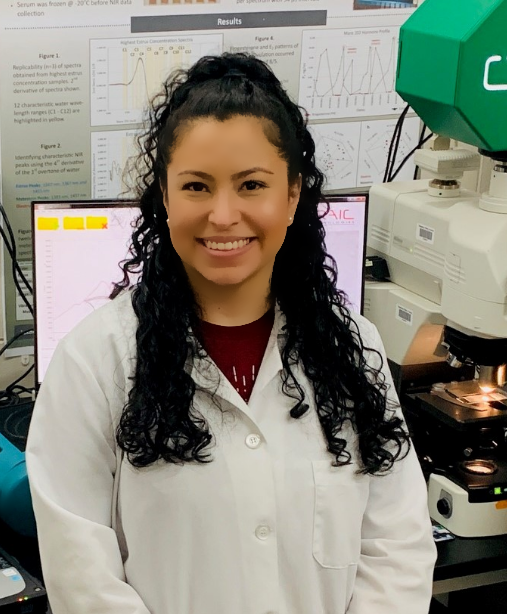
Mariana Santos-Rivera

Bio

Mariana Santos-Rivera was born in the beautiful country of Colombia. She holds a Veterinary Medicine degree from the University of Tolima. In 2010 during her first job at the Scientific Research Center Caucaseco, she worked in preclinical trials to develop malaria vaccines. The malaria research and her ability to communicate in English linked her to her second job, in the Albert and Vivian Puzey Foundation (Quantaspec, Inc.) located in Vermont, USA. There she worked on developing new diagnostic methods for malaria using Fourier Transform Infrared (FTIR) Spectroscopy. That is where her passion for IR techniques started and motived her to look for her next opportunity in 2013 at the National Coffee Research Center in Colombia. She worked with Near-Infrared Spectroscopy (NIRS) and learned to perform advanced Chemometric analyses, which in 2017 led her to pursue her current biochemistry doctoral studies at Mississippi State University.

Since 2018 at MSU, Mariana has been testing NIRS and Aquaphotomics to create the biochemical profiles from the animal and plant pathogens: Bovine Herpesvirus type 1, Bovine Respiratory Syncytial Virus, Mannhemia haemolytica, Xanthomonas citri pv. malvacearum, and Rhizoctonia solani. Her ultimate goal is to create the basis for a portable, fast, non-destructive, and accurate diagnosis tool able to reduce the current time and costs required for the detection and identification of pathogens, which are determinant in the infection-related mortality rates and diseases spreading.

Personal websites:

https://orcid.org/0000-0002-3356-6276
https://www.linkedin.com/in/mariana-santos-rivera-12434a45/
https://www.researchgate.net/profile/Mariana-Santos-Rivera

Carrie Vance

Bio

Carrie Vance obtained advanced degrees in chemical physics and biophysics from Caltech and Johns Hopkins University where she specialized in NMR and EPR spectroscopy applied to chemical and enzymatic reaction dynamics. With an interest in how spectroscopic approaches could be applied to larger systems with more biological focus, she joined the Biophotonics program at MSU to develop modes of using spectroscopy and chemometrics to assess animal and plant physiology. In this context, her research has expanded into applications of NIR spectroscopy to aspects of metabolism, endocrinology and reproduction, chemical communication and disease across numerous taxa.

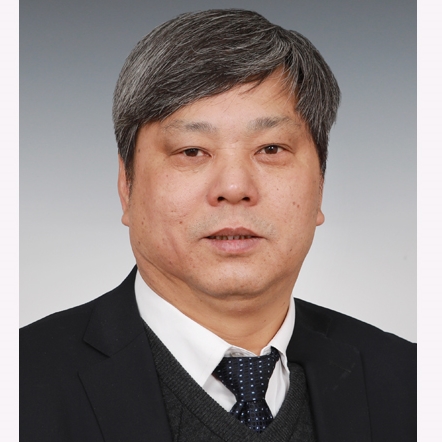
Xueguang Shao

Bio

Xueguang Shao is a professor of analytical chemistry in Nankai University, the director of the Tianjin key laboratory of bio-sensing molecular recognition. He got The Ministry of Education Award for Young Teachers in 2002, Natural Science Foundation Outstanding Youth Fund in 2003, the special allowances of the state council in 2012, and the Lu Wanzhen Award of CCNIRS (China Council of Near Infrared Spectroscopy) in 2018.

The main research area of Prof. Shao is chemometrics and its application in analytical chemistry. Since the 90s of the last century, he has engaged in the studies of near infrared spectroscopy. He developed a series of chemometric methods for NIR spectral analysis, including the methods for spectral pre-processing, outlier detection, variable selection, and the methods for quantitative and discrimination analysis. Great efforts were made for selection of the informative variables from the NIR spectra. Aiming at the problem of low sensitivity of NIR spectroscopy, works for the micro-analysis were conducted based on the combination of chemometric and experimental strategies. In recent years, temperature dependent NIR spectroscopy was proposed and new applications were explored. Besides the theoretical studies, Prof. Shao also developed new techniques for practical applications of NIR spectroscopy, such as the technique for monitoring the industrial production and the method for fast identification of medicines.