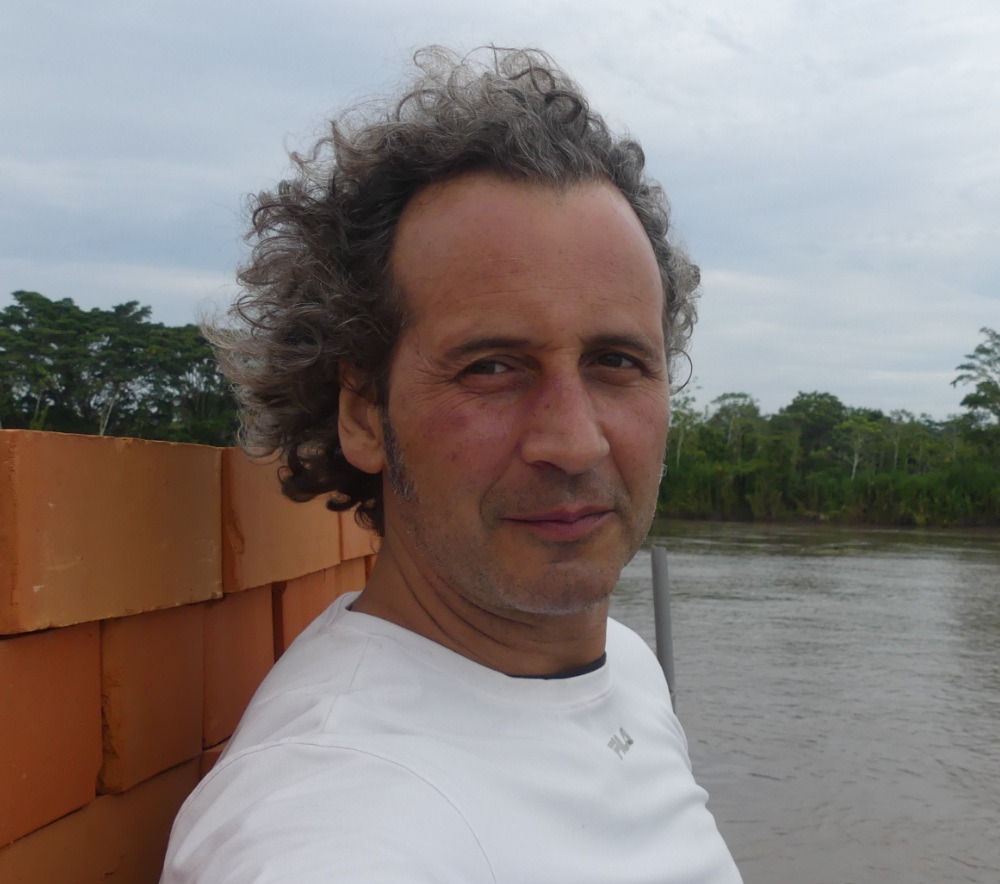
Jorge J. Wenz

Bio

Jorge Wenz achieved its PhD in food chemistry and technology in 1999 at the Universidad Nacional de Sur, Bahía Blanca, Argentina, where he is actually assistant professor. Since its post-doctoral stage at the Instituto de Investigaciones Bioquímicas, CONICET, he is working in biophysics of membranes, dealing with: the architecture of the membranes, their phase behavior, lateral organization and segregation of the lipids and the influence on these properties. These items have been mainly evaluated by means of fluorescence spectroscopic and multivariate analysis. Nevertheless, in the last few years he incorporated near infrared spectroscopy as an innovative tool to examine the water in membranes, since water not only may inform about the neighboring molecules, but also it is a crucial component of membranes by itself, with a role in their structure and functionality.

Hengchang Zang

Bio

Craig Schwartz received his undergraduate degree from Northwestern University (IL, USA) and his Ph.D. in physical chemistry from University of California, Berkeley in 2010.  His thesis work focused on theoretical and experimental investigations of liquids using X-ray spectroscopic techniques.  He subsequently worked for an insurance company, before returning to science to develop ultrafast X-ray methods for synchrotrons at Argonne National Laboratory.  He then became a project scientist at SLAC national lab where he built X-ray spectrometers and worked on ultrafast phenomena.  His research is primarily concerned with X-ray spectroscopy and scattering.  Primarily, he studies soft matter by spectroscopic means.  He is also interested in developing new X-ray spectroscopic methods, particularly methods that require the high fields of X-ray free electron lasers.

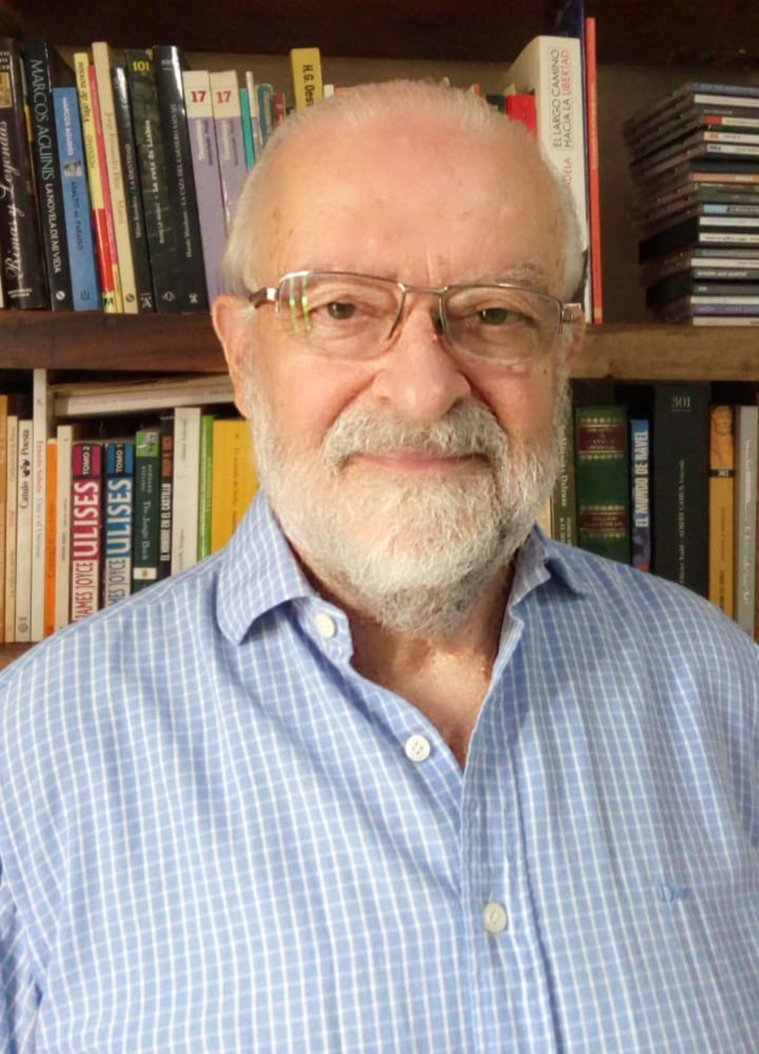
E. Aníbal Disalvo

Bio

Main research field: To analyze the structural and dynamical properties of lipid interphases in relation to the water distribution in specific sites, its relevance to membrane stability and permeability of cell in osmotic and hydric stress, and the regulation of enzyme activity by FTIR spectroscopy, cyclic voltammetry, dipole potential and surface pressure of monolayers, espectrofluorescence and stop flow kinetics are the main experimental tools together with molecular simulation.

Academic formation: Doctor in Sciences (Physical chemistry), 1974 National University of La Plata, Argentina. Speciality Biophyscial chemistry of lipid membranes and biomimetic systems.
Present position: Superior (emeritus) Researcher of the National Research Council (CONICET, Argentina).
Head of the Applied Biophysical Area, Center of Applied Biophysical and Food research, (UNSE-CONICET, Santiago del Estero, Argentina.

Academic trajectory
Researcher of the National Research Council ( CONICET, Argentina).since 1994.
Associate Professor of Chemistry since 1997, University of Buenos Aires, Argentina.
Full professor since 2015, National University of Santiago del Estero, Argentina.
Advisor of twenty PhD Doctoral thesis in Chemistry and Biochemistry since 1989.

Sae Tanaka

Bio
Sae Tanaka is an Instructor at School of Medicine, Keio University. She received her B.S., M.S. and Ph.D. degree in Molecular Biology from the University of Tokyo, Tokyo, Japan, in 2010, 2012 and 2015, respectively.