Author: admin

  • Aquaphotomics Session at the 21st International Conference on Near Infrared Spectroscopy NIR 2023

    Aquaphotomics Session at the 21st International Conference on Near Infrared Spectroscopy NIR 2023

    The world’s leading biannual conference on near-infrared spectroscopy was held for the first time this year in Austria, in the beautiful town of Innsbruck, with the motto ‘Good Vibrations, Smooth Contours!’ symbolizing the location and the commitment to embodying the spirit of science, fostering a stimulating environment, and nurturing personal connections.

    Figure 1. The International Conference on Near Infrared Spectroscopy, NIR 2023, was held in the picturesque Austrian town of Innsbruck

    The conference lasted from August 20 to 24 and was attended by 380 participants from more than 30 countries. The organizing committee, led by conference chairperson Prof. Dr. Cristian W. Huck from the University of Innsbruck, prepared an incredibly rich program that included three award ceremonies and award lectures, five plenary sessions, 14 keynote lectures, almost 80 oral presentations, as well as 26 flash talks and 160 posters.

    On the first day of the conference, Monday, August 21st, as a part of the Water, Soil, and Environment session chaired by Prof. Zoltan Kovacs from Hungary, there were five lectures on aquaphotomics topics. The keynote lecture titled “NIRS-Aquaphotomics: A New Integrative Science and Technology Platform” was presented by Prof. Dr. Roumiana Tsenkova, the founder of aquaphotomics, from the University of Kobe, Japan.

    In this fascinating talk, she presented some new concepts that have recently emerged from aquaphotomics research, such as the idea that water can be considered a sensor, laser and a hologram. Prof. Tsenkova also introduced a novel Japanese name for aquaphotomics, “Mikoudo”. “Mi” originates from the Japanese word “mizu”, representing water, “Kou” means “light,” and finally, “do” translates to “path” or “way” akin to well-known disciplines like Aikido, Sado (Japanese tea ceremony) and Shodo (Japanese calligraphy), which all share the “do” element in their names. Mikoudo (aquaphotomics), therefore, is a path to a greater understanding and insight into water through its interaction with light.

    The next speaker was Assoc. Prof. Dr. Jelena Muncan, also from the Aquaphotomics Research Field in Kobe, who presented on “Recent Developments in Aquaphotomics: Insights into Water Structure and Functionality.”

    Figure 2. The keynote aquaphotomics lecture was presented by Prof. Dr. Roumiana Tsenkova, from Aquaphotomics Research Field at Kobe University in Japan. The founder of aquaphotomics introduced newly emerged ideas about water such as water being an ultimate sensor, laser and a hologram. Doing aquaphotomics means being on a path towards greater understanding of water through its interaction with light, and ultimately understanding life and the whole universe.

    She discussed significant progress in identifying new Water Matrix Coordinates (WAMACs) in the first overtone of water. She showed the currently identified 19 WAMACs and molecular structures that absorb light within those frequency ranges. Additionally, she demonstrated how these structures are interconnected with macro-scale properties and phenomena such as hardness, texture, preservation, damage, self-organization, and others, also illustrating water as a multiphasic system.

    Figure 3. Assoc. Prof. Dr. Jelena Muncan during her presentation on “Recent Developments in Aquaphotomics” in Kobe, discussing new insights into water structure and functionality, including 19 identified Water Matrix Coordinates (WAMACs) in the first overtone of water.
    Figure 4. Alexander Stoilov, senior researcher at Yunosato Aquaphotomics Lab in Hashimoto City, Japan, explained aquaphotomics approach to soil analysis during his presentation. Their findings revealed that the accuracy of soil classification improved with soil wetting and is dependent on the percentage of moisture.

    Alexander Stoilov, a senior researcher at the first industrial aquaphotomics laboratory – Yunosato Aquaphotomics Lab, in Hashimoto city, Japan, presented different applications of aquaphotomics in various projects at Yunosato. These applications include water quality control, food quality and development of new food products, quality control of cosmetic products, and a particular focus on the most novel application: soil analysis. An interesting aspect of their findings is that wetting the soil helped classify different soil types. The objective of this ongoing research is to employ aquaphotomics to identify the ideal soil-crop matches, ensuring optimal conditions for organic growth.

    Prof. Dr. Myriam Catala Rodriguez, from the Spain’s research group Symbiogene at Universidad Rey Juan Carlos, stands as one of the latest additions to the field of aquaphotomics, specializing in the study of anhydrobiosis.

    Figure 5. Prof. Myriam Catala Rodriguez, from Universidad Rey Juan Carlos, Spain, shedding light on water’s vital role in anhydrobiosis through her groundbreaking study on Asterochloris erici.

    Her lecture, titled “Metabolomic Analysis of the Global Molecular Fingerprint and Aquaphotomic Analysis of the Dehydration-Rehydration Cycle of the Symbiotic Aeroterrestrial Microalga Asterochloris erici,” unveiled captivating findings concerning the restructuring of water’s molecular composition in response to dehydration. This research underscores the pivotal role water plays in the state of anhydrobiosis, supported by the results of metabolomic analysis. This “omics” study beautifully reaffirms the earlier discoveries made by Prof. Tsenkova’s group and showed consistency regarding the significance of the same water species in the survival of resurrection plants, while also shedding light on the same phenomena in microalgae for the very first time.

    The session concluded with an exceptional lecture by Prof. Dr. Carrie K. Vance, from Mississippi State University in the USA. Prof. Vance delivered a presentation titled “Developing NIR-Aquaphotomics for Rapid Screening of Respiratory Disease in Livestock” unveiling the latest findings from her research group. This lecture marks their most recent advancement in a longstanding and consistent trajectory of aquaphotomics applications within the realm of veterinary medicine.

    Her presentation not only exemplified the depth and robustness of aquaphotomics research but also showcased its immense potential for practical, real-world applications. It becomes evident that we may stand on the cusp of groundbreaking applications in the field of medicine, with aquaphotomics leading the way toward transformative advancements.

    Figure 6. Prof. Carrie K. Vance at her captivating presentation on advancing NIR-aquaphotomics for swift respiratory disease screening in livestock—a remarkable stride in aquaphotomics’ contribution to veterinary medicine.

    One of the distinguished keynote lectures presented at the Conference was also delivered by Prof. Dr. Zoltan Kovacs on August 22nd during the Agriculture, Dairy, and Food session, presided over by Prof. Dr. Tsenkova. Titled “Recent Advancements in Near Infrared Spectroscopy from Farm to Fork,” Prof. Kovacs shared a wealth of research findings that encompass the entire spectrum of food production and quality control, as indicated by the lecture’s title.

    Prof. Kovacs’s research group places significant emphasis on aquaphotomics, a field he introduced to Europe after completing his post-doctoral studies under the guidance of Prof. Tsenkova in Kobe, Japan. Leveraging the exceptional opportunities provided by the Stipendium Hungaricum program in Hungary for international students, Prof. Kovacs has assembled a formidable team of PhD students from various corners of the world. This diverse team has since evolved into one of the leading forces in the realms of near infrared spectroscopy and aquaphotomics.

    Figure 7. Prof. Dr Zoltan Kovacs delivered one of the keynote lectures of the NIR2023 Conference, titled Recent Advancements in Near Infrared Spectroscopy from Farm to Fork. As a former post-doctoral fellow of Prof. Tsenkova, he studied aquaphotomics in Japan and then introduced it to his research at the Hungarian University of Agriculture and Life Sciences, Hungary, where he now has a strong international aquaphotomics research group.

    The conference also featured around ten posters presenting diverse aquaphotomics research topics. These ranged from diagnostic applications for hepatitis C in human patients (Spain), measuring irradiation dose exposure in mice (Japan), detecting diseases in plants using hyperspectral imaging and aquaphotomics (a pioneering development emerging from Norway for the first time), monitoring the dehydration process of vegetables (Italy), pinpointing the effects of argon packaging and storage on lettuce (Hungary), observing milk coagulation processes (Italy), to exploring novel and exotic subjects such as understanding the mechanisms behind cold atmospheric plasma (China), processing in traditional Chinese medicine (China) , and properties of deep-sea water at various depths (Japan).

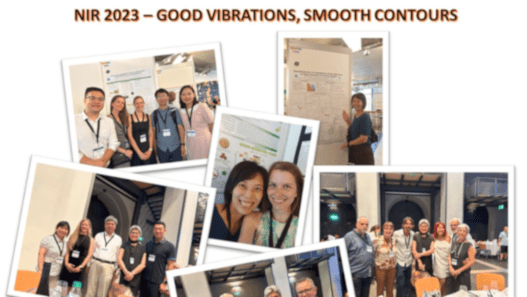
    The conference offered a wonderful opportunity to connect with new acquaintances, strengthen existing relationships, and finally meet, in person, some of the colleagues who had joined our work during the challenging times of the COVID-19 pandemic—individuals who had become online friends and collaborators, yet we had never met face-to-face. It also provided a platform to absorb the latest trends and research directions in near-infrared spectroscopy, offering insights into where the future of this field may lead.

    This conference indeed became a hub of positive energy and harmonious connections (just like the motto promised), reflecting the cherished moments and enduring bonds created during our time together against the stunning backdrop of Innsbruck and the delight of savoring exquisite Austrian cuisine.

     As we look ahead, one thing is certain—the next time we will all meet in Rome, Italy, from 8th to 12th of June in 2025, where NIR2025 will take place, guided by the theme “Light through Centuries”. We are happy to announce that the Aquaphotomics session will be an integral part of this event. We look forward to seeing you in Rome!

  • Aquaphotomics Webinar – Water Coherence and Consciousness –

    Aquaphotomics Webinar – Water Coherence and Consciousness –

    Recording

    The presentation slides can be downloaded from here (PDF).


    We are excited to announce our upcoming webinar with Prof. Dr. Guiseppe Vitiello, an outstanding scientist and distinguished researcher with a rich portfolio of scientific contributions. Prof. Vitiello’s extensive research spans a diverse spectrum of fields, including elementary particles physics, neutrino physics, gauge theories involving spontaneous symmetry breakdown, the Anderson-Higgs-Kibble mechanism, quantum dissipative systems, living matter physics, mathematical models of the brain, linguistics, and even critical atmospheric phenomena such as hurricanes.

    Prof. Vitiello has enjoyed fruitful collaborations spanning several decades. His partnerships include a longstanding one with Emilio Del Giudice since 1983, Giuliano Preparata since 1988, and a notable collaboration with the late neuroscientist Walter J. Freeman since 2003. From 2009 to 2022, he engaged in a significant collaboration with Luc Montagnier, the recipient of the 2008 Nobel Prize in Medicine, focusing on the intriguing subject of electromagnetic properties of DNA. He has been invited lecturer at many international conferences on theoretical physics, neuroscience, biology and medicine and is author of about 300 publications in international journals, chapters in monographic volumes, conference proceedings,  and the books.

    In this upcoming webinar, Prof. Vitiello will show the results of a groundbreaking research about synchronized neuronal oscillations that cover extensive brain regions, observed from rabbits and cats to humans, with near-zero phase dispersion. These oscillations occur in the 12-80 Hz range and are not governed by electric or magnetic fields or chemical diffusion. Instead, they are explained by a dissipative quantum model, where collective neuronal activity emerges from the interactions of cortical neurons. This model describes spatial patterns resulting from symmetry breakdown due to external stimuli and aligns with quantum field theory.

    It accounts for the transition from quantum to macroscopic dynamics, as well as the brain’s self-similarity and scale-free properties observed in the laboratory.

    The webinar will be held, as usual, on the Zoom platform and is free for all who wish to attend. Please mark your calendars for the webinar on October 17th and register, using the provided “Sign up” form.

    We look forward to your participation!


    Time & Date

    Date: 2023/10/17 (Tuesday)
    Starts at: Japan Time (JST) 5:00 PM / CEST 10AM / EDT 4AM
    Ends at: Japan Time (JST) 6:00 PM / CEST 11AM / EDT 5AM


  • Spanish Research Group “Symbiogene” Uses Aquaphotomics to Illuminate Anhydrobiosis Secrets

    Spanish Research Group “Symbiogene” Uses Aquaphotomics to Illuminate Anhydrobiosis Secrets

    Spain’s research group, “Symbiogene,” is leveraging the power of Aquaphotomics to unravel the mysteries of anhydrobiosis. Led by Pedro Carrasco and Myriam Catalá from Universidad Rey Juan Carlos, the group focuses on abiotic stress, anhydrobiosis, microalgae, lichen, and desiccation – key fields for comprehending organisms’ resilience to environmental shifts.

    Symbiogene’s specialization lies in the study of aeroterrestrial microalgae and lichens, renowned for their ability to endure severe dehydration and rehydration cycles. This remarkable survival strategy, known as anhydrobiosis, provides invaluable insights into how life can flourish in the face of climate change and water scarcity.

    Meet the Faces Behind Symbiogene: Pedro Carrasco and Myriam Catalá lead the esteemed research group from Universidad Rey Juan Carlos, Spain. Their expertise in abiotic stress, anhydrobiosis, microalgae, lichen, and desiccation drives forward our understanding of nature’s resilience in the face of changing environments.

    By harnessing the combined prowess of near-infrared spectroscopy and aquaphotomics, Symbiogene meticulously dissects cellular metabolomic profiles. This approach unveils distinctive molecular patterns during stress, shedding light on the intricate links between metabolomic shifts and stress responses. The research is particularly illuminating for plants capable of total dehydration, often referred to as “resurrection plants.”

    Symbiogene’s engagement with Aquaphotomics not only fills gaps in the understanding of water’s molecular behavior during the dehydration of aeroterrestrial algae but also marks a significant stride in advancing anhydrobiosis comprehension. This collaboration holds the potential to drive insights into climate change adaptation and water scarcity mitigation.

    Click here to find out more about Symbiogene

    Click here to see the list of other research groups that are also using Aquaphotomics in their research

  • Symbiogene

    Group name: Symbiogene
    Group leaders : Pedro Carrasco / Myriam Catalá
    Affiliation: Universidad Rey Juan Carlos, Spain
    Research Topics : Abiotic stress, anhydrobiosis, microalgae, lichen, desiccation

    Contact: [email protected]

    Description: Aeroterrestrial microalgae, as well as lichens, are poikilohydric organisms; they cannot regulate their water content and are subject to fluctuations of environmental water. When these organisms lose their water content, they enter a state of anhydrobiosis until the next rehydration, which allows them to resume their metabolism. Allegedly, lichens and their associated phycobionts can survive indefinite dehydration/rehydration cycles and are therefore an interesting model to analyze the response to desiccation stress in a scenario of climate warming and water scarcity.

    Aquaphotomics work: Near-infrared spectroscopy allows the analysis of the metabolomic profile of cells, providing a unique molecular fingerprint that allows the association of metabolomic changes to stress situations. This novel technique, together with aquaphotomics, has made it possible to analyze in depth all the differences at the molecular level, including water, between common plants and those adapted to total dehydration (“resurrection plants”). However, the molecular structure of water during dehydration of aeroterrestrial algae is still unknown.

  • Lecture Announcement at European Researcher’s Night

    Lecture Announcement at European Researcher’s Night

    European Researcher’s Night
    (Organized by EURAXESS Japan)

    From around 16:15-55(JST), 9:15-55(CEST) on July 26th, Professor Roumiana Tsenkova will be giving a talk on Aquaphotomics research activities.
    Please join us!

    26 July, 16:00-18:00 (JST), 9:00-11:00 (CEST)
    Face-to-face participants: 2F, Takigawa Memorial Hall of Academic Exchange, Kobe University, Japan
    Online participation possible
    Pre-registration is required (free of charge).
    To register, please visit
    https://www.office.kobe-u.ac.jp/intl-euraxess/news/20230726.html

  • Aquaphotomics June Webinar – Understanding Macromolecules with Aquaphotomics

    Aquaphotomics June Webinar – Understanding Macromolecules with Aquaphotomics

    Recording


    Dear friends and colleagues,

    We are excited to invite you to our upcoming webinar featuring Dr. Lian Li, associated professor at the School of Pharmaceutical Sciences at Shandong University in China. Dr. Li received his PhD at Shandong University in 2016 and is now a member of Prof. Zang’s research group, where his main research interests are in application and visualization of (near infrared) NIR spectroscopy and Aquaphotomics in pharmaceutical process analysis. In 2022, he received the “Lu Wanzhen Near Infrared Spectroscopy Youth Award” from China Council of Near Infrared Spectroscopy. He was also a winner of the Best poster award at the 4th International Aquaphotomics Conference in 2021.

    In this webinar titled “Application of aquaphotomics in understanding the behavior of macromolecules,” Dr. Li will discuss some typical applications of aquaphotomics in human serum albumin (HSA), peanut allergens, hyaluronic acid (HA), and stevioside analysis which have been investigated in his group. Proteins and carbohydrates are important elements in pharmaceutical manufacturing, and better understanding of the manufacturing process, and the role of water in it, is crucial. Water can be a potential probe to characterize minor, but very important changes. Dr. Li will demonstrate how water can be used as a powerful tool to understand the microworld with aquaphotomics.

    The webinar will take place on June 20 on the Zoom platform and is free for all attendees. Please use the “Sign up” form below to register.

    We look forward to your participation!


    Aquaphotomics June Webinar – Schedule

    Time & Date: 2023/06/20 (Tuesday)

    Starts at: Japan Time (JST) 5:00 PM / Central European Summer Time (CEST) 10:00 AM / Eastern Daylight Time (EDT) 4:00 AM

    Ends at: Japan Time (JST) 6:00 PM / Central European Summer Time (CEST) 11:00 AM / Eastern Daylight Time (EDT) 5:00 AM

  • Aquaphotomics May Webinar – Quantum World of Liquid Water

    Aquaphotomics May Webinar – Quantum World of Liquid Water

    Recording


    Dear friends and colleagues,

    We are excited to invite you to our upcoming webinar featuring Dr. Antonella De Ninno, a distinguished researcher in quantum electrodynamics (QED) coherence in condensed matter and the two-fluids nature of liquid water. Dr. De Ninno obtained her Physics degrees from the University “La Sapienza” of Rome and has been a researcher at the Italian National Agency for New Technologies, Energy and Sustainable Economic Development (ENEA) since 1987, where she has published over 80 research items.

    Her collaboration with famous Italian theoretical physicists Giuliano Preparata and Emilio Del Giudice has led to a deep understanding of the two-fluids nature of liquid water and its role in biology through the concept of quantum electrodynamics (QED) coherence in condensed matter. This theory provides an innovative approach to the supra-molecular structure of liquid water and its exceptional role in biology. Dr. De Ninno has also worked on several experimental layouts, such as FTIR, X-ray fluorescence, and THz spectroscopy, to demonstrate the two-fluids nature of liquid water. She has shown a keen interest in the effect of ions on the structural order of water, and QED has provided insight into the physical mechanism of interaction between extremely low-frequency electromagnetic fields and living systems.

    In this webinar titled “Two fluids in liquid water: theory and experimental observations” Dr. De Ninno will present a series of simple and reliable experiments that demonstrate the two-fluids nature of liquid water and its implications for biology. Biologists have long envisioned such a model since the 1960s to explain experimental observations on the water surrounding cells and biological tissues. Through molecular spectroscopy (FTIR and NIR) of water solutions, dielectric spectroscopy (TH time-domain), and exclusion zone formation, among other observations, Dr. De Ninno will broaden our understanding of liquid water and its unique properties.

    The webinar will take place on May 16th on the Zoom platform and is free for all attendees. Please use the “Sign up” form below to register.

    We look forward to your participation!


     Aquaphotomics May Webinar – Schedule

    Time & Date: 2023/05/16 (Tuesday)

    Starts at: Japan Time (JST) 5:00 PM / Central European Summer Time (CEST) 10:00 AM / Eastern Daylight Time (EDT) 4:00 AM

    Ends at: Japan Time (JST) 6:00 PM / Central European Summer Time (CEST) 11:00 AM / Eastern Daylight Time (EDT) 5:00 AM


  • Professor Yukihiro Ozaki will be awarded the Order of the Sacred Treasure, Middle Cordon

    Professor Yukihiro Ozaki will be awarded the Order of the Sacred Treasure, Middle Cordon

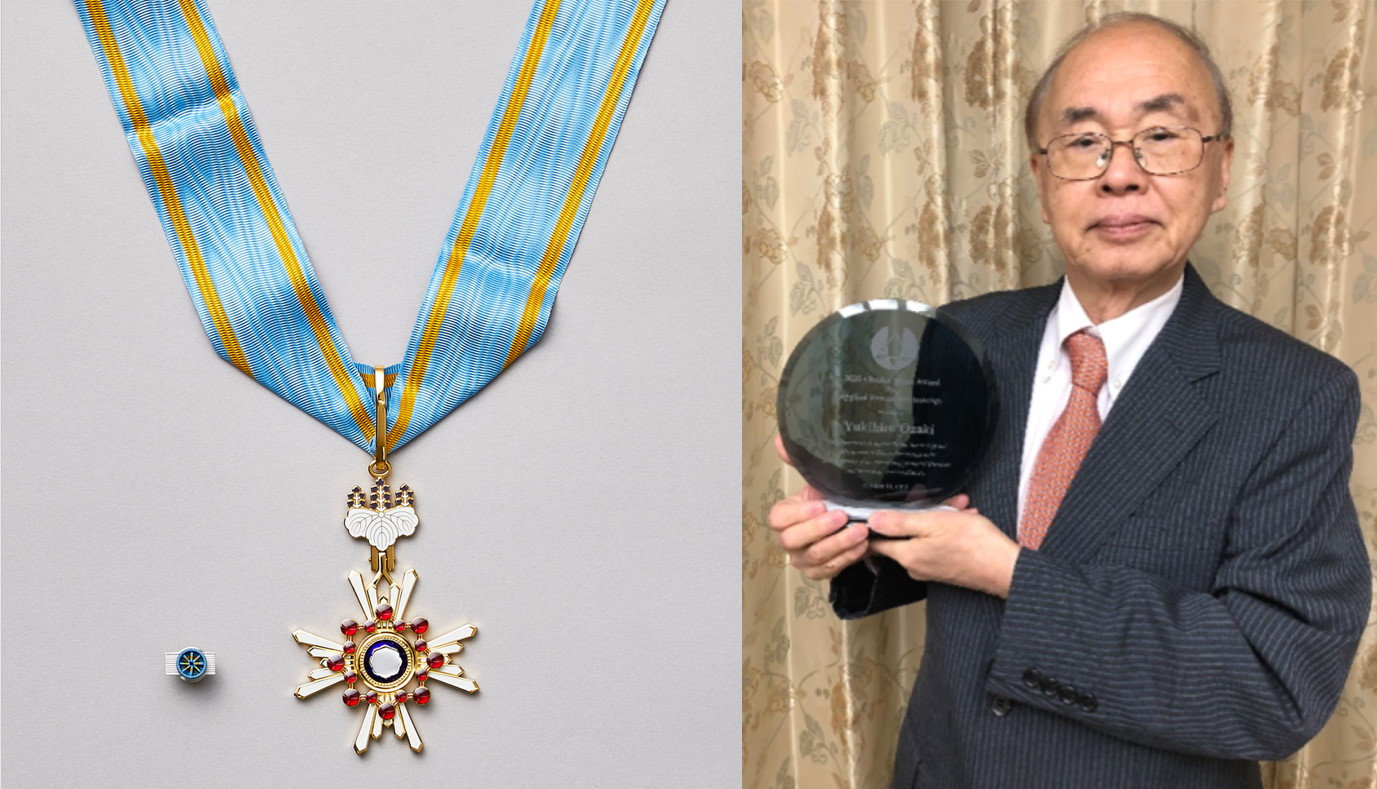
    We are delighted to announce that Professor Yukihiro Ozaki will be awarded the Order of the Sacred Treasure, Middle Cordon. He is a long-standing research collaborator for us and a leading authority of spectroscopy in Japan.

    This Order of Culture is awarded to persons who have made particularly outstanding achievements in public service or in other areas of scientific or cultural development over a long period of time.

    It is a great honour and we have just invited Dr. Ozaki to be a speaker at a webinar organised by our Aquaphotomics International Society in April! A recording of his presentation is available on our website, so please don’t miss it!

    Aquaphotomics Spring Webinar – Top Among the Top

    We wish Dr. Ozaki good health and success in his future endeavours.

  • Deadline for abstract submission for the 3rd Aquaphotomics European Conference has been extended to April 30!

    Deadline for abstract submission for the 3rd Aquaphotomics European Conference has been extended to April 30!

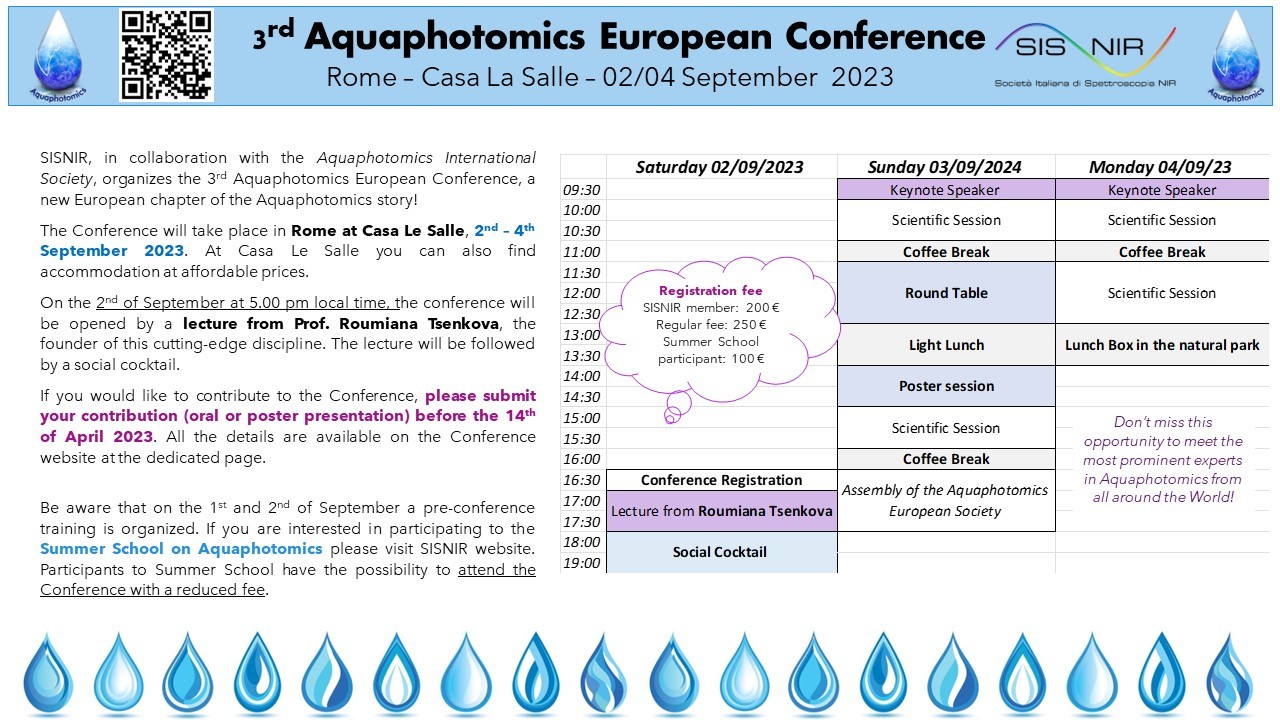
    The deadline for abstract submission for the next Third Aquaphotomics European Conference (Rome, 2nd – 4th September 2023) has been extended to April 30th. Attendees can submit their contribution to the Conference as oral or poster presentation following the instructions reported on the conference website at this link: 
    https://www.3aec.sisnir.org/index.php/abstract-submission

    The Third Aquaphotomics Conference will be a unique opportunity to exchange new ideas and applications on Aquaphotomics and to meet the leading experts about this discipline. 

    For more information please visit the conference website: 
    https://www.3aec.sisnir.org/index.php

    Furthermore, a Summer School on Aquaphotomis will be held in the same location before the conference, from September 1st to September 2nd 2023. The Summer School on Aquaphotomics is a dedicated training aimed at introducing the main aspects of this “omics” discipline to researchers working in the field on NIR spectroscopy and chemometrics.

    Be aware that participants to Summer School have the possibility to attend the Conference with a reduced fee!

    For more information about the Summer School please visit the website: 
    https://www.sisnir.org/summer-school-2023

  • Aquaphotomics Spring Webinar – Top Among the Top

    Aquaphotomics Spring Webinar – Top Among the Top

    Recordings


    Dear friends and colleagues,

    We are delighted to announce that our upcoming webinar will feature the distinguished Professor Emeritus, Dr. Yukihiro Ozaki. As one of the world’s foremost leaders in molecular spectroscopy, physical chemistry, and analytical chemistry research, Prof. Ozaki has made significant contributions to scientific and technological advancements throughout his illustrious career. His expertise encompasses a wide range of spectroscopic techniques, including Infrared, Raman, Near-infrared (NIR), Far ultraviolet (FUV), and terahertz spectroscopy. Prof. Ozaki has also been active in applying quantum chemistry to molecular spectroscopy, forging a strong bridge between these fields.

    Prof. Ozaki has written more than 45 book chapters, 17 books, given more than 120 invited lectures all around the world and published over 1100 papers. He has been the embodiment of the motto of his research group, “top among the top” publishing an amazing 30 papers per year from 1999 to 2017! He has received 13 international and 8 Japanese awards, including the prestigious Medal with Purple Ribbon, given to those who have made significant discoveries and inventions in the field of science and technology.

    But all these accomplishments aside, the human qualities of Prof. Ozaki are what make him truly grand. The things that you can not read in his papers or find on Google. For example, that he organized building of a kindergarten and care center for the kids of his researchers. Or that he raised new generations of spectroscopy leaders; many of his former students are now leaders in their fields across Japan and the world. That if you write an email to him, you will probably have an answer within 1 minute! These “little things” that do not end up on front pages or in statistics are what truly make a person remarkable and a leader. Because he inspires us to follow his example!

    His unwavering mission has always been to promote the science and application of molecular spectroscopy throughout the world. During one interview given at the time he received Charles Mann Award, Professor Ozaki eloquently summarized his most significant contributions as follows: 1) pioneering the study of disease mechanisms through Raman spectroscopy, 2) establishing the application of near-infrared (NIR) spectroscopy to physical chemistry, and 3) proposing the use of attenuated total reflection-far ultraviolet (ATR-FUV) spectroscopy.

    We are honored and privileged to have him as a friend and a great supporter, and we invite you to join us for this special opportunity to learn from one of the best scientists and leaders. For this webinar, Prof. Ozaki will talk to us about his latest research results in the field of NIR imaging.

    The webinar will be held on April 11th on the Zoom platform, and registration is free for all who wish to attend.

    We are looking forward to seeing you there!


    Aquaphotomics Spring Webinar – Top Among the Top – Schedule

    Time & Date: 2023/04/11 (Tuesday)

    Starts at: Japan Time (JST) 5:00 PM / Central European Summer Time (CEST) 10:00 AM / Eastern Daylight Time (EDT) 4:00 AM

    Ends at: Japan Time (JST) 6:00 PM / Central European Summer Time (CEST) 11:00 AM / Eastern Daylight Time (EDT) 5:00 AM