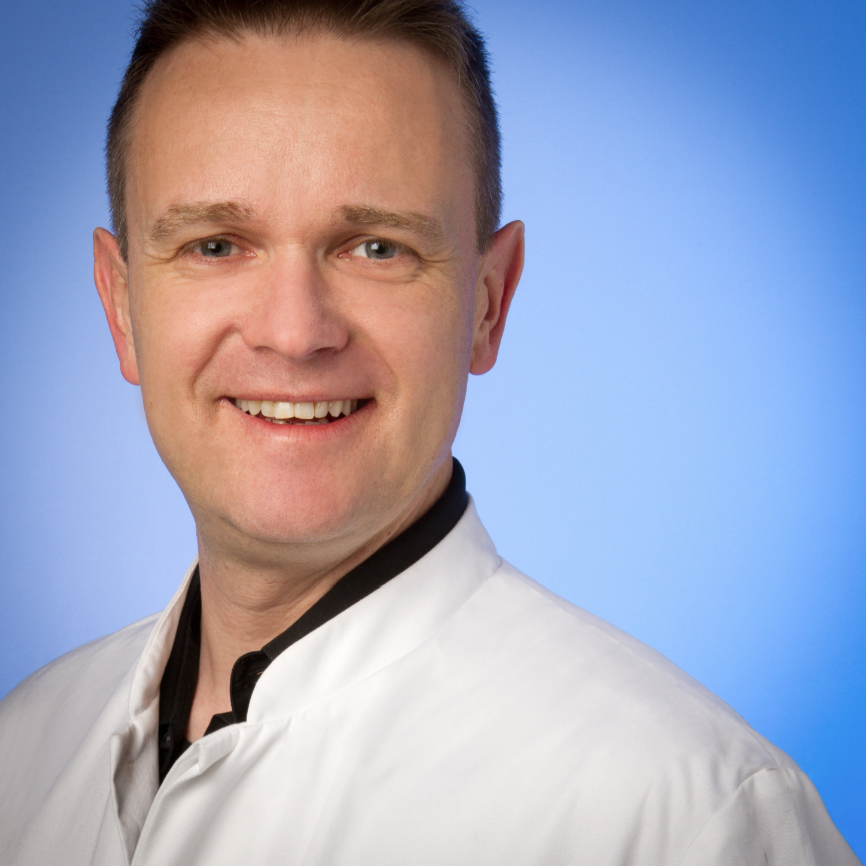
Masato Yasui

Presentation Topic
Water Biology and Medicine: roles of aquaporins (AQP) (Abstract)
Bio
Professor and Chair, Department of Pharmacology
Keio University School of Medicine, Tokyo Japan
1989 Medical License (M.D.), Graduated from Keio University School of Medicine (Tokyo, Japan)
1992 Clinical Resident of Pediatrics, St. Luke’s International Hospital, Tokyo, Japan
1992 Clinical Fellow of Neonatolgy, Tokyo Women’s Medical University, Tokyo, Japan
1997 Postgraduate Student, Dept. of Woman and Child Health, Pediatric Unit, Karolinska Institute, Stockholm, Sweden (Prof. Anita Aperia) (Doctor of Philosophy)
1997-2000 Postdoctoral Research Fellow, Dept. of Biological Chemistry, Johns Hopkins Univ. School of Medicine, Baltimore, USA (Prof. Peter Agre)
2001- Assistant Professor, Depts. of Pediatrics and Biological Chemistry, Johns Hopkins School of Medicine, Baltimore, Maryland, USA
2006 Professor and Chair, Department of Pharmacology, Keio University School of Medicine, Tokyo Japan

Yusuke Morisawa

Presentation Topic
FUV spectroscopic investigations for water and aqueous solutions (Abstract)
Bio
Associate Professor at Department of Chemistry, School of Science and Engineering, Kindai University, was born in 1975 in Kyoto, Japan. He received his Bachelor degree in 1998 from Kwansei Gakuin University, as well as Master (2000) and Doctor (2005) of Science degrees from Kyoto University. He sereved as a Postdoctral fellow of Institute of Atomic and Molecular Sciences, Academia Sinica, Taiwan (2005-2007), and Kwansei Gakuin University (2007-2012), and Lecturer (2012-2016) and Associate Professor (2016-) in Kindai University, Osaka, Japan. He received the Japan Society for Analytical Chemistry Award for Advanced Analytical Technology (JAIMA Award) in 2011 and Spectroscopic Society of Japan Award for Young Scientist in 2013. His current research interest is molecular spectroscopy and its analytical applications in the region from THz to FUV.

Shigeaki Morita

Presentation Topic
Hydration Structure of Intermediate Water in Biomaterials Investigated by Infrared Spectroscopy (Abstract)
Bio
Shigeaki MORITA, Ph.D.
Professor
Osaka Electro-Communication University

Born in 1972 in Tokyo, Japan
Ph.D. (2001), Tokyo University of Agriculture and Technology
2001-2003, Postdoctoral Fellow, Hokkaido University
2003-2007, Postdoctoral Fellow, Kwansei-Gakuin University
2007-2012, Assistant Professor, Nagoya University
2012-2017, present, Associate Professor, Osaka Electro-Communication University
2012-present, Professor, Osaka Electro-Communication University

Yuichi Ogawa

Presentation Topic
Development of 60 GHz Near-field Array Sensor (Abstract)
Bio
Educational Background
April, 1991, Entered Faculty of Agriculture, Okayama University
March.,1995, Graduated from Okayama University
April, 1995, Enter the Graduate School of Agriculture, Okayama University
March., 1997, Graduated from the Graduate School of Agriculture, Okayama University
Ph.D of Agriculture: from Tohoku Univ. in September, 2005.

Business Experience
April 1, 1997, Yanmer Co., Ltd.
July 9, 2001, Assistant Researcher, Engineering Base Research Department, RIKEN
July 1, 2003, Unit Researcher, Kawase Initiative Research Unit, RIKEN
April 1, 2004, Assistant Professor, Graduate School of Agriculture, Tohoku University
July 1, 2005, Associate Professor, Graduate School of Agriculture, Tohoku University
September 1, 2009, Associate Professor, Graduate School of Agriculture, Kyoto University

Current Office
Laboratory of Agricultural Process Engineering, Division of Environmental Science & Technology
Graduate School of Agriculture, Kyoto University
Address: Kitashirakawa-Oiwakecho, Sakyo-ku, Kyoto 606-8502, Japan
E-mail: ogawayu@kais.kyoto-u.ac.jp
URL: http://www.aptech.kais.kyoto-u.ac.jp/e/index.html
Phone: +81-75-753-6169, FAX: +81-75-753-6171

Christian Huck

Presentation Topic
Recent Trend in NIR Spectroscopy including Quantum Chemistry and two-dimensional correlation spectroscopy (Abstract)
Bio
Christian Huck currently holds the positon of a full professor at the Institute of Analytical Chemistry and Radiochemistry, CCB-Center for Chemistry and Biomedicine, Leopold-Franzens University, Innsbruck, Austria. He started his academic career just after finishing his PhD studies in 1998 as a postdoc and an assistant professor in the following. At this time also research in the field of NIRS was started. In 2006 he received the habilitation for analytical chemistry and was appointed as an associate professor by then. After neglecting a call to the University of Stuttgart in 2015 he agreed to a call to the University of Innsbruck. In 2015 and 2016 he was a visiting guest professor at Professor Yukihiro Ozaki´s lab at Kwansei-Gakuin University (Sanda, Hyogo, Japan). Today, Christian Huck is responsible for a broad field of analytical technologies including beside near-infrared spectroscopy (NIRS) also separation and enrichment methods, mass spectrometry (MS) and others. Focusing towards NIRS in his research towards NIRS he has published more than 300 papers and received an h-index of 44 (> 7000 citations). Christian Huck is also the Tomas Hirschfeld Award 2018 winner and is well-known as the editor of NIR News. In his research he focuses on natural compounds including food and medicinal plants, biotechnology (blood and cancer analysis) as well as material analysis.

Xueguang Shao

Presentation Topic
Extracting quantitative information from temperature dependent near infrared spectra (Abstract)
Bio
Xueguang Shao is a professor of analytical chemistry in Nankai University, the director of the Tianjin key laboratory of bio-sensing molecular recognition. He got The Ministry of Education Award for Young Teachers in 2002, Natural Science Foundation Outstanding Youth Fund in 2003, the special allowances of the state council in 2012, and the Lu Wanzhen Award of CCNIRS (China Council of Near Infrared Spectroscopy) in 2018.

The main research area of Prof. Shao is chemometrics and its application in analytical chemistry. Since the 90s of the last century, he has engaged in the studies of near infrared spectroscopy. He developed a series of chemometric methods for NIR spectral analysis, including the methods for spectral pre-processing, outlier detection, variable selection, and the methods for quantitative and discrimination analysis. Great efforts were made for selection of the informative variables from the NIR spectra. Aiming at the problem of low sensitivity of NIR spectroscopy, works for the micro-analysis were conducted based on the combination of chemometric and experimental strategies. In recent years, temperature dependent NIR spectroscopy was proposed and new applications were explored. Besides the theoretical studies, Prof. Shao also developed new techniques for practical applications of NIR spectroscopy, such as the technique for monitoring the industrial production and the method for fast identification of medicines.

Michal Cifra

Presentation Topics
Microwave and optical bioelectrodynamics at the nanoscale and molecular level (Abstract)
Bio
Dr. Michal Cifra, since 2013 head of Bioelectrodynamics research team (Institute of Photonics and Electronics, Czech Academy of Sciences). PhD. 2009, Radioelectronics, (Czech Technical University in Prague, Czechia), Ing. (MSc.) 2006, Biomedical Engineering (University of Žilina, Slovakia). Apart from ~1 year biophotonics research experience from Germany (RWTH, Aachen / IIB, Neuss), he also gained experience with high frequency bioelectronic interfaces (8 months, University of Chicago, USA).

His long term vision is to explore novel paths to future electrodynamic and electronic therapeutic and diagnostic methods in biotechnology and medicine. To fulfil the vision, he and his team develop computational methods and nanotechnology enabled experimental tools to analyze both active and passive electromagnetic properties of biomaterials from the level of molecules to tissues.

Personal websites:
http://www.ufe.cz/en/team/bioelectrodynamics
https://www.linkedin.com/in/michal-cifra-5a5a5437
https://www.researchgate.net/profile/Michal_Cifra

Laboratory website and link:
http://bioed.ufe.cz/

Roumiana Tsenkova

Presentation Topics

Open for public lecture: Aquaphotomics introductory course (bilingual, Japanese & English)
(ワークショップ日本語概要)
(Workshop English Abstract)
(PowerPoint)

Why Aquaphotomics? (Abstract)

Bio
Roumiana Tsenkova is professor and head of laboratory at Kobe University. Recently she proposed aquaphotomics as a new scientific field to study the collective characterization and quantification of pools of water molecules that have the same molecular vibration and hold information on structure, function, and dynamics of organisms or aqueous systems.

Jelena Muncan

Presentation Topic
Applications of Aquaphotomics in Biodiagnostics, Biomeasurements and Biomonitoring (Abstract)
Bio
Dr Jelena Muncan obtained her PhD degree in Biomedical Engineering (2014) at the University of Belgrade, Serbia in the field of non-invasive glucose sensing. In 2017. she received Japanese Society for Promotion of Science post-doctoral research fellowship at Kobe University, Biomeasurement Technology Laboratory of Graduate School of Agriculture where, under guidance of Prof. Dr Roumiana Tsenkova she is researching applications of aquaphotomics for non-invasive mastitis diagnosis in dairy cows. She currently holds a position of an Assistant Professor at the Biomedical Engineering Department, Faculty of Mechanical Engineering, University of Belgrade in Serbia.

Since 2011 she was introduced to the field of aquaphotomics, which considerably shaped all her subsequent research. Her research area is very wide and highly multidisciplinary, encompassing characterization of nanomaterials/materials/biomaterials and their interaction with water, biomedical diagnostics, monitoring and therapy. In all these research projects aquaphotomics plays key role. Her research efforts are directed toward better understanding of the role water has in biocompatibility and function of materials on macro as well as on nano scale. In diagnostics, the quest for water biomarker in body fluids could lead to minimally invasive and non-invasive detection based on the imprint of cumulative changes of all biomolecules with the role in disease pathogenesis. Her ultimate goal is to translate the research results of aquaphotomics to biomedical and other engineering applications.

Jelena Munćan is the author or co-author of more than 60 publications published in international journals and monographs as well as presented at various international conferences worldwide.

Masaru Tanaka

Presentation Topic
Design of soft-biomaterials based on the interfacial water structure for advanced medical devices (Abstract)
Bio
Masaru Tanaka is a professor at Kyushu University. In the period of 1996-2000 he worked for TERUMO Co. and designed novel biocompatible polymers and commercialized as an artificial lung. In 2000 he moved to Hokkaido University and in 2007 he moved to Tohoku University. Stents covered with the self-organized porous 3D films are commercially available in the world clinical market. In 2009 he was awarded a full professorship at Yamagata University. He became a leader of Funding Program for Next Generation World-Leading Researchers (NEXT Program, Japan 2011-2014). He has received several awards, including the SPSJ Asahi Kasei Award for his intermediate water concept based on the role of interfacial water at materials’ interphases. Intermediate water content is a good predictor of biological responses to materials and is using for high-through put materials discovery.