Author: admin

  • Aquaphotomics Study Shows Music Can Change Water’s Molecular Structure

    Aquaphotomics Study Shows Music Can Change Water’s Molecular Structure

    We all know how influential sound can be to us—just think about the baby crying two seats down, the neighbor learning saxophone, the live band performing on the plaza, the playlist you listen to while working out, or the screech of a fork dragging across a plate. Sounds, whether music or noise, affect us in more ways than we realize.

    Scientists from the Yunosato Aquaphotomics Lab in Wakayama, Japan and the Aquaphotomics Research Department at Kobe University in Hyogo, Japan recently used aquaphotomics (a novel omics discipline studying water-light interaction) and near-infrared spectroscopy (a spectroscopic method that uses the near-infrared region of the electromagnetic spectrum) to study the effects of sound on water. They discovered the impact of sounds on water systems may run deeper than anyone thought.

    Previous studies have shown that playing sounds at different frequencies can influence molecules, cells, and organisms. For example, sound can affect the growth, metabolism, and vulnerability of microbes to destruction by antibodies. It can register as a stressor for plants, triggering genetic and stress-response processes effectively enough to keep the plants alive longer than usual without water. Sound has been shown to affect food-intake neural controls in rats, and it can be used to lower the blood pressure of humans diagnosed with high-blood pressure. At the right frequency, sound can even affect our DNA. Based on the results of this study, it looks like sound can affect the “DNA” of water, too.

    A core concept in aquaphotomics is that the water behaves as “collective mirror” for matter and energy. When influenced by internal or external factors, water’s molecular structure changes. Since these changes can be observed by measuring and comparing the water’s electromagnetic (EMG) spectrum before and after or during the influence, water can be used as a sensor of sorts.

    In order to characterize the changes sound caused in the basic physical and chemical properties of water, scientists had Japanese pianist and composer, Acoon Hibino, play music at 432 Hz and 440 Hz, separately, on a Yamaha Motif XF8 synthesizer. They channeled Mr. Hibino’s performance through two Bose L1 compact stereo speakers focused at samples of pure water and mineral water. After several minutes, they measured the electromagnetic spectrum of the samples and isolated the absorbance bands associated with free water molecules, strongly-bonded water molecules, trapped molecules, solvation shells, and other water molecular species. They then compared the bands of the sample groups with those measured from pre-music control groups.

    To compare the spectrums, the scientists created “Aquagrams”. Aquagrams are radial graphs depicting the water spectral patterns of interest at specific bands of the spectrum. According to observed changes in the aquagrams, temperature, salinity, and conductivity, it was concluded that sound stimulated changes in hydrogen bonding that stabilized the samples against environmental influences. More specifically, the 432 Hz frequency promoted crystallization, and the 440 Hz frequency had a weaker and opposite effect enhancing the evaporation and solubility.

    Since the frequencies used affected the two types of water samples in consistently different ways, scientists believe the effect of sound on water is frequency- and water- dependent. If it is, there is potential for scientists to use sound and spectroscopy to differentiate between samples and to apply this principle differently to different water-systems. This study shows that sound can be used to re-organize the bonds in water-based systems.

    For practical applications, these findings are substantial, because there are countless water-based systems in our world. In the medical field alone, the potential for treatment innovation is enormous. Our bodies are a combination of multiple types of water-based systems, and since restructuring or affecting those systems can be used to treat many ailments and illnesses, the results of this study give promising evidence that sound-based therapies can be used in new ways as medical treatments. Since music-based interventions are extremely non-invasive and inexpensive, the breadth of potential for the application of sound-based therapies is as incredible as it is invaluable.

    Read more: Pilot Aquaphotomic Study of the Effects of Audible Sound on Water Molecular Structure

  • Farewell to 2022 – Aquaphotomics Bōnenkai Party

    Farewell to 2022 – Aquaphotomics Bōnenkai Party

    Webinar recording


    Dear Friends,

    In Japan there is a beautiful tradition to have a party at the end of the year. It is called “Bōnenkai” and it is a drinking party where typically friends or co-workers get together to have some drinks and forget all the woes and troubles of the past year enjoying each other’s company.

    It is our pleasure now, to invite you to come to our last webinar this year, Farewell to 2022 – Aquaphotomics Bōnenkai Party which will take place on 2022/12/23 (Friday), 5PM JST (9AM CET). The webinar will be held using Zoom platform as usual; free for all who wish to participate. All you need to do is sign up for attendance using the form below.

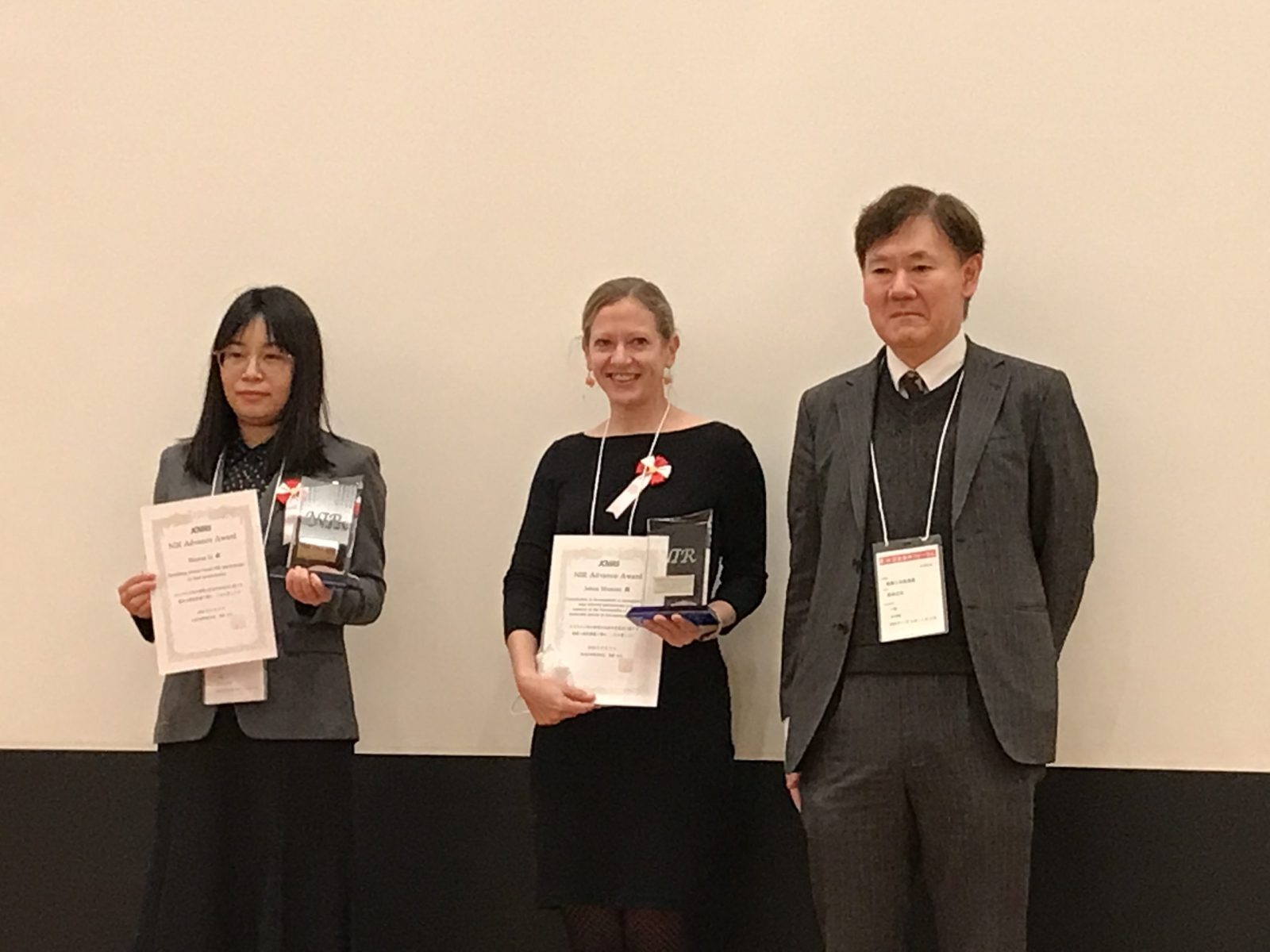
    In this webinar Assoc. Prof. Jelena Muncan will give an overview of the work done during 2022, the major achievements and new discoveries, and Prof. Roumiana Tsenkova will talk about the future plans. And there is a special surprise this year! Aquaphotomics Research Department and Aquaphotomics Society will be presenting an award for the scientific publication which made a significant contribution to our development in the year 2022! The name of the winner is secret and it will be only revealed at the webinar (even the winner doesn’t know)!

    In the spirit of Bōnenkai party let’s remember together the best moments of 2022 and celebrate our achievements and discoveries! We are looking forward to seeing you at the Aquaphotomics Bōnenkai Party! Don’t forget to bring your favorite drink!


    WEBINAR: Farewell to 2022 – Aquaphotomics Bōnenkai Party 

    ~ Webinar Program ~

    Opening of the webinar and introduction by Prof. Roumiana Tsenkova

    “Aquaphotomics achievements and discoveries in 2022” by Assoc. Prof. Jelena Muncan

    Road ahead – Concluding speech by Prof. Roumiana Tsenkova

    ~  Webinar Schedule ~

    Time & Date: 2022/12/23 (Friday)

    Starts at:   Japan Time (JST) 5:00 PM

                      Central European Time (CET) 9:00 AM

    Ends at:     Japan Time (JST) 6:00 PM

                       Central European Time (CET) 10:00 AM

  • Kanaji Masakorala

    Group leader : Kanaji Masakorala

    Affiliation: Department of Botany, Faculty of science, University of Ruhuna, Sri Lanka

    Research Topics: Phytoremediation, environmental toxicology, plant stress biology.

    Contact: [email protected]

    Description: Our research group consist of members having the expertise in different fields, including plant science, environmental science and microbiology. Currently, in our research, we apply multidisciplinary approach to study, monitor and find solutions for environmental issues through the application of different types of molecular biological, chemical and physical analyses.

    Aquaphotomics work: I joined with Aquaphotomics Department in the Faculty of Agriculture, Kobe University Japan, as a postdoctoral researcher and there I learned NIR spectroscopy and aquaphotomics under the guidance of Prof. Dr. Roumiana Tsenkova. In our future research, I hope to apply NIR spectroscopy and aquaphotomics as a holistic biomarker.  

  • New Family Members, New Research Directions

    New Family Members, New Research Directions

    Kanaji Masakorala – Early Diagnosis of Iron Toxicity and Differentiation of iron toxicity tolerant and susceptible rice varieties

    For the past two months we had a great pleasure of working together with, as we call him now – Kanaji san. Before he came to Aquaphotomics Research Department we heard a lot about him – we heard he is a great scientist with incredible knowledge about plants and that he is a much loved and admired Professor. And rightly so! As it also turns out, he is a wonderful ambassador of his country, and all of us now in the Lab would like to visit Sri Lanka and enjoy the beautiful beaches, tasty exotic food and fruits we never even knew existed, and also watch the traditional Sri Lanka dances!

    Our Kanaji san is actually Prof. Dr. Kanaji Masakorala and he has had a very interesting life, travelling around the world, acquiring many skills and nice memories. He is born in Sri Lanka, where at the University of Ruhuna Sri Lanka, he got his bachelor degree in Botany! There he later on joined the Department of Botany as a lecturer. He then commenced a travel around the globe to discover more about the vast world of plants and Botany. In his master studies he specialized in Environmental toxicology at the University of Bergen, Norway and the University of Plymouth, United Kingdom. Then his travels led him to Beijing, China, where at the University of Science and Technology, he completed a PhD degree in Environmental Science in. In his MSc and PhD research, he applied different types of biomarkers in the characterization of abiotic stresses in plants due to exposure to heavy metals hydrocarbons and surfactants and others. He has been working as a Professor in Botany Since 2019 in the Department of Botany, Faculty of science, University of Ruhuna, Sri Lanka. His main research interests are in environmental toxicology, plant stress biology, phytoremediation, bioremediation and bio monitoring. And now he can also add Aquaphotomics to his specialties! He just completed a postdoctoral research through the invitational fellowship received from Society for Promotion of Science (JSPS, Oct – Dec 2022) under the guidance of Prof. Dr. Roumiana Tsenkova. He explored Aquaphotomics as a nondestructive tool to characterize stress caused by iron (Fe 2+ ) toxicity in rice plants at the seedling stage. Our Department was very happy to have him here and we are looking forward to his next, hopefully longer stay! Until then we will continue working together and support him planting aquaphotomics roots in Sri Lanka!

    Lashya Manage – Defining Soil Aquaphotome

    At the beginning of August this year, we were happy to actually welcome our first guest from Sri Lanka, a new post-doctoral fellow Ms. Lashya Manage. Lasha san seems to also be a world traveler, like Kanaji san. She received her Ph.D. from the Department of Agroecology, Faculty of Science and Technology, Aarhus University in Denmark, where she spent 3 years (2015 to 2018) attached to the AGRO team in the Department of Agroecology. Her previous knowledge and research interest in spectral and proximal sensors were well compatible with the activities of AGRO. During her Ph. D. she explored the suitability of the benchtop visible near-infrared diffuse reflected spectroscopy and contemporary pedotransfer functions as effective, rapid, and indirect alternatives to conventional soil analysis. In addition, her project demonstrated that soil moisture effects are closely related to different soil characteristics and their potential to retain water. Her research studies led to the publishing of research articles about how spectroscopy can be used for prediction of different soil characteristics and how the moisture affects the prediction accuracy of spectroscopic measurements. Her previous research team reported that apart from the moisture content, water retention characteristics govern the moisture effect on soil spectroscopy analysis. This is how she became interested in water and soil, and learned about Aquaphotomics.

    Dr. Lashya Manage joined the Aquaphotomic research group in August this year and started her work particularly attached to the Yunosato Aquaphotomics Lab in Hashimoto, Wakayama. Beyond the boundaries of the negative moisture effect, Aquaphotomics has inspired her knowledge to understand water as an information source of providing insight into soil characteristics and functionalities. She has been working in the Yunosato Lab for almost half a year now. In her first study, she investigated the difference in soil types and their characteristics with the variable soil moisture content. Apart from that, she started monitoring soil responses at different stages of plants growth and evaluating the interaction between soil and plant responses by acquiring the NIR spectra from both soil and plant leaves during the corresponding growth stages of the crop. She has presented her first findings at the regional Aquaphotomics Conference in Japan, that took place on 23-24th November in Yunosato, and she is currently working on her first paper on this topic. Together with the Aquaphotomics team and planned research collaborations with Professor Fujitake’s team from the Department of Agrobioscience in Kobe University, their future research will be exploring Aquaphotomics as a novel and holistic approach for investigating soil properties and functions. Lasha san’s hope for the future is that, at the end of this research, she will be able to create soil aquaphotome.

    Alexandra Petrova – Aquaphotomics for Medicine and Healthcare

    The latest and youngest addition to our Aquaphotomics family is Alexandra Petrova. In Japan, we call her Ale san, which sometimes can be heard as Ari san, meaning Miss Ant (so cute! kawaii ◕‿◕✿).

    Ale san is a graduate of the University College of London (UCL), Biochemical Engineering Department and she came to Japan specifically to learn Aquaphotomics and help with applications in medical realm. She is also a keen traveler and her travels also led her to Peru where she got very interested in music and plants and alternative healing modalities. If you met Ale san in Japan, then it is most certain, whoever you are, and wherever you are, she will sooner or later insist on playing traditional Andean ceremonial flute, especially and specifically for you. We asked Alexandra to say something about her and Japan, of her impressions so far and her hopes and dreams for the future. So, here it is.

    ~ Ari chan in her own words ~

    “I have been here for few months now, in Japan, the laboratory of Aquaphotomics, and the horizons are opening for me like nothing I could ever imagine. I am from Bulgaria, so the challenges of living abroad are ever present and ever gifting. Here, the Aquaphotomics family have made this big transition and paramount jump of my life to end with the smoothest possible landing. The laboratory takes part in multidisciplinary projects and has connections with one of the most intriguing scientists on our planet today. This has given me the opportunity to learn about various fields while working on the topics that inspire me the most. In Bulgaria, I lastly worked with IVF and fungal based medicinal supplements. Ultimately, I wish to connect these fields with my knowledge gained here, and the possibilities in medical healthcare. I think many new possibilities can be created with aquaphotomics, such as non-invasive biomonitoring and real-time, quantifiable diagnostics.

    My first project was to learn and apply Aquaphotomics and Multivariate spectral analysis to measure and understand the effect of a Music Based Intervention (MBI). MBI has been used in medicine for thousands of years and is now regaining interest from numerous healthcare practitioners and researchers across the globe. I am currently preparing my first paper based on these results, and I was happy to recently present a poster and oral talk during Japanese Aquaphotomics conference held in Yunosato, Hashimoto. I am also now working on analyzing near infrared spectra of people before and after meditation-based psychotherapy. I am very grateful to be part of the Aquaphotomics family and cannot wait to see what, where and who else this journey will unfold for me.”

  • Aquaphotomics Harvest Webinar Series –  Webinar #2

    Aquaphotomics Harvest Webinar Series – Webinar #2


    Recordings & Publications

    Interactions of Linearly Polarized and Unpolarized Light on Kiwifruit Using Aquaphotomics

    by Damenraj Rajkumar, Rainer Künnemeyer, Harpreet Kaur, Jevon Longdell and Andrew McGlone
    Download the article: https://doi.org/10.3390/molecules27020494


    Investigation of Water Interaction with Polymer Matrices by Near-Infrared (NIR) Spectroscopy

    by Vanessa Moll, Krzysztof B. Beć,Justyna Grabska and Christian W. Huck
    Download the article: https://doi.org/10.3390/molecules27185882


    Changes in Water Properties in Human Tissue after Double Filtration Plasmapheresis — A Case Study

    by Felix Scholkmann, and Roumiana Tsenkova
    Download the article: https://doi.org/10.3390/molecules27123947


    Water as a Link between Membrane and Colloidal Theories for Cells

    by by E. Anibal Disalvo, A. Sebastian Rosa, Jimena P. Cejas and María de los A. Frias
    Download the article: https://doi.org/10.3390/molecules27154994


    Dear Friends and Colleagues,

    It is our pleasure to announce Webinar #2 of the Aquaphotomics Harvest Webinars Series. The second webinar will be held on Thursday, 10th of November, 5PM (JST) and consist of 4 lectures in English, with Japanese subtitles. Each lecture will be around 15 min and 5 min for discussion. 

    Once again, we would also like to express our sincere gratitude and appreciation to Tsuki no Shizuku Foundation for their tremendous support in publishing the first Aquaphotomics Special Issue and in general their support for the aquaphotomics research, projects and publications.

    Please find all the information about the lectures at the schedule below. The webinar will be held using Zoom platform free for all who wish to participate. All you need to do is sign up for attendance using a “Sign up” form provided below the schedule.  

    We are looking forward to seeing you!


    Aquaphotomics Harvest Webinar 2 – Schedule

    Date: 2022/11/10 (Thursday)

    Start: Japan Time (JST) 5:00 PM / Central European Time (CET) 9:00 AM

    End: Japan Time (JST) 6:30 PM / Central European Time (CET) 10:30 AM

    PresenterTopic and Affiliation
    Damenraj RajkumarInteractions of Linearly Polarized and Unpolarized Light on Kiwifruit Using Aquaphotomics (Link to publisher)

    The New Zealand Institute for Plant and Food Research Limited, New Zealand 
    Vanessa MollInvestigation of Water Interaction with Polymer Matrices by Near-Infrared (NIR) Spectroscopy (Link to publisher)

    Institute of Analytical Chemistry and Radiochemistry, University of Innsbruck, Austria 
    Felix ScholkmannChanges in Water Properties in Human Tissue after Double Filtration Plasmapheresis — A Case Study (Link to Publisher)

    Biomedical Optics Research Laboratory, University of Zurich, Switzerland 
    Anibal DisalvoWater as a Link between Membrane and Colloidal Theories for Cells (Link to Publisher)

    Laboratory of Applied Biophysics, Applied Biophysics and Food Research Center (CIBAAL), Argentina
  • Pilot Aquaphotomic Study of the Effects of Audible Sound on Water Molecular Structure

    Pilot Aquaphotomic Study of the Effects of Audible Sound on Water Molecular Structure

    We are very pleased to announce that a new article on Aquaphotomics has been accepted and will be published in Molecules 2022, 27(19), 633. (published: 26 September 2022)

    “Pilot Aquaphotomic Study of the Effects of Audible Sound on Water Molecular Structure” by by Aleksandar Stoilov, Jelena Muncan, Kiyoko Tsuchimoto, Nakanishi Teruyaki, Shogo Shigeoka, and Roumiana Tsenkova

    Abstract
    Sound affects the medium it propagates through and studies on biological systems have shown various properties arising from this phenomenon. As a compressible media and a “collective mirror”, water is influenced by all internal and external influences, changing its molecular structure accordingly. The water molecular structure and its changes can be observed as a whole by measuring its electromagnetic (EMG) spectrum. Using near-infrared spectroscopy and aquaphotomics, this pilot study aimed to better describe and understand the sound-water interaction. Results on purified and mineral waters reported similar effects from the applied 432 Hz and 440 Hz frequency sound, where significant reduction in spectral variations and increased stability in water were shown after the sound perturbation. In general, the sound rearranged the initial water molecular conformations, changing the samples’ properties by increasing strongly bound, ice-like water and decreasing small water clusters and solvation shells. Even though there was only 8 Hz difference in applied sound frequencies, the change of absorbance at water absorbance bands was specific for each frequency and also water-type-dependent. This also means that sound could be effectively used as a perturbation tool together with spectroscopy to identify the type of bio, or aqueous, samples being tested, as well as to identify and even change water functionality.

    The article can be viewed and downloaded at https://doi.org/10.3390/molecules27196332.


    Recent News

  • Aquaphotomics Research Workshop (Nov 23-24) / アクアフォトミス研究会 (11月23日~24日)

    Aquaphotomics Research Workshop (Nov 23-24) / アクアフォトミス研究会 (11月23日~24日)

    The Aquaphotomics research workshop includes the open lectures on November 23, research presentations on the 24th, and an optional study tour on Mount. Koya on the 25th. The program on the 24th will be published soon. For more details, please see the poster below.

    This event is proudly sponsored by

    アクアフォトミクス研究会では、23日に公開講座、24日に研究発表会、25日に高野山研修旅行(希望者のみ)が行われます。24日のプログラムは近日公開予定です。詳しくは、下記のポスターをご覧ください。

    協賛

    参加登録URL:https://forms.gle/GyfauXBHkMhjewyw7

    PDF Download / PDF ダウンロード

  • Aquaphotomics Open Lectures (November 23) / アクアフォトミス公開市民講座 (11月23日)

    Aquaphotomics Open Lectures (November 23) / アクアフォトミス公開市民講座 (11月23日)

    Prof. Ozaki and Prof. Tsenkova will give open lectures for the general public on November 23 at Hashimoto, Wakayama. This is an excellent opportunity to meet the researchers, and take a tour of the Aquaphotomics Laboratory! Their lectures will cover a wide range of topics, including history and future of water research. Please see the poster below for more details.

    This event is proudly sponsored by

    尾崎先⽣、ツェンコヴァ先⽣による、⼀般の⽅を対象とした講演、研究者との交流、アクアフォトミクス研究所の⾒学ツアーを企画致しました。幅広い⽔の研究の歴史と未来について、参加者の⽅々と共に考えることを⽬的とします。是⾮お誘い合わせの上、ご参加下さい。

    協賛

    参加登録URL:https://forms.gle/CZDUhkfTREHp8KD28

    PDF Download / PDF ダウンロード

  • Aquaphotomics Harvest Webinar Series –  Webinar 1

    Aquaphotomics Harvest Webinar Series – Webinar 1


    Recordings & Publications

    Water Spectral Patterns Reveals Similarities and Differences in Rice Germination and Induced Degenerated Callus Development

    by Zoltan Kovacs, Jelena Muncan, Nobuko Ohmido, George Bazar and Roumiana Tsenkova
    Download the article: https://doi.org/10.3390/plants10091832


    Correction of Temperature Variation with Independent Water Samples to Predict Soluble Solids Content of Kiwifruit Juice Using NIR Spectroscopy

    by Harpreet Kaur, Rainer Künnemeyer, and Andrew McGlone
    Download the article: https://doi.org/10.3390/molecules27020504


    Identification of Stingless Bee Honey Adulteration Using Visible-Near Infrared Spectroscopy Combined with Aquaphotomics

    by Muna E. Raypah, Ahmad Fairuz Omar, Jelena Muncan, Musfirah Zulkurnain and Abdul Rahman Abdul Najib
    Download the article: https://doi.org/10.3390/molecules27072324


    Aquaphotomic, E-Nose and Electrolyte Leakage to Monitor Quality Changes during the Storage of Ready-to-Eat Rocket

    by Laura Marinoni, Marina Buccheri, Giulia Bianchi, and Tiziana M. P. Cattaneo
    Download the article: https://doi.org/10.3390/molecules27072252


    Dear Friends and Colleagues,

    It is our pleasure to announce a new aquaphotomics webinar, to mark the closing of our first Aquaphotomics Special Issue – Exploring the Water Molecular Systems in Nature published by the Molecules Journal. The Special Issue has been very successful and we are grateful to all the scientists who contributed with their latest research findings to the continuous growth and expansion of aquaphotomics.

    We would also like to express our sincere gratitude and appreciation to Tsuki no Shizuku Foundation for immense support we received in publication of the Aquaphotomics First Special Issue and, in general, for providing the support for aquaphotomics research, projects and publications.

    Therefore, it is our pleasure today to announce our Aquaphotomics harvest Webinars Serie, which will feature presentations of the papers published with the support of the Tsuki no Shizuku Foundation. The first webinar in the series of two, will be held on Wednesday, 21st of September, 5PM (JST) and consist of 4 lectures in English, with Japanese subtitles. Each lecture will be around 15 min and 5 min for discussion.  

    Please find all the information about the lectures at the schedule below. The webinar will be held using Zoom platform free for all who wish to participate. All you need to do is sign up for attendance using a “Sign up” form provided below the schedule.  

    We are looking forward to seeing you!


    Aquaphotomics Harvest Webinar 1 – Schedule

    Date: 2022/09/21 (Wednesday)

    Start: Japan Time (JST) 5:00 PM / Central European Summer Time (CEST) 10:00 AM

    End: Japan Time (JST) 6:30 PM / Central European Summer Time (CEST) 11:30 AM

    PresenterTopic and Affiliation
    Zoltan KovacsWater Spectral Patterns Reveals Similarities and Differences in Rice Germination and Induced Degenerated Callus Development

    Full professor, Department of Measurements and Process Control Institute of Food Science and Technology Hungarian University of Agriculture and Life Sciences, Hungary  
    Harpreet KaurCorrection of Temperature Variation with Independent Water Samples to Predict Soluble Solids Content of Kiwifruit Juice Using NIR Spectroscopy

    Scientist, The New Zealand Institute for Plant and Food Research Limited, New Zealand  
    Muna E.RaypahIdentification of Stingless Bee Honey Adulteration Using Visible-Near Infrared Spectroscopy Combined with Aquaphotomics

    Postdoc Fellow, School of Physics, University of Science Malaysia, Malaysia
    Laura MarinoniAquaphotomic, E-Nose and Electrolyte Leakage to Monitor Quality Changes during the Storage of Ready-to-Eat Rocket

    Researcher, The Council for Agricultural Research and the Analysis of Agricultural Economics, Italy


  • The Aquaphotomics Children are Growing   – part 4

    The Aquaphotomics Children are Growing   – part 4

    Jelena Muncan on the day of her promotion to Specially Appointed Associate Professor, with Yoko Osafune, an Aquaphotomics researcher currently on training from Dr. Recella Co.Ltd. Jelena is bowing to express her gratitude for the beautiful flowers and congratulations she received from Dr. Recella.

    In June, our specially appointed assistant professor Jelena Muncan, has been promoted to an Associate Professor! We have asked Jelena to tell us about how she feels about it after her meeting with the Dean of the Faculty of Agriculture at Kobe University. “First of all,”, she said, “I feel a lot of gratitude, especially when I heard the Dean saying how our Department is making a great contribution to the University with our research and publications. This was really beautiful to hear that we make a difference and that our work is appreciated. And, I always feel very grateful to Japan and to Prof. Tsenkova for the opportunity to be able to work on something I love and to grow. It is now 5 years since I became a part of Aquaphotomics team in Kobe, and I can only describe this time as an immense growth in my knowledge, abilities and ideas. And I would also like to say that I am so grateful to be surrounded by incredible people; Prof. Tsenkova’s laboratory has always had amazingly talented and hard-working people, and it is such a pleasure to live in that atmosphere every day. I also have to say a big “THANK YOU” to Recella Co. Ltd. The company’s donation made it possible to establish the new Aquaphotomics Research Department and to proceed with our exploration of water”.