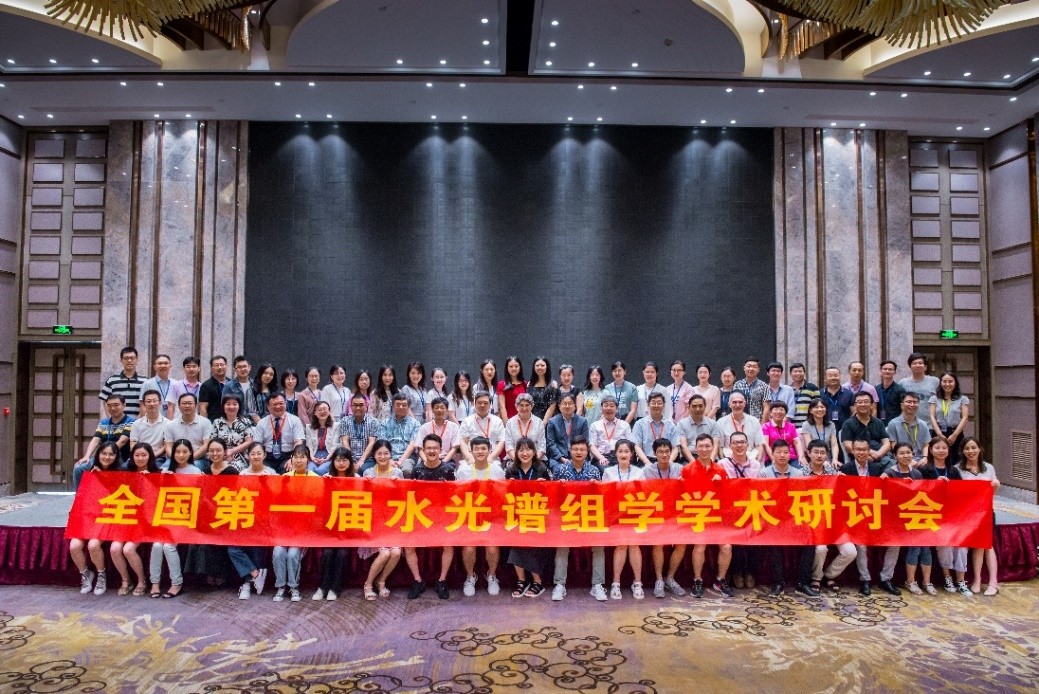
From the 21st
to 23rd of July, 2019, the “First Chinese Conference on
Aquaphotomics” was held in Jinan, China. This event was organized by Professor
Hengchang Zang (Shandong University) and Professor Xueguang Shao (Nankai
University). The event was hosted by China Council of Near Infrared
Spectroscopy (CCNIRS), jointly organized by School of Pharmaceutical Sciences,
Shandong University, and sponsored by Bloomage Biotechnology Corporation
Limited.
The Conference
brought together water researchers, students and users of the technology from a
wide variety of backgrounds, applications and industries to present, see and
discuss current developments in aquaphotomics. There were more than 110
participants from a wide range of research fields, including pharmacy, food and
chemical analysis, photobiology,
petrochemistry,
equipment and software suppliers.
The theme of
this conference was “Application of Spectroscopy in Aquaphotomics”. During the
conference, researchers communicated and discussed various topics, such as the
origin of aquaphotomics, methods of aquaphotomics, various applications in
medicine and different industrial branches, specifics of instruments and probes
for water research and so on. Experts discussed in depth and called for more
researchers to join the study of water which may seem to be a simple substance,
but it is a huge world to explore.
The conference
invited Professor Dr Roumiana Tsenkova (Chairperson of the International
Council for Aquaphotomics and a founder of aquaphotomics) and Hoeil Chung (Secretary-General
of Asian NIR Consortium) to give cutting-edge research presentations. Prof.
Hengchang Zang (Shandong University), Prof. Xueguang Shao (Naikai University),
Prof. Jingyan Han (Peking University), Prof. Xinghua Xia (Nanjing University),
Prof. Kexin Xu (Tianjin University), Dr. Xiu’e Jiang (Changchun Institute of
Applied Chemistry, Chinese Academy of Sciences) and Dr. Xueping Guo (Bloomage Biotechnology
Corporation Limited) shared the research results of their laboratories. Most of
the reported achievements were focused on applications in basic research with a
fresh approach to studying using water as a source of information, but many works in the areas of medicine, life
sciences etc. were also presented.
After the
meeting, the experts called for the establishment of the “Chinese Council of Aquaphotomics”
and regular discussions of the topics to promote the development of this
scientific discipline. The hope of the organizers is that regular, successful
conference meetings will attract more people to join this research field, establish
wider network of scientists interested in the research of water molecular
matrix and application of the research findings in industry and everyday-life
applications, thus helping the progress of human society.
We are very pleased to announce that a new review article on Aquaphotomics has been published in “Molecules” as part of the “Special Issue Advances in Near Infrared Spectroscopy and Related Computational Methods.”
“Aquaphotomics—From Innovative Knowledge to Integrative Platform in Science and Technology” by Jelena Muncan and Roumiana Tsenkova (Published: 28 July 2019)
Aquaphotomics is a young scientific discipline based on innovative knowledge of water molecular network, which as an intrinsic part of every aqueous system is being shaped by all of its components and the properties of the environment. With a high capacity for hydrogen bonding, water molecules are extremely sensitive to any changes the system undergoes. In highly aqueous systems—especially biological—water is the most abundant molecule. Minute changes in system elements or surroundings affect multitude of water molecules, causing rearrangements of water molecular network. Using light of various frequencies as a probe, the specifics of water structure can be extracted from the water spectrum, indirectly providing information about all the internal and external elements influencing the system. The water spectral pattern hence becomes an integrative descriptor of the system state. Aquaphotomics and the new knowledge of water originated from the field of near infrared spectroscopy. This technique resulted in significant findings about water structure-function relationships in various systems contributing to a better understanding of basic life phenomena. From this foundation, aquaphotomics started integration with other disciplines into systematized science from which a variety of applications ensued. This review will present the basics of this emerging science and its technological potential.
We are sad to announce that Karl Norris, the founder of NIR spectroscopy, passed away on July 17, 2019. Rightly known as the “father of NIR”, he was also a great friend and support to many of us in the aquaphotomics community.
Adding spectra of water to the spectra of protein will never give us the spectra of the same protein in water
– Karl Norris
“His words inspired me very much in my work on aquaphotomics. He was the first to tell me ‘well done’, after presenting our work on the difference of the water spectral pattern of healthy and mastitis cows milk in Korea, in 2001,” said Prof. Tsenkova.
Our deepest sympathies to his family and all of you who are saddened by this loss.
Affiliation: Leibniz Institute for Agricultural Engineering and Bioeconomy (ATB), Germany
Research Topics: fruit quality; irrigation; oxygen shortage; spatially resolved spectroscopy, frequency based spectroscopy
Description
The group Prec_Hort works on research questions related to precise production measures in fruit growing. The group is active in the development of optical sensors and turning the signals into plant information. The plant information obtained is used in the agronomic processes. The Prec_Hort work group is located in the Leibniz Institute for Agricultural Engineering and Biotechnology (ATB), Potsdam, Germany. Here we have an optical laboratory and an experimental station providing some two thousand apple trees with two cultivars in random design and sweet cherry trees capturing >70 varieties to run experiments. We are a group of five researchers in various steps of our careers supported by excellent engineers.
Aquaphotomics work
Our research questions target the following three steps to integrate sensors in the precise fruit production:
Characterisation of physical properties of fresh fruit
The in-situ assessment of fruit by means of spectral-optical (multi- and hyper-spectral methods in the visible and near infrared wavelength range, time-resolved laser-induced fluorescence spectroscopy, spatially resolved spectroscopy [backscattering imaging]) and whole trees by means of light detection and ranging laser scanners.
Applications of Precision Horticulture such as zone-specific harvest management and more precise irrigation management considering soil zones, plant growth (leaf area) and fruit developmental stage
Any exchange within Aquaphotomics on the optical sensing and its application would be very interesting to us.
The First Chinese Conference on Aquaphotomics will
be held on 21 to 23 July, 2019 in Jinan, Shandong, China. The theme of this
conference is “Application of Spectroscopy in Aquaphotomics”. The conference is
organized by China Council of Near Infrared Spectroscopy, CCNIRS, School of
Pharmaceutical Sciences, Shandong University and Nankai University. And it is
sponsored by Bloomage Biotechnolgy Corporation Limited.
The Conference Organization:
The
Conference Chair:
Hengchang Zang, Shandong University
and Xueguang Shao, Nankai University
The Organizing Committee Chair:
Yiping Du, East
China University of Science and Technology and Xueping Guo, Bloomage Biotechnolgy
Corporation Limited
The keynote
speakers:
Prof. Roumiana Tsenkova
(Kobe University)
Prof. Hoeil
Chung (Hanyang University)
Prof. Jingyan
Han (Peking University)
Prof.
Xinghua Xia (Nanjing University)
Prof. Kexin Xu (Tianjin
University)
Prof.
Xiue Jiang (The Changchun Institute of Applied Chemistry)
Prof. Xueguang
Shao (Nankai Univerisity)
Prof. Hengchang
Zang (Shandong University)
Dr.
Xueping Guo (Bloomage Biotechnolgy Corporation
Limited)
Program:
July 21,
Registration
July 22, 8:30 – 18:00
Open lectures & Forum for young researcher
July 23, A visit
to Bloomage Biotechnolgy Corporation Limited
Welcome all
researchers from the world to join the conference.
Aquaphotomics sheds light on how plants control their water structure to survive
A small group of plants known as “resurrection plants” can survive months or even years without water. The research team of Kobe University’s Graduate School of Agricultural Science, led by Professor Dr Roumiana Tsenkova, in collaboration with a research group from Agrobioinstitute in Sofia, Bulgaria led by Professor Dr Dimitar Djilianov, made a significant step forward in understanding how they do it.
Using a pioneering aquaphotomics approach and completely
non-destructive way of monitoring, the entire processes of drying and subsequent
rehydration of one such plant – Haberlea
rhodopensis – were compared to the same processes for its non-resurrection relative.
The results showed that during drying, the resurrection plant performs fine
restructuring of water in its leaves, preparing itself for the dry period by
accumulating water molecular dimers and water molecules with 4 hydrogen bonds,
while drastically diminishing free water molecules. This regulation of water
structure is thought to be the mechanism of how the plant preserves its tissues
against dehydration-induced damages, and allows it to survive in the dry state.
The discovery that water structure is important for preservation of the plants
during drought stress opens up a new direction for bioengineering and improving
the drought tolerance ability of plants.
The research article was published in the online edition of Scientific Reports on February 28 at 10AM (UK time). It can be accessed from the following link: https://www.nature.com/articles/s41598-019-39443-4 .
Life
and water are intrinsically tied together. And yet, among living creatures
there are some organisms able to survive long periods without water. They are
called anhydrobiotic organisms. Among these, a small group of plants known as “resurrection
plants” can survive long
periods with almost completely desiccated vegetative tissues and recover fast
and fully when water is available again. Enormous progress has been made
recently at various levels to shed light on the mechanisms behind desiccation
tolerance of resurrection plants. Understanding this phenomenon may help us use
targeted genetic modifications to produce crop plants able to tolerate
dehydration and adapt better to climate changes, in addition to better
understanding of the role of water in life.
It is
well established that resurrection plants have an array of adaptions and
mechanisms which help them cope with the effects of dehydration – all the efforts of these adaptations
are directed toward protecting the integrity of cellular structures and
protection against oxidative stress. Little or no attention was paid so far to
the role of water, as a partner during desiccation and recovery after severe
stress. And yet all these organisms, despite producing different protective
compounds, have one thing in common – water. Water in living
organisms is a complex molecular matrix made of a defined number of different water
molecular structures which are constantly being shaped by other components
(biomolecules) and environmental influences.
In this
research, Professor Dr Roumiana Tsenkova and Professor Dr Djilianov teams
studied one of the resurrection plants – called Haberlea rhodopensis. This plant, together with around only 350 hundred
plant species on Earth, has an ability to survive very long periods of extreme
dehydration, and then quickly, just hours after rewatering, it miraculously
recovers to its fully functional, normal, living state.
Figure 1.Haberlea rhodopensis, a resurrection plant species, was used as a model system to study the underlying mechanisms of extreme desiccation tolerance
Using near infrared light, in a completely non-destructive
way, they monitored the processes of desiccation and rehydration of Haberlea rhodopensis plant and its
relative non-resurrection plant species Deinostigma
eberhardtii.
Near infrared spectroscopy and the novel “Aquaphotomics” approach
developed by Prof. Tsenkova provided insight into the structural changes of water
molecules in leaves of the plants and how they change during dehydration and
rehydration. And for the first time it was observed that the water structure in
the two plants, which are botanically very similar, in fact is drastically
different.
The simple measurements of water content of the leaves
revealed that Haberlea rhodopensis
readily and very quickly reduces the water content to only 13%, as if it knows
that it can survive without it (Figure 2). Deinostigma
eberhardtii, on the other hand, tried hard throughout the dehydration to
keep the water up until the point when it finally lost the battle (which is
around 35% of water content, after which it cannot recover). However, when the
structure of water molecules was examined during dehydration, it showed marked
differences between the plants.
Figure 2. Changes in the relative water content (RWC %) during desiccation and subsequent rehydration in Haberlea rhodopensis (♦) and Deinostigma eberhardtii (◊) respectively (Kuroki, S. et al. Water molecular structure underpins extreme desiccation tolerance of the resurrection plant Haberlea rhodopensis. Sci. Rep. (2019). doi:10.1038/s41598-019-39443-4)
When Haberlea
rhodopensis was losing water, it kept the number of certain water molecular
species – free water molecules, water dimers, trimers and more hydrogen bonded
water molecules – in the same ratios (Figure 3). While the numbers of these
molecules diminished, their relationship was kept constant, suggesting
orchestrated efforts by the plant to keep the water in a certain state. Such
ability was not observed in Deinostigma
eberhardtii, and the ratios of water species in the leaves randomly fluctuated.
Drastic
differences of the water structure in the leaves were observed when both plants
were in the completely dried state. In this final phase, Haberlea rhodopensis radically diminished free water molecules
which are very important for all metabolic processes, and accumulated water
dimers and water molecules with 4 hydrogen bonds. Deinostigma eberhardtii, in contrast never showed any such radical
transformation of water structure. Up to the very last moment, even in the
completely dried state it still had a lot of free water molecules, but now
involved in spoliation and decay processes
Figure 3. Dynamics of different water species during dehydration and rehydration of Haberlea rhodopensis and Deinostigma eberhardtii. Relative absorbance of water species in Haberlea rhodopensis (A) and Deinostigma eberhardtii (B), during desiccation and subsequent rehydration (Sr – protonated water clusters, S0 – free water molecules, S1 – water dimers, S2, S3 and S4 – water molecules with 2, 3 and 4 hydrogen bonds, respectively) (Kuroki, S. et al. Water molecular structure underpins extreme desiccation tolerance of the resurrection plant Haberlea rhodopensis. Sci. Rep. (2019). doi:10.1038/s41598-019-39443-4)
During rehydration, Haberlea
rhodopensis showed the same orchestrated dynamics of reorganization of
water structure, by performing orderly incremental changes of mostly all water
species.
This research showed for the first time that the structure
of water, not its content, is what matters to the survival of the organism. When
people think about life, we often associate dynamic features with the processes
in living systems. And yet, in this peculiar plant, in the absence of visible
signs of ongoing metabolism, achieving a specific water structure was its
survival tool.
As a result, the study performed by Prof. Tsenkova sheds
some light on what may be the most fundamental feature of a living system – it is
the structural organization, rather than the dynamics, that is at its
core. And the structure of water is shaped by the numerous substances produced
in the cells. These may be sugars, amino acids, or other biomolecules, but
their final goal is achievement of a certain state of water molecular structure
which allows the preservation of tissues and prevention of damage.
This pioneering
research adds to our growing understanding of the mechanisms by which some
organisms achieve their remarkable tolerance to extreme dehydration. It
discovered a novel target for modification in order to achieve better tolerance
to drought in plants, which obviously can be achieved using different
strategies (sugars, amino acids, proteins etc.) as long as they exert such
influence on water molecular structure that would lead to decrease of free
water molecules and increase of hydrogen bonded water. The aquaphotomics near
infrared spectroscopy method allows direct, non-destructive insight into the
living processes and water structure and dynamics in real time and is as a
valuable new tool for studying not only the abiotic and biotic stress in
plants, but many other phenomena in living systems.
The 3rd Aquaphotomics
International Symposium was held from 2 to 6 December at the Westin Awaji
Island Resort situated at a beautiful location of Awaji Island in Hyogo
Prefecture, Japan. This year’s Symposium theme – “Water – Exploring Water
Molecular Systems in Nature” gathered researchers from all around world to
present their findings and learn more about water’s incredible properties, and
functions in various aqueous and biological systems.
More than 140 delegates from 20 countries
during the course of five days had an opportunity to attend the bilingual open
lecture, pre-conference workshop, listen to 36 keynote and invited lectures and
see 28 poster presentations.
The Symposium was opened by its
chair-person and founder of aquaphotomics prof. Dr Roumiana Tsenkova, who
during a lecture open to all the public presented the main concepts, principles
and contributions of aquaphotomics in not only the field of water science, but
life science and technological applications that can stem from the utilization
of the acquired knowledge. The lecture was followed by an aquaphotomics
workshop which intended to help attendants navigate the complex world of
chemometrics and data analysis used in aquaphotomics. Dr Dusan Kojic from Keyo
University in Tokyo shared his approach for enhancing subtle differences in
complex spectra of aqueous systems by the application of spectral component
analysis. Dr Ali Gahkani, from Aunir, United Kingdom, this year’s winner of the
Aquaphotomics shootout session at the at the International Diffuse Reflectance
Conference (IDRC), in Chambersburg, Pennsylvania, through an interactive
presentation showed the way to drastically improve effectiveness of
quantification and classification of the NIR spectra by applying the covariance
weighting approach aimed at elimination of interferent signal. Dr.Med.Uni.
Bernhard Pollner from Medical University of Innsbruck, Austria and Dr. Zoltan
Kovacs, Associate Professor from Szent Istvan University, Hungary introduced
the “aquap2” software package for R-project programming environment which they
themselves developed specifically to be suited for the aquaphotomics data
analysis. Dr. Federiko Marini, Associate Professor at Sapienza University of
Rome and an expert in chemometrics shared his advices on which chemometric
tools he found to be most useful for the aquaphotomics data analysis. The
workshops were really well received, attracted numerous questions from the
audience and we could only hope that the shared experience of the workshop
instructors would contribute to better data analysis in aquaphotomics community
as well as result in new publications and perhaps novel applications.
Rich Symposium program included many keynote and invited lectures with topics spanning from fundamental water research up to the various points of practical applications of aquaphotomics. The fundamental research covered interaction of light of all frequencies with water and findings that resulted from it. The program was divided into sessions: X-ray spectroscopy of water, UV spectroscopy of water, THz spectroscopy of water, Chemometrics, The role of water in health, Biomedical applications, Polymer-water interaction and biocompatibility, and many others. Several keynotes speakers – Dr. Craig Shwartz (X-ray spectroscopy of water), Prof. Dr. Koichiro Tanaka (THz spectroscopy of water), Prof. Dr. Hiro-o Hamaguchi (Formation of “nano-ice” in cold water), Prof. Dr. Gerald Pollack (Exclusion zone water and its role in health), Prof. Dr. Masaru Tanaka (Role of water in biocompatibility), Prof. Dr. Yasui Masato (Aquaporins) and Dr. Michal Cifra (Bioelectrodynamics), Prof. Dr Xueguang Shao (Chemometrics) delivered really novel and exciting findings and provoked many questions from the audience. The full list of speakers, their biographies and presentations can be found at the official conference website (https://conference.aquaphotomics.com/ ).
This year’s Symposium also made a
significant step towards the future development of aquaphotomics not only as a
scientific field, but also as an international organization. The efforts of the
past few years finally came to fruition with the establishment of Aquaphotomics
International Society (IAQPS). The Society is established with the aim to
promote and facilitate integration of aquaphotomics knowledge into all areas of
life sciences, thereby contributing to better understanding of water-light
interaction and structure and functionalities of water species in aqueous and
biological systems. During the 1st General Assembly officially,
after the attendees were introduced to the organizational structure, vision and
mission, by majority of the votes Prof. Dr. Roumiana Tsenkova was elected as
its president, Univ.-Prof.Mag.Dr. Christian Huck and Prof. Dr. Masato Yasui
were elected as vice-presidents and Prof. Dr. Shigeaki Morita as a treasurer,
while Dr Everine van de Kraats will serve as a secretary of the Society. More
than 15 officers in the Society Board will be in charge of European and
Japanese liaison, as well as for development of various aspects of
aquaphotomics research, technological development, promotion, education and
others. Prof. Dr. Mutsuo Iwamoto, Prof. Dr. Yukihiro Ozaki, and Prof. Dr.
Hiro-o Hamaguchi, will serve as members
of the The Advisory Board of the Society. Currently, the membership is free for
all who are interested in aquaphotomics (http://qoy.vxf.mybluehost.me/).
It is expected that Society will play pivotal role in the future development of
aquaphotomics-based research and aquaphotomics-based technological application.
The best poster presenters were selected based on the largest number of votes from the delegates. The Poster Awarding Committee with three judges – Prof. Dr. Xuegang Shao from Nanking University, Univ.-Prof.Mag.Dr. Christian Huck from University of Innsbruck and Dr. Cristina Malegori from University of Genova had a difficult task of monitoring the voting. Among 28 posters displayed, three caught the most attention from the audience. The best posters from this year’s symposium were presented by Ms. Xiaoyu Cui from Nankai University in China (High dimensional chemometric algorithms for analyzing temperature dependent near infrared spectra), Prof. Dr. Angelina Kisselova, from Medical University in Sofia, Bulgaria (Pilot study of mouthwash Yume water) and Ms. Yuri Nakamura from Isol Technica, Japan (Use of the functional water for waterproofing on the highway concrete slab).
The Symposium also had a rich social program – the guests had an opportunity to visit the magnificent gardens of Westin Awaji Island Resort, during the Banquet they experienced the famous Tea ceremony and enjoyed marimba musical pieces and traditional Japanese music. During the final two days a tour of the Japanese sacred mountain Mt. Koya was organized, where guests visited several temple complexes and then afterwards, had a relaxing time at the Yunosato spa in Wakayama province.
The Symposium was deemed a great success
and a very inspirational time for all who attended.
今回のシンポジウムでは、「自然界における水分子システムの探求」(Exploring
Water Molecular Systems in Nature)というテーマのもと、水の様々な特異性とその機能性の理解および生体・水溶液・食品など、水を有するものに対して水が持つ役割の理解をしようと努める世界中の研究者を集めることを目的としました。
「A Poor Man’s Guide to AquaPhotomics: Analysis of Variance in
Near-Infrared Spectra of Water」Dusan Kojic氏(慶応義塾大学)、「Removing interference signal from NIR spectra」Ali Gahkani氏(Aunir)、「Aquaphotomics multivariate analysis
tools – aquap2」Zoltan Kovacs氏(Szent Istvan大学)とBernhard Pollner氏(インスブルック医科大学)、「Chemometric tools for aquaphotomics」Federico Marini氏(サピエンツァ大学)
「X-RAY AND UV-SPECTROSCOPY」Craig Schwartz氏(スタンフォード大学SLAC)、「CHEMOMETRICS」Xueguang Shao氏(南開大学)、「THZ
SPECTROSCOPY」田中耕一郎氏(京都大学)
・応用セッションの基調講演
「Nano-ice” forms in cold water and causes the density maximum anomaly」浜口博雄氏(国立交通大学)「The fourth phase of water: a central role in health」Gerald Pollack氏(ワシントン大学)、「Design of
soft-biomaterials based on the interfacial water structure for advanced medical
devices」田中勝氏(九州大学)、「Water biology and medicine:
roles of aquaporins (AQP)」安井正人氏(慶応義塾大学)、「Microwave
and optical bioelectrodynamics at the nanoscale and molecular level」Michal Cifra氏(Institute of Photonics and
Electronics)
本シンポジウムにおいては、2日目にアクアフォトミクス国際学会「Aquaphotomics International
Society(IAQPS)」が設立されました。まず、Everine van de Kraats氏から国際アクアフォトミクス国際学会設立に関する提案がなされ、多数の参加者の賛同を得ました。その後、第一回国際アクアフォトミクス総会では、改めて以下の設立趣旨および目的が説明されました。
The “3rd Aquaphotomics International Symposium – Exploring Water Molecular Systems in Nature” was successfully held in Dec 2 – 6, 2018 in Awaji Yumebutai, Hyogo, Japan.
Date: December 2 – 6, 2018
Venue: Awaji Yumebutai International Conference Center, Awaji, Hyogo, Japan
Organizers:
The 3rd Aquaphotomics International Symposium Organizing Committee
Biomeasurement Technology Laboratory, Faculty of Agriculture, Kobe University
Partnership:
The Spectroscopy Society of Japan
The Japanese Society of Agriculture Machinery and Food Engineering
The Society of Agriculture Structures, Japan
Core Members:
Honorable Chair: Mutsuo IWAMOTO (Kagoshima-Osumi Food Technology Development Center)