We are very pleased to announce that a new article on Aquaphotomics has been published in “Sensors” (Volume 21, Issue 1, December 2020).
“Real-Time Monitoring of Yogurt Fermentation Process by Aquaphotomics Near-Infrared Spectroscopy” by Jelena Muncan, Kyoko Tei, Roumiana Tsenkova.
“Automated quality control could have a substantial economic impact on the dairy industry. At present, monitoring of yogurt production is performed by sampling for microbiological and physicochemical measurements. In this study, Near-Infrared Spectroscopy (NIRS) is proposed for non-invasive automated control of yogurt production and better understanding of lactic acid bacteria (LAB) fermentation. UHT (ultra-high temperature) sterilized milk was inoculated with Bulgarian yogurt and placed into a quartz cuvette (1 mm pathlength) and test-tubes. Yogurt absorbance spectra (830–2500 nm) were acquired every 15 min, and pH, in the respective test-tubes, was measured every 30 min, during 8 h of fermentation. Spectral data showed substantial baseline and slope changes with acidification. These variations corresponded to respective features of the microbiological growth curve showing water structural changes, protein denaturation, and coagulation of milk. Moving Window Principal Component Analysis (MWPCA) was applied in the spectral range of 954–1880 nm to detect absorbance bands where most variations in the loading curves were caused by LAB fermentation. Characteristic wavelength regions related to the observed physical and multiple chemical changes were identified. The results proved that NIRS is a valuable tool for real-time monitoring and better understanding of the yogurt fermentation process.”
We are very pleased to announce that a new article on Aquaphotomics has been published in “Food Control” (Volume 122, April 2021, 107805).
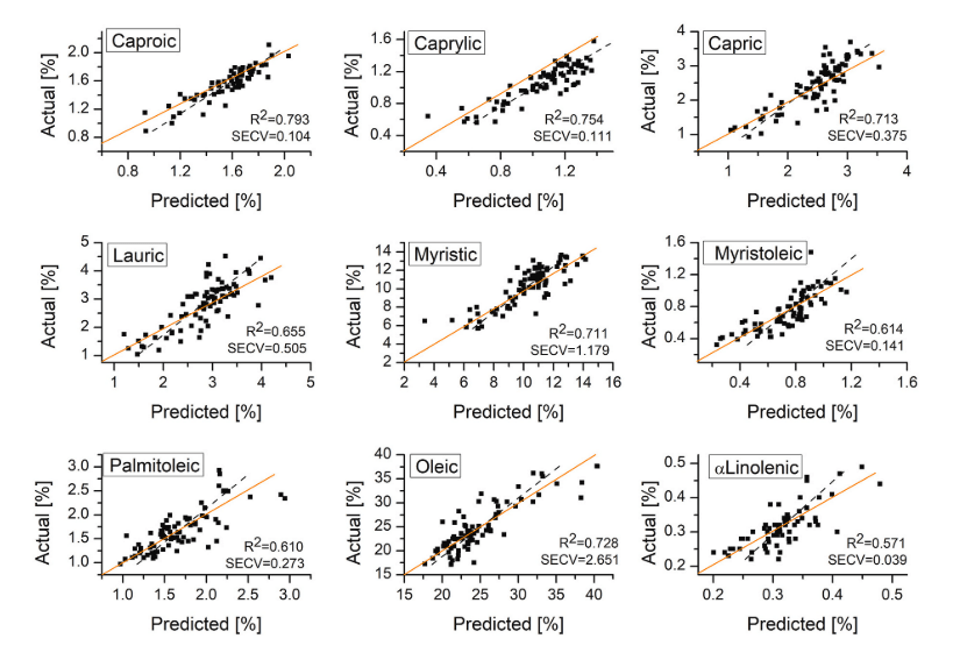
“Near infrared aquaphotomics study on common dietary fatty acids in cow’s liquid, thawed milk” by Jelena Muncan, Zoltan Kovacs, Bernhard Pollner, Kentarou Ikuta, Yoshihisa Ohtani, Fuminori Terada, Roumiana Tsenkova.
“This study was aimed at two objectives: 1) explore the possibility of near infrared (NIR) spectroscopy to determine the content of common dietary fatty acids (FAs) and fat content in cow’s liquid milk for better individual cow’s feed management; 2) using aquaphotomics obtain better understanding of interaction between water molecular structure and FAs and gain more insight into their functionality. For these purposes, 252 milk samples were collected from 9 cows during 14 weeks and FAs content measured using gas chromatography as a reference method. Applying aquaphotomics NIR spectral analysis, quantification was attempted using 1300–1850 nm region where both water and FAs absorbance bands are located. The results showed possibility of quantification for 8 common dietary FAs which was more accurate when spectral region was narrowed to 1600–1800 nm. In the external validation, good predictions (R2> 0.75, RPD>1.5), were obtained for caproic and caprylic and acceptable for capric, lauric, myristic, myristoleic, palmitoleic and oleic acid (0.55<R2<0.75, RPD>1.5). Interpretation of influential variables in regression models revealed contribution of water absorbance bands related to protonated and hydration water, which originate from the water-FAs interaction and are important for their self-organization into assemblies with different morphologies.”
Affiliation: Mississippi State University, Department of Biochemistry, Molecular Biology, Entomology, and Plant Pathology, Mississippi State, MS, USA 39762
Research Topics : Animal physiology, Amphibian conservation, NIR and NMR spectroscopy applied to animal and plant pathogens and diseases.
Description: Our research group started working with spectroscopic applications in animal physiology when Dr. Vance joined a research team focusing on NIR analysis of nutrition in the Giant Panda. We expanded our studies to develop NIR spectroscopic methodologies for determining basic physiological parameters (e.g. gender, reproductive status, age, disease) with the end goal of mapping the demographic movements of giant panda in-situ. Additionally, we have applied NIR spectroscopy to numerous other mammalian species (horses, cattle, elephants, okapi, leopards) and extended our research into non-mammalian taxa (anura, caudates, fish).
Aquaphotomics work: We have used Aquaphotomics to profile the reproductive status of Snow leopards and Amur leopards using NIR spectra collected from urine. In addition, we evaluated the reproductive cycling and performance of mares exposed to the fusarium mycotoxin Zearalenone, which causes hyperestogenism, by the analysis of blood serum spectra. Currently, we are using NIR spectroscopy and Aquaphotomics to analyze biochemical profiles of the pathogens Bovine Herpesvirus type 1, Bovine Respiratory Syncytial Virus, Mannhemia haemolytica, Xanthomonas spp, and Rhizoctonia solani. Our ultimate goal is to understand the biochemical changes occurring during the course of disease, and validate spectra profiling early stages of infection. Deterministic spectra feed into the development of NIR spectroscopy as a rapid, portable, non-destructive, and accurate diagnostic tool capable of reducing the time required for pathogen and disease detection and identification, which is a determining factor in infection-related mortality rates and the control of further disease spread.
We are very pleased to announce that a new article on Aquaphotomics has been published in “Journal of Chemometrics” (23 June, 2020).
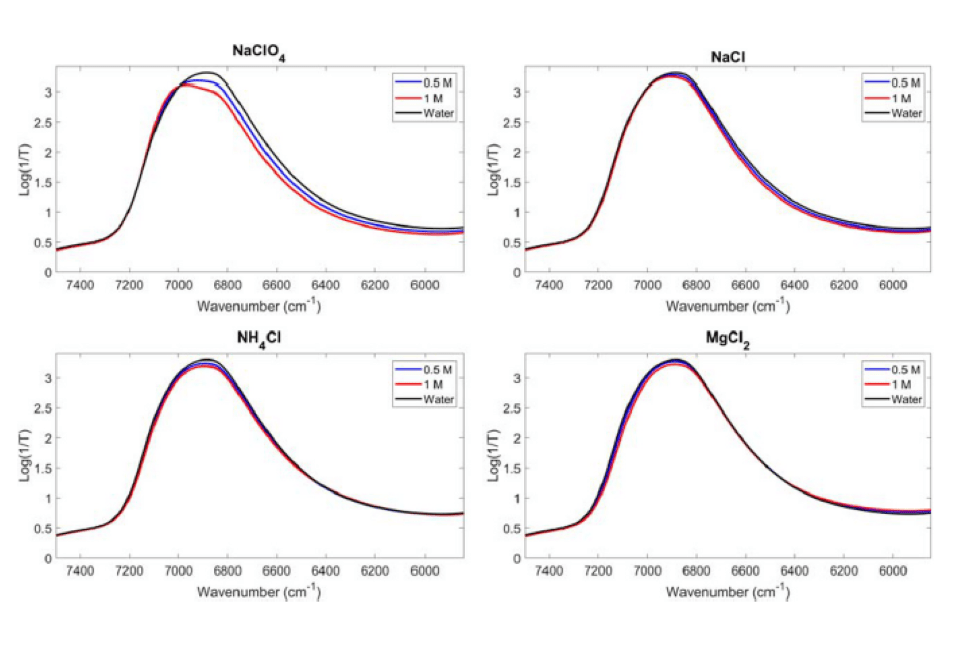
“Near-infrared multivariate model transfer for quantification of different hydrogen bonding species in aqueous systems” by Jun-Li Xu, Ronan M. Dorrepaal, Jose Martinez-Gonzalez, Roumiana Tsenkova, Aoife A. Gowen.
It is challenging to achieve consistent quantification of hydrogen-bonded water species by fitting Gaussian bands on spectra collected from different instruments, especially when the spectral resolution is low. Therefore, this work aims to propose a near-infrared (NIR) multivariate calibration model transfer method to obtain reliable, consistent, and reproducible results from different spectroscopic instruments. A composite method of Gaussian deconvolution, multivariate curve resolution-alternating least squares (MCR-ALS), and partial least squares (PLS) was developed to quantify five water species (labeled as C1, C2, C3, C4, and C5), respectively, assigned to non-hydrogen-bonded, singly hydrogen-bonded, doubly and triply hydrogen-bonded species, distorted icelike structures in the liquid phase, and fully hydrogen-bonded species showing ice-like structure. Primary instrument (iS50) was selected due to the highest spectral resolution and spectra (7500–5845 cm−1 with spectral resolution of 0.5 cm−1) were acquired from four types of salt solutions. The developed PLS model yielded a high prediction performance when applied on two independent prediction sets with R2P higher than 0.95 and RMSEP less than 0.009 for prediction of C1-5. Model built with primary spectra was successfully transferred to spectra of secondary instrument (iN10), producing RMSEP less than 0.010. Transferred model applied on secondary instruments (NIRECO and MPA) showed that fully H-bonded species in deionized water decreased as temperature increased, while non-hydrogen-bonded and singly hydrogenbonded demonstrated an opposite temperature dependence. Our results confirmed that it is promising to transfer the calibration model from a sophisticated spectrometer to a simple spectroscopic instrument in terms of quantification of hydrogen-bonded water species.
We are very pleased to announce that a new article on Aquaphotomics has been published in “Substantia” as part of the Special Issue Article (Substantia Vol 3 No 2 Suppl. 3 2019).
“Aquaphotomics – Origin, concept, applications and future perspectives” by Everine B. van de Kraats, Jelena Muncan, and Roumiana Tsenkova.
Aquaphotomics is a novel scientific discipline which has made rapid progress in just 14 years since its establishment in 2005. The main novelty of this field using spectroscopy is placing the focus on water, as a complex molecular matrix and an integral part of any aqueous system. Water is sensitive to any change the system experiences – external or internal. As such, the molecular structure of water revealed through its interaction with light of all frequencies becomes a source of information about the state of the system, an integrative marker of system dynamics.
This novel field shifts the paradigm of seeing water in a system as a passive, inert molecule to one which can build various structures with various functionalities, giving water an active role in biological and aqueous systems. Owing to the high sensitivity of hydrogen bonds, the water molecules are incredibly adaptive to their surroundings, reshaping and adjusting in response to changes of the aqueous or biological systems, and this property in aquaphotomics is utilized as a key principle for various purposes of bio-measurements, bio-diagnostics and biomonitoring.
This paper will present the origin and concept of aquaphotomics and will, through a series of examples of applications, illustrate many opportunities and directions opened for novel scientific and technological developments.
We are very pleased to announce that a new article on Aquaphotomics has been published in “Molecules” as part of the Special Issue Perspectives in Near Infrared Spectroscopy and Related
Techniques (Molecules 2020, 25, 2234).
“A Novel Tool for Visualization of Water Molecular Structure and Its Changes, Expressed on the Scale of Temperature Influence” by Zoltan Kovacs, Bernhard Pollner, George Bazar, Jelena Muncan, and Roumiana Tsenkova
Aquaphotomics utilizes water-light interaction for in-depth exploration of water, its structure and role in aqueous and biologic systems. The aquagram, a major analytical tool of aquaphotomics, allows comparison of water molecular structures of different samples by comparing their respective absorbance spectral patterns. Temperature is the strongest perturbation of water changing almost all water species. To better interpret and understand spectral patterns, the objective of this work was to develop a novel, temperature-scaled aquagram that provides standardized information about changes in water molecular structure caused by solutes, with its effects translated to those which would have been caused by respective temperature changes. NIR spectra of Milli-Q water in the temperature range of 20–70 °C and aqueous solutions of potassium chloride in concentration range of 1 to 1000 mM were recorded to demonstrate the applicability of the proposed novel tool. The obtained results presented the influence of salt on the water molecular structure expressed as the equivalent effect of temperature in degrees of Celsius. The temperature based aquagrams showed the well-known structure breaking and structure making effects of salts on water spectral pattern, for the first time presented in the terms of temperature influence on pure water. This new method enables comparison of spectral patterns providing a universal tool for evaluation of various bio-aqueous systems which can provide better insight into the system’s functionality.
Due to the uncertainty caused by the current COVID-19 pandemic and the travel restrictions around the world, the organizing committee has decided to postpone the 4th Aquaphotomics International Conference to March 20-23, 2021.
Date: November 15 – 19, 2020 March 20 – 23, 2021
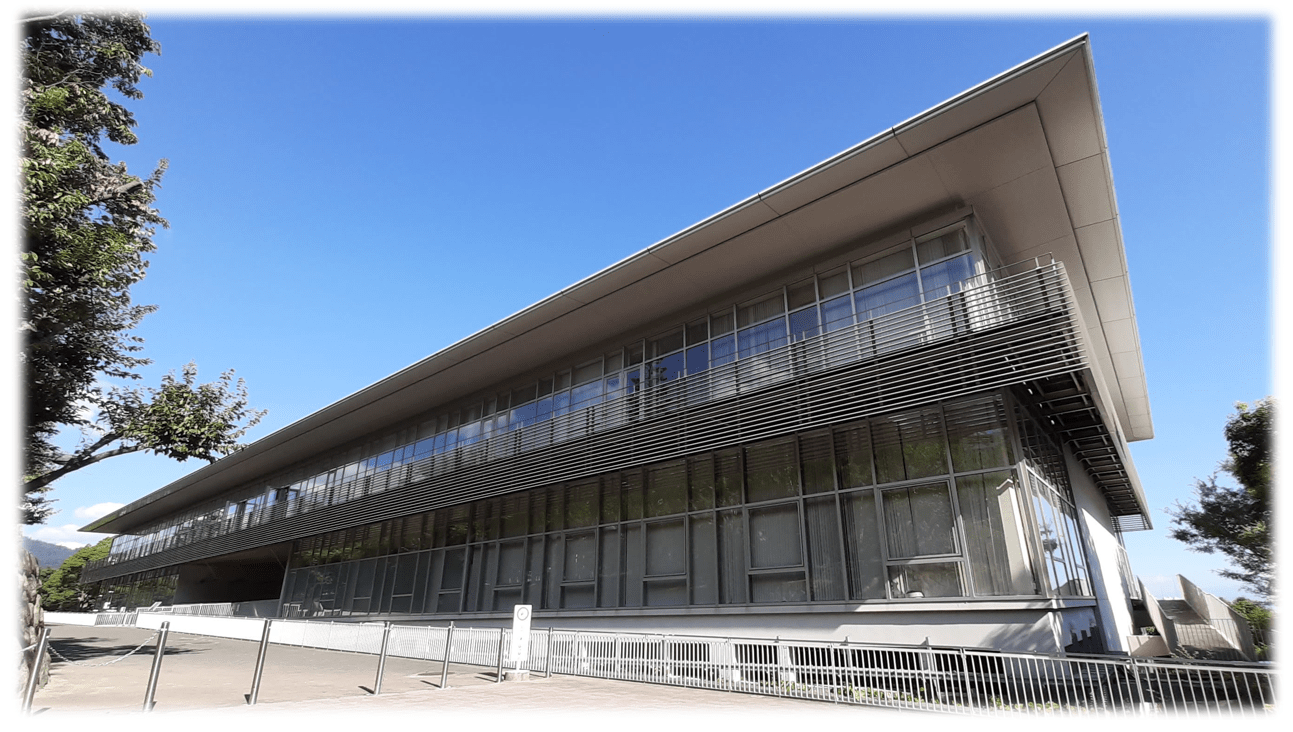
Venue: Centennial Hall, Kobe University, Hyogo, Japan
Organizers:
Aquaphotomics International Society
Biomeasurement Technology Laboratory, Faculty of Agriculture, Kobe University
Core Members:
Honorable Chair: Mutsuo IWAMOTO
Chair: Roumiana TSENKOVA (Kobe University)
Vice Chair: Masato YASUI (Keio University)
Vice Chair: Christian HUCK (University of Innsbruck)
International Advisor: Yukihiro OZAKI (Kwansei Gakuin University)
Please visit the conference’s official website for more information.
The 19th International Conference on Near Infrared Spectroscopy (ICNIRS) took place in Gold Cost, Australia from 15th to 20th September, 2019.
The Aquaphotomics session was held on 18th of September, and was chaired by Dr Jill Fernandes from Queensland Alliance for Agriculture and Food Innovation, The University of Queensland. The session included five speakers who presented their findings on various aquaphotomics-related aspects:
1) Jelena Muncan, Kobe University, Japan: Plant aquaphotomics: New frontiers
2) Roumiana Tsenkova: Aquaphotomics: From basics to applications and new technologies
3) Harpreet Kaur, University of Waikato, New Zealand: Temperature independent quality prediction of kiwifruit juice using aquaphotomics and external parameter orthogonalization
4) Xuenguang Shao, Nankai University, China: Understanding the complexity of water structures from near-infrared spectra by chemometrics and simulations
5) Akifumi Ikehata: Opening the black box of NIR prediction for sugar content of fruits with the aid of NMR-based metabolomics
The first aquaphotomics session held at ICNIRS conference was well-attended and sparked a lot of interesting questions.
Aquaphotomics session speakers (from left to right): Akifumi Ikehata, Xuegang Shao, Roumiana Tsenkova, Jelena Muncan and Harpreet Kaur
This year’s Conference, apart from hosting an entire session devoted to aquaphotomics, also has seen a lot of poster presentations from all around the world:
Cristina Malegori, University of Genova, Italy: Aquaphotomics approach for understanding the role of water activity during storage: The rice germ case study
Tiziana M.P. Cattaneo, CREA, Italy: Aquaphotomics approach to monitor fruit ripening
Tiziana M.P. Cattaneo, CREA, Italy: Aquaphotomics approach applied to study the effect of the use of Borax and NaCl on caviar (Acipenser Transmotanus) storage
Jelena Muncan, Kobe University, Japan: Deep understanding of the interaction between water and Nafion® polymer by means of NIR spectroscopy and aquaphotomics
Carrie K. Vance, Mississippi State University, USA: NIR-Aquaphotomics analysis of Zearalenone Estrogenicity in cycling mares
Carrie K. Vance, Mississippi State University, USA: Reproductive hormone profiles of estrogen and progesterone in cycling mares can be detected using NIR-aquaphotomics
Felix Scholkmann, University of Zurich, Spectrally-determined sample temperature: An important parameter for applications of near-infrared spectroscopy based aquaphotomics
Xueguang Shao, Nankai University, China: Extracting structural information from temperature-dependent near infrared spectra
Yan Sun, Nankai University, China: Understanding the hydrogen bonding of alcohols by temperature-dependent near infrared spectroscopy
Mian Wang, Nankai University, China, Understanding the interactions in protein aqueous solutions by temperature-dependent near infrared spectroscopy
Hengchang Zang, Shandong University, China, Near infrared spectroscopic study of molecular interaction in ethanol-water mixtures
Mariana Santos-Rivera, Mississippi State University, USA: Gender discrimination using Near Infrared Reflectance (NIR) Spectroscopy
The Conference’s best poster award was in fact presented to Mariana Santos-Rivera from the Mississippi State University for the work on gender discrimination using NIRS in-vivo to detect the chemical changes produced by the chemosignaling glands/regions in salamanders with mucus layers and aqueous skin. Congratulations to Mariana!!!
The winner of the ICNIRS best poster award: Prof. Dr Daniel Cozzolino congratulates the winner, Ms Mariana Santos-Rivera (left); Mariana with prof. Tsenkova and her mentor prof. Dr Carrie Vance from the Mississippi State University (right)
Compared to the past participations, the Australian ICNIRS conference showed that in the meantime aquaphotomics has made large progress. The content of the oral and poster presentations beautifully illustrated the diversity and all the potential of aquaphotomics applications.
We are looking forward to see more developments in future (see you in China in 2021!)
Affiliation: College of Chemistry, Nankai University, China
Research Topics: Chemometrics, Near–infrared spectroscopy, Analytical Chemistry
Contact email: xshao@nankai.edu.cn
Description
A series of chemometric methods were developed for analyzing complex systems, including chemical factor analysis (CFA), optimization methods, wavelet transform (WT), and immune algorithm (IA). Particular attention was paid to the studies of near infrared spectroscopy. Chemometric methods for near–infrared (NIR) spectral analysis, including the methods for spectral pre-processing, outlier detection, variable selection, and the methods for quantitative and discrimination analysis. Works for the micro-analysis by NIR spectroscopy were conducted as well based on the combination of chemometric and experimental strategies. The research interests of the laboratory also include the application of NIR spectroscopy in the monitoring of industrial productions and the quality control of drugs and natural products.
In recent works, research works are concentrated on temperature–dependent NIR spectroscopy. Quantitative models between NIR spectra and temperature was studied and applied to the quantitative determination of the compositions in mixtures and the analytes in aqueous solutions, as well as the structural analysis in the transformation of proteins and polymers. In these works, water was taken as a probe for sensing the quantity and the structure of the analytes. Therefore, chemometric methods for extracting the information from NIR spectrum of water was developed. In the future works, application of temperature–dependent NIR spectra in analyzing bio-systems will be concentrated on, e.g., disease diagnosis based on the spectra of bio-liquids.
Aquaphotomics Related Work
Similar with the studies of aquaphotomics, the spectrum of water was taken as the main source of the information. Water serves as a mirror to reflect the quantity, structure and the interactions in the analyzing systems. Therefore, methods for deeply mining the fine spectral features of water and their variation with temperature are needed. Up to now, water structures in different solutions were studied by temperature–dependent NIR spectroscopy, and the complexity of water structures was studied by molecular simulations. Chemometric methods for enhancing the resolution of the NIR spectrum and retrieving the spectral information for different water species were developed. Furthermore, quantitative determination and understanding of the structural changes of proteins and polymers by the change of the spectral features of water with temperature was conducted. Water was proven to be a good probe for indicating the quantity and the structure of the analytes in aqueous and bio-liquid systems.