Author: admin

  • Hengchang Zang


    Group leader: Prof. Hengchang Zang

    Affiliation: School of Pharmaceutical Sciences, Shandong University, China

    Research Topics: Process analysis technology, Near infrared spectroscopy, Aquaphotomics

    Contact: [email protected]


    NIRS is a modern analytical technique that makes use of the material information contained in the near infrared spectrum region and relies on chemometrics and computer technology to carry out qualitative and quantitative analysis of organic substances. It is one of the most important tools in PAT technology. NIRS has become one of the most rapidly developed new analytical techniques in the past decade due to its advantages of fast analysis speed, no pretreatment, no pollution, and simultaneous analysis of multiple components.

    Drug quality and its uniformity is one of the important basic characteristics of drugs, and it is the core of drug efficacy and drug risk management. Many advanced pharmaceutical companies have adopted NIR spectroscopy for quality analysis and control of the whole process. However, the application of NIR spectroscopy in the pharmaceutical field is still in the research stage, and the common problems of many methodologies need to be further studied and understood. It is necessary to conduct theoretical discussion and experimental research on how to integrate the implementation of engineering, drug registration regulations, and the restrictions of GMP clauses. The consistency of drug efficacy and the improvement of drug re-registration standards all need the support of NIR technology. Therefore, in recent years, our research group has been devoted to the theoretical exploration and application research of the application of NIR spectroscopy in the pharmaceutical field.

    Aquaphotomics related work

    Hydration plays an important role in the stability of protein structure and function. The dynamic characteristics of hydration play a key role in biochemical processes, including protein folding, enzyme function, and molecular recognition. Protein purification is affected by hydration and dehydration. We used NIR spectroscopy to study the morphological changes of the hydration layer around protein molecules and detected the network structure of hydrogen bond water around protein molecules by changing the protein concentration, thus providing theoretical support for the stability of protein structure.
  • The 4th Aquaphotomics International Conference – Still the Hot Topic

    The 4th Aquaphotomics International Conference – Still the Hot Topic

    We are happy to say that our Conference is still the talk of the town!

    You can read about it in the latest article “The 4th Aquaphotomics International Conference – Report ” published in Volume 32, Issue 3-4 of NIR news. We are always glad to be a part of the NIR news. 

    The permanent link for an open article is https://doi.org/10.1177/09603360211026037. Enjoy your reading 🙂 

  • Made in France – New publications in aquaphotomics field

    Made in France – New publications in aquaphotomics field

    Jean-Michel Roger (left), Alexander Mallet (right)

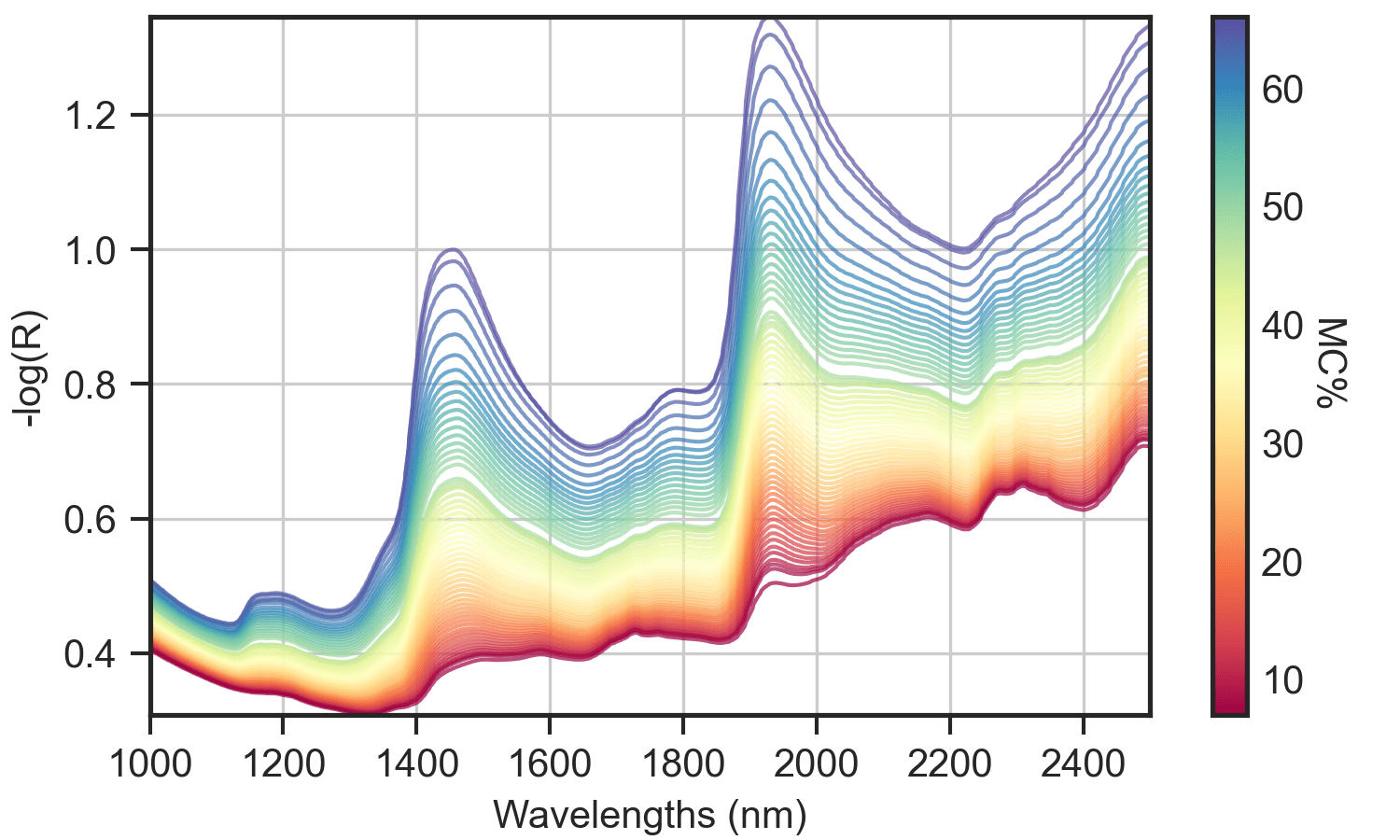
    It is a pleasure to announce the recent publications which could be of immense importance for aquaphotomics researchers. Both publications originate from the group of Jean-Michel Roger, (INRAE, UMR ITAP, Montpellier University and ChemHouse Research Group, France) one of the world experts in preprocessing and analysis of spectral data.  The first author on both publications is Alexander Mallet, a young PhD researcher, who is working on revealing both physical and chemical effects of the water on the near infrared spectra, and who spent few months in the Biomeasurement Technology Laboratory, of Prof. Dr. Tsenkova at Kobe University, last year.  The works are of particular importance for correct spectroscopic assignments, correct modeling and interpretation of the structure of water. 

    The first publication describes the results of the dynamic study of near-infrared spectra acquired during a drying process with a focus on the first overtone OH absorbance region:    

    Mallet, A., Tsenkova, R., Muncan, J., Charnier, C., Latrille, É., Bendoula, R., Stayer, J.P. & Roger, J. M. (2021). Relating Near-Infrared Light Path-Length Modifications to the Water Content of Scattering Media in Near-Infrared Spectroscopy: Toward a New Bouguer–Beer–Lambert Law. Analytical Chemistry, 93(17), 6817-6823. 

    https://doi.org/10.1021/acs.analchem.1c00811

    The second one continues to analyze and compare moisture content effects in one comprehensive experiment with a wide variety of biochemical and physical types in order to understand water effects and how they relate to the substrate properties. 

    Mallet, A., Charnier, C., Latrille, É., Bendoula, R., Steyer, J. P., & Roger, J. M. (2021). Unveiling non-linear water effects in near infrared spectroscopy: A study on organic wastes during drying using chemometrics. Waste Management122, 36-48.

    https://doi.org/10.1016/j.wasman.2020.12.019

    Both publications are heartily recommended and we expect to see their influence on aquaphotomics development. Most sincere congratulations to French group from the Aquaphotomics Research Department in Kobe. We are eagerly awaiting more. 

  • AIC2021 Conference Report

    AIC2021 Conference Report

    Dear Conference Attendees, Friends, and Colleagues,

    I would like to express my deepest gratitude for your invaluable contribution to the 4th Aquaphotomics International Conference held in March 2021 at Kobe University, Japan.

    The conference was held both online and onsite on the first day, and was online only on the second and third day from the perspective of preventing the spread of COVID-19.

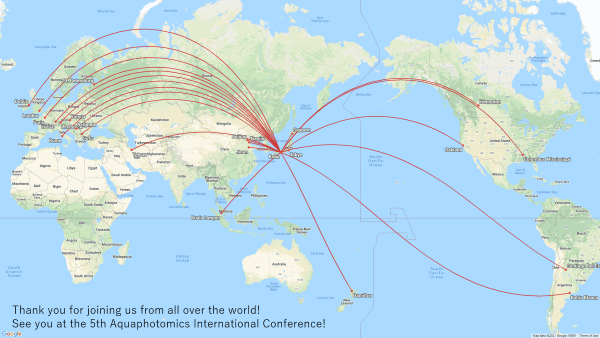
    The conference was well attended with 248 participants from 23 countries (including 70 participants who attended the open lecture only) that greatly exceeded the 114 participants in the 2018 Symposium.

    Thank you very much again for making this conference a great success!
    We will continue to pursue our research activities at the Aquaphotomics International Society.

    Yours sincerely,

    Roumiana Tsenkova
    Chairperson, Aquaphotomics International Society


    AIC2021 開催終了報告

    この度は、第四回アクアフォトミクス国際学会開催に際しまして、皆様には多大なるご協力を賜り、心より感謝申し上げます。

    新型コロナウイルス感染症の感染拡大防止の観点から初日は現地開催とオンラインでの同時配信を行い、2・3日目はオンラインのみでの開催となりました。

    来場・オンライン合わせ参加者は23か国、248名(うち公開講座のみの参加者は70名)であり、前回の114名を大きく上回る参加規模となりました。

    初のオンライン開催ではございましたが、無事に全プログラムを終了することができました。これもひとえに皆様方のご協力の賜物と感謝申し上げます。

    当アクアフォトミクス国際学会に於きましては、今後とも、多くの方々のご期待に違わぬよう、研究活動に邁進いたして参ります。

    今後とも変わらぬご理解、ご支援のほどよろしくお願い申し上げます。

    アクアフォトミクス国際学会・会長
    Roumiana Tsenkova

  • Real-Time Monitoring of Yogurt Fermentation Process by Aquaphotomics Near-Infrared Spectroscopy

    Real-Time Monitoring of Yogurt Fermentation Process by Aquaphotomics Near-Infrared Spectroscopy

    We are very pleased to announce that a new article on Aquaphotomics has been published in “Sensors” (Volume 21, Issue 1, December 2020).

    “Real-Time Monitoring of Yogurt Fermentation Process by Aquaphotomics Near-Infrared Spectroscopy” by Jelena Muncan, Kyoko Tei, Roumiana Tsenkova.

    “Automated quality control could have a substantial economic impact on the dairy industry. At present, monitoring of yogurt production is performed by sampling for microbiological and physicochemical measurements. In this study, Near-Infrared Spectroscopy (NIRS) is proposed for non-invasive automated control of yogurt production and better understanding of lactic acid bacteria (LAB) fermentation. UHT (ultra-high temperature) sterilized milk was inoculated with Bulgarian yogurt and placed into a quartz cuvette (1 mm pathlength) and test-tubes. Yogurt absorbance spectra (830–2500 nm) were acquired every 15 min, and pH, in the respective test-tubes, was measured every 30 min, during 8 h of fermentation. Spectral data showed substantial baseline and slope changes with acidification. These variations corresponded to respective features of the microbiological growth curve showing water structural changes, protein denaturation, and coagulation of milk. Moving Window Principal Component Analysis (MWPCA) was applied in the spectral range of 954–1880 nm to detect absorbance bands where most variations in the loading curves were caused by LAB fermentation. Characteristic wavelength regions related to the observed physical and multiple chemical changes were identified. The results proved that NIRS is a valuable tool for real-time monitoring and better understanding of the yogurt fermentation process.”

    The article can be viewed and downloaded at https://doi.org/10.3390/s21010177.

  • The 4th Aquaphotomics International Conference starts on March 20!

    The 4th Aquaphotomics International Conference starts on March 20!

    Date: March 20 – 22, 2021

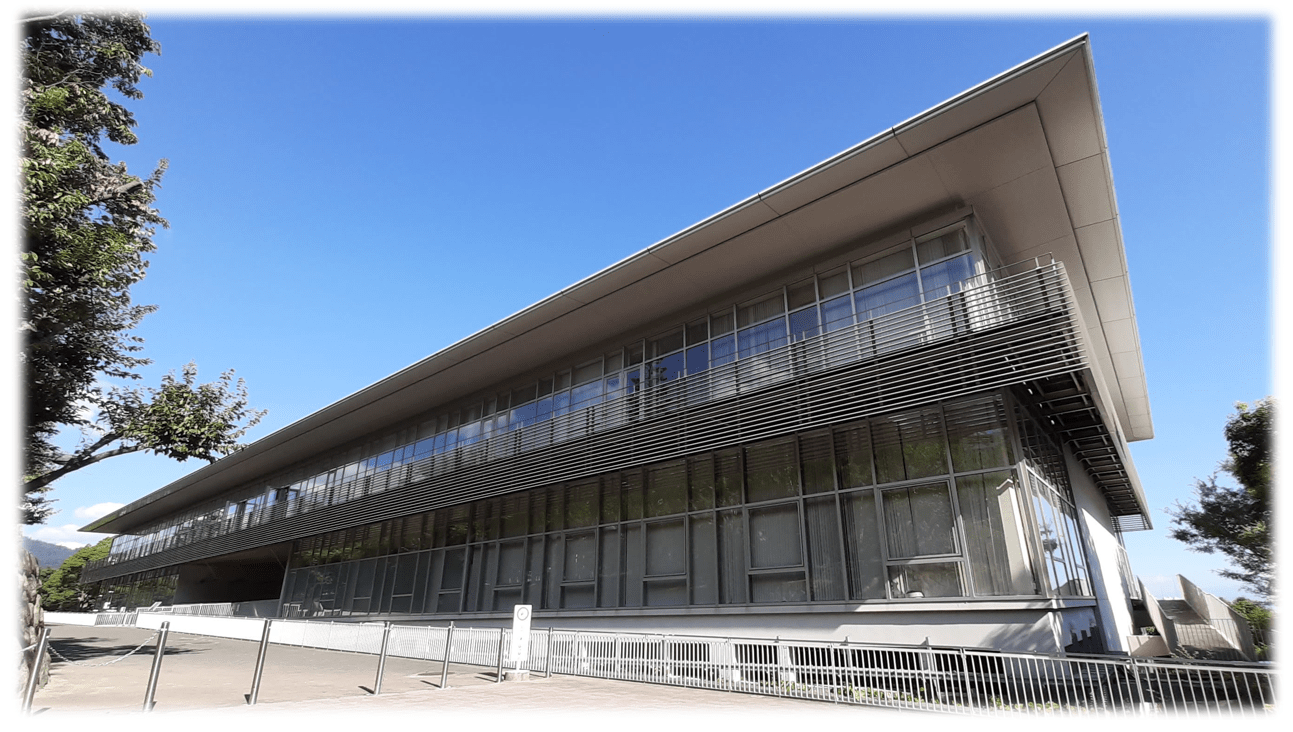
    Venue: Centennial Hall, Kobe University, Kobe, Japan

    Visit the Conference’s website for more information!

    Open Lecture (Free)

    • 13:00 – 14:30 on March 20
    • We have a full house at the venue. If you want to listen to the Open Lecture, please join the online zoom session (free)!
    • We welcome everyone who wants to learn about Aquaphotomics.

    日付:2021年3月20日〜22日

    会場:神戸大学百年記念館六甲ホール

    学会の公式ウェブサイトへ

    公開講座

    • 3月20日13:00~14:30
    • 六甲ホールすでに満席です。無料オンライン講座を参加してください!
    • Aquaphotomicsについて学びたい方を歓迎します。
  • Near infrared aquaphotomics study on common dietary fatty acids in cow’s liquid, thawed milk

    Near infrared aquaphotomics study on common dietary fatty acids in cow’s liquid, thawed milk

    We are very pleased to announce that a new article on Aquaphotomics has been published in “Food Control” (Volume 122, April 2021, 107805).

    “Near infrared aquaphotomics study on common dietary fatty acids in cow’s liquid, thawed milk” by Jelena Muncan, Zoltan Kovacs, Bernhard Pollner, Kentarou Ikuta, Yoshihisa Ohtani, Fuminori Terada, Roumiana Tsenkova.

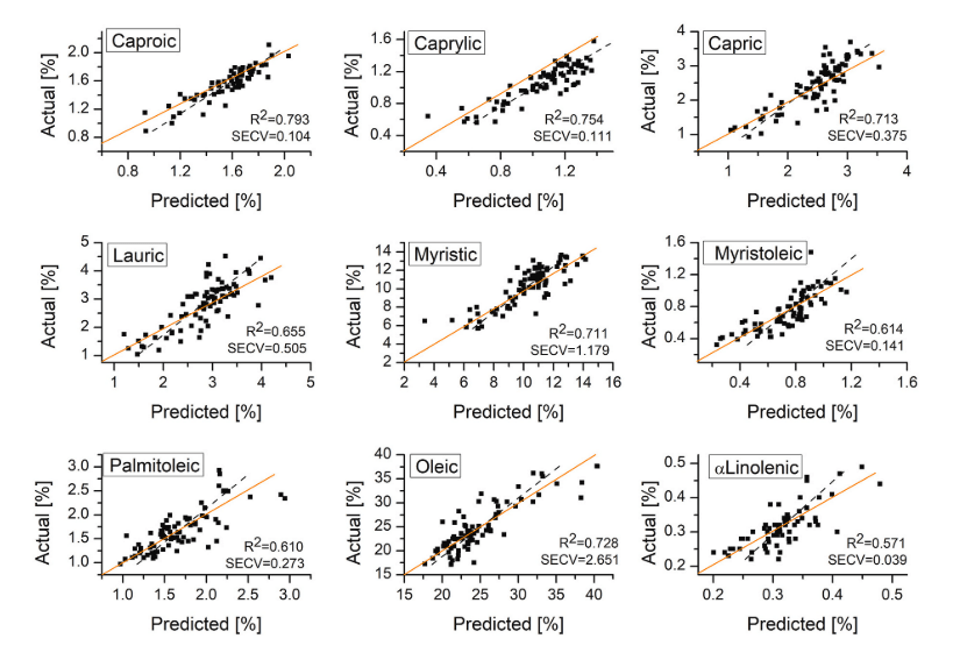
    “This study was aimed at two objectives: 1) explore the possibility of near infrared (NIR) spectroscopy to determine the content of common dietary fatty acids (FAs) and fat content in cow’s liquid milk for better individual cow’s feed management; 2) using aquaphotomics obtain better understanding of interaction between water molecular structure and FAs and gain more insight into their functionality.
    For these purposes, 252 milk samples were collected from 9 cows during 14 weeks and FAs content measured using gas chromatography as a reference method. Applying aquaphotomics NIR spectral analysis, quantification was attempted using 1300–1850 nm region where both water and FAs absorbance bands are located. The results showed possibility of quantification for 8 common dietary FAs which was more accurate when spectral region was narrowed to 1600–1800 nm. In the external validation, good predictions (R2> 0.75, RPD>1.5), were obtained for caproic and caprylic and acceptable for capric, lauric, myristic, myristoleic, palmitoleic and oleic acid (0.55<R2<0.75, RPD>1.5). Interpretation of influential variables in regression models revealed contribution of water absorbance bands related to protonated and hydration water, which originate from the water-FAs interaction and are important for their self-organization into assemblies with different morphologies.”

    The article can be viewed and downloaded at https://doi.org/10.1016/j.foodcont.2020.107805 .

  • Carrie K. Vance

    Group leader : Carrie K. Vance

    Affiliation: Mississippi State University, Department of Biochemistry, Molecular Biology, Entomology, and Plant Pathology, Mississippi State, MS, USA 39762

    Research Topics : Animal physiology, Amphibian conservation, NIR and NMR spectroscopy applied to animal and plant pathogens and diseases.

    Contact: [email protected]

    Description: Our research group started working with spectroscopic applications in animal physiology when Dr. Vance joined a research team focusing on NIR analysis of nutrition in the Giant Panda. We expanded our studies to develop NIR spectroscopic methodologies for determining basic physiological parameters (e.g. gender, reproductive status, age, disease) with the end goal of mapping the demographic movements of giant panda in-situ. Additionally, we have applied NIR spectroscopy to numerous other mammalian species (horses, cattle, elephants, okapi, leopards) and extended our research into non-mammalian taxa (anura, caudates, fish).

    Aquaphotomics work: We have used Aquaphotomics to profile the reproductive status of Snow leopards and Amur leopards using NIR spectra collected from urine. In addition, we evaluated the reproductive cycling and performance of mares exposed to the fusarium mycotoxin Zearalenone, which causes hyperestogenism, by the analysis of blood serum spectra. Currently, we are using NIR spectroscopy and Aquaphotomics to analyze biochemical profiles of the pathogens Bovine Herpesvirus type 1, Bovine Respiratory Syncytial Virus, Mannhemia haemolytica, Xanthomonas spp, and Rhizoctonia solani. Our ultimate goal is to understand the biochemical changes occurring during the course of disease, and validate spectra profiling early stages of infection. Deterministic spectra feed into the development of NIR spectroscopy as a rapid, portable, non-destructive, and accurate diagnostic tool capable of reducing the time required for pathogen and disease detection and identification, which is a determining factor in infection-related mortality rates and the control of further disease spread.

  • Near-infrared multivariate model transfer for quantification of different hydrogen bonding species in aqueous systems

    Near-infrared multivariate model transfer for quantification of different hydrogen bonding species in aqueous systems

    We are very pleased to announce that a new article on Aquaphotomics has been published in “Journal of Chemometrics” (23 June, 2020).

    “Near-infrared multivariate model transfer for quantification of different hydrogen bonding species in aqueous systems” by Jun-Li Xu, Ronan M. Dorrepaal, Jose Martinez-Gonzalez, Roumiana Tsenkova, Aoife A. Gowen.

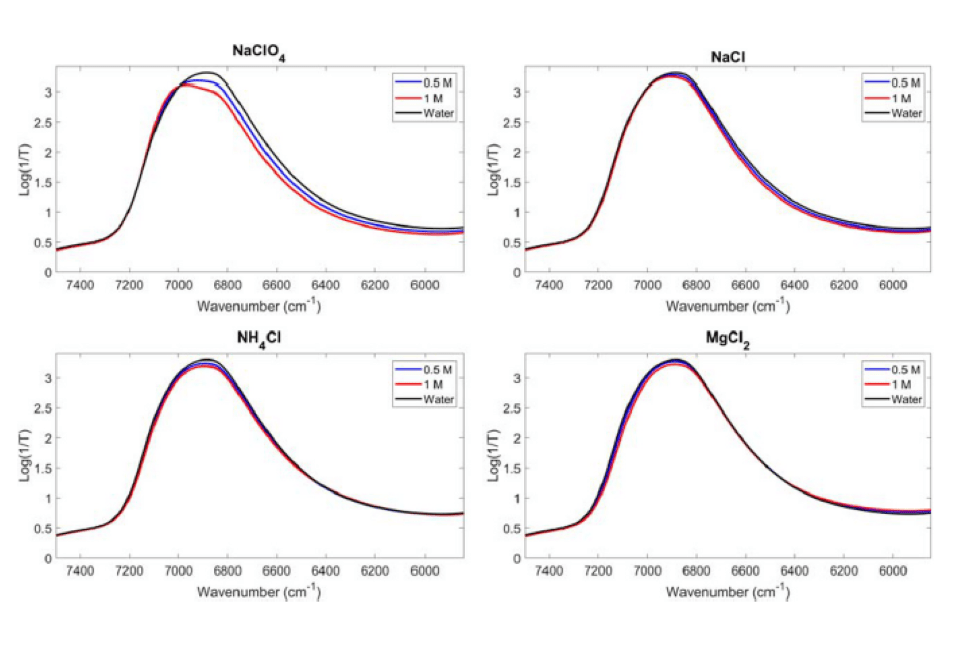
    It is challenging to achieve consistent quantification of hydrogen-bonded water species by fitting Gaussian bands on spectra collected from different instruments, especially when the spectral resolution is low. Therefore, this work aims to propose a near-infrared (NIR) multivariate calibration model transfer method to obtain reliable, consistent, and reproducible results from different spectroscopic instruments. A composite method of Gaussian deconvolution, multivariate curve resolution-alternating least squares (MCR-ALS), and partial least squares (PLS) was developed to quantify five water species (labeled as C1, C2, C3, C4, and C5), respectively, assigned to non-hydrogen-bonded, singly hydrogen-bonded, doubly and triply hydrogen-bonded species, distorted icelike structures in the liquid phase, and fully hydrogen-bonded species showing ice-like structure. Primary instrument (iS50) was selected due to the highest spectral resolution and spectra (7500–5845 cm−1 with spectral resolution of 0.5 cm−1) were acquired from four types of salt solutions. The developed PLS model yielded a high prediction performance when applied on two independent prediction sets with R2P higher than 0.95 and RMSEP less than 0.009 for prediction of C1-5. Model built with primary spectra was successfully transferred to spectra of secondary instrument (iN10), producing RMSEP less than 0.010. Transferred model applied on secondary instruments (NIRECO and MPA) showed that fully H-bonded species in deionized water decreased as temperature increased, while non-hydrogen-bonded and singly hydrogenbonded demonstrated an opposite temperature dependence. Our results confirmed that it is promising to transfer the calibration model from a sophisticated spectrometer to a simple spectroscopic instrument in terms of quantification of hydrogen-bonded water species.

    The article can be viewed and downloaded at https://doi.org/10.1002/cem.3274 .

  • Aquaphotomics – Origin, concept, applications and future perspectives

    Aquaphotomics – Origin, concept, applications and future perspectives

    We are very pleased to announce that a new article on Aquaphotomics has been published in “Substantia” as part of the Special Issue Article (Substantia Vol 3 No 2 Suppl. 3 2019).

    “Aquaphotomics – Origin, concept, applications and future perspectives” by Everine B. van de Kraats, Jelena Muncan, and Roumiana Tsenkova.

    Aquaphotomics is a novel scientific discipline which has made rapid progress in just 14 years since its establishment in 2005. The main novelty of this field using spectroscopy is placing the focus on water, as a complex molecular matrix and an integral part of any aqueous system. Water is sensitive to any change the system experiences – external or internal. As such, the molecular structure of water revealed through its interaction with light of all frequencies becomes a source of information about the state of the system, an integrative marker of system dynamics.

    This novel field shifts the paradigm of seeing water in a system as a passive, inert molecule to one which can build various structures with various functionalities, giving water an active role in biological and aqueous systems. Owing to the high sensitivity of hydrogen bonds, the water molecules are incredibly adaptive to their surroundings, reshaping and adjusting in response to changes of the aqueous or biological systems, and this property in aquaphotomics is utilized as a key principle for various purposes of bio-measurements, bio-diagnostics and biomonitoring.

    This paper will present the origin and concept of aquaphotomics and will, through a series of examples of applications, illustrate many opportunities and directions opened for novel scientific and technological developments.

    The article can be viewed and downloaded at https://doi.org/10.13128/Substantia-702 .