We are very pleased to announce that a new article on Aquaphotomics has been published in “Molecules” as part of the Special Issue Perspectives in Near Infrared Spectroscopy and Related
Techniques (Molecules 2020, 25, 2234).
“A Novel Tool for Visualization of Water Molecular Structure and Its Changes, Expressed on the Scale of Temperature Influence” by Zoltan Kovacs, Bernhard Pollner, George Bazar, Jelena Muncan, and Roumiana Tsenkova
Aquaphotomics utilizes water-light interaction for in-depth exploration of water, its structure and role in aqueous and biologic systems. The aquagram, a major analytical tool of aquaphotomics, allows comparison of water molecular structures of different samples by comparing their respective absorbance spectral patterns. Temperature is the strongest perturbation of water changing almost all water species. To better interpret and understand spectral patterns, the objective of this work was to develop a novel, temperature-scaled aquagram that provides standardized information about changes in water molecular structure caused by solutes, with its effects translated to those which would have been caused by respective temperature changes. NIR spectra of Milli-Q water in the temperature range of 20–70 °C and aqueous solutions of potassium chloride in concentration range of 1 to 1000 mM were recorded to demonstrate the applicability of the proposed novel tool. The obtained results presented the influence of salt on the water molecular structure expressed as the equivalent effect of temperature in degrees of Celsius. The temperature based aquagrams showed the well-known structure breaking and structure making effects of salts on water spectral pattern, for the first time presented in the terms of temperature influence on pure water. This new method enables comparison of spectral patterns providing a universal tool for evaluation of various bio-aqueous systems which can provide better insight into the system’s functionality.
Due to the uncertainty caused by the current COVID-19 pandemic and the travel restrictions around the world, the organizing committee has decided to postpone the 4th Aquaphotomics International Conference to March 20-23, 2021.
Date: November 15 – 19, 2020 March 20 – 23, 2021
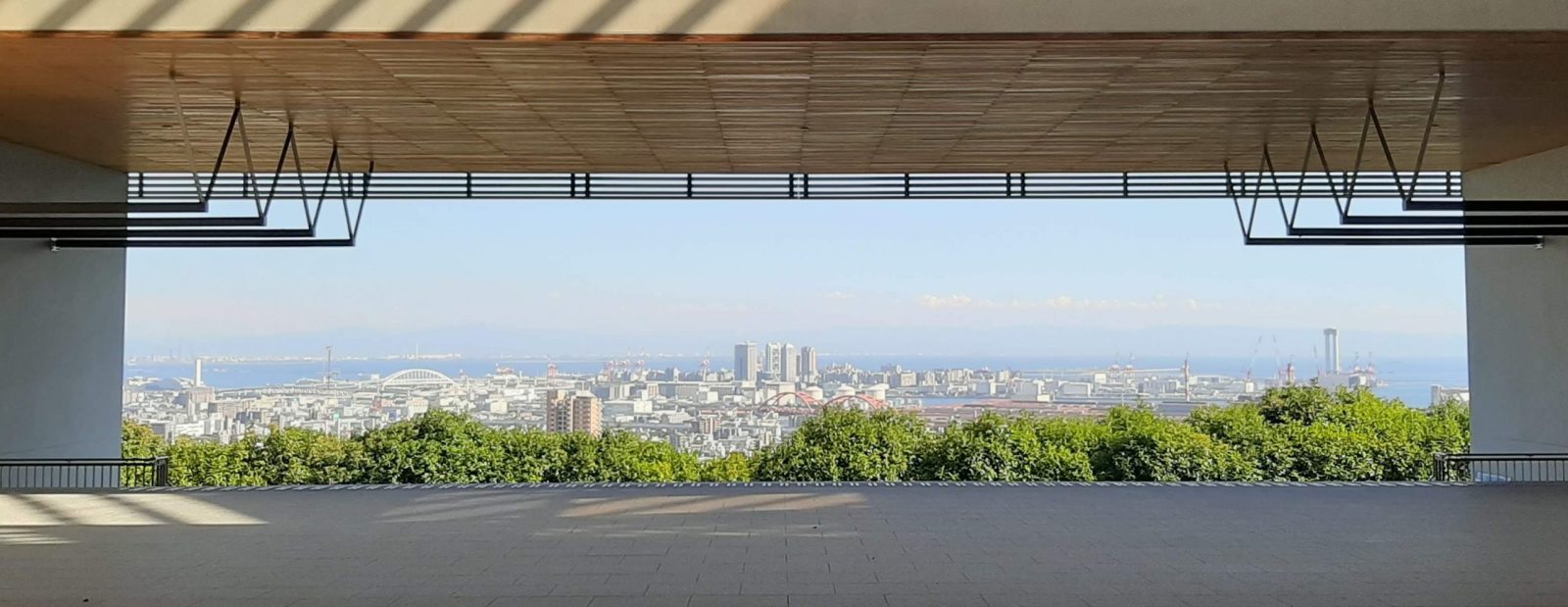
Venue: Centennial Hall, Kobe University, Hyogo, Japan
Organizers:
Aquaphotomics International Society
Biomeasurement Technology Laboratory, Faculty of Agriculture, Kobe University
Core Members:
Honorable Chair: Mutsuo IWAMOTO
Chair: Roumiana TSENKOVA (Kobe University)
Vice Chair: Masato YASUI (Keio University)
Vice Chair: Christian HUCK (University of Innsbruck)
International Advisor: Yukihiro OZAKI (Kwansei Gakuin University)
Please visit the conference’s official website for more information.
The 19th International Conference on Near Infrared Spectroscopy (ICNIRS) took place in Gold Cost, Australia from 15th to 20th September, 2019.
The Aquaphotomics session was held on 18th of September, and was chaired by Dr Jill Fernandes from Queensland Alliance for Agriculture and Food Innovation, The University of Queensland. The session included five speakers who presented their findings on various aquaphotomics-related aspects:
1) Jelena Muncan, Kobe University, Japan: Plant aquaphotomics: New frontiers
2) Roumiana Tsenkova: Aquaphotomics: From basics to applications and new technologies
3) Harpreet Kaur, University of Waikato, New Zealand: Temperature independent quality prediction of kiwifruit juice using aquaphotomics and external parameter orthogonalization
4) Xuenguang Shao, Nankai University, China: Understanding the complexity of water structures from near-infrared spectra by chemometrics and simulations
5) Akifumi Ikehata: Opening the black box of NIR prediction for sugar content of fruits with the aid of NMR-based metabolomics
The first aquaphotomics session held at ICNIRS conference was well-attended and sparked a lot of interesting questions.
Aquaphotomics session speakers (from left to right): Akifumi Ikehata, Xuegang Shao, Roumiana Tsenkova, Jelena Muncan and Harpreet Kaur
This year’s Conference, apart from hosting an entire session devoted to aquaphotomics, also has seen a lot of poster presentations from all around the world:
Cristina Malegori, University of Genova, Italy: Aquaphotomics approach for understanding the role of water activity during storage: The rice germ case study
Tiziana M.P. Cattaneo, CREA, Italy: Aquaphotomics approach to monitor fruit ripening
Tiziana M.P. Cattaneo, CREA, Italy: Aquaphotomics approach applied to study the effect of the use of Borax and NaCl on caviar (Acipenser Transmotanus) storage
Jelena Muncan, Kobe University, Japan: Deep understanding of the interaction between water and Nafion® polymer by means of NIR spectroscopy and aquaphotomics
Carrie K. Vance, Mississippi State University, USA: NIR-Aquaphotomics analysis of Zearalenone Estrogenicity in cycling mares
Carrie K. Vance, Mississippi State University, USA: Reproductive hormone profiles of estrogen and progesterone in cycling mares can be detected using NIR-aquaphotomics
Felix Scholkmann, University of Zurich, Spectrally-determined sample temperature: An important parameter for applications of near-infrared spectroscopy based aquaphotomics
Xueguang Shao, Nankai University, China: Extracting structural information from temperature-dependent near infrared spectra
Yan Sun, Nankai University, China: Understanding the hydrogen bonding of alcohols by temperature-dependent near infrared spectroscopy
Mian Wang, Nankai University, China, Understanding the interactions in protein aqueous solutions by temperature-dependent near infrared spectroscopy
Hengchang Zang, Shandong University, China, Near infrared spectroscopic study of molecular interaction in ethanol-water mixtures
Mariana Santos-Rivera, Mississippi State University, USA: Gender discrimination using Near Infrared Reflectance (NIR) Spectroscopy
The Conference’s best poster award was in fact presented to Mariana Santos-Rivera from the Mississippi State University for the work on gender discrimination using NIRS in-vivo to detect the chemical changes produced by the chemosignaling glands/regions in salamanders with mucus layers and aqueous skin. Congratulations to Mariana!!!
The winner of the ICNIRS best poster award: Prof. Dr Daniel Cozzolino congratulates the winner, Ms Mariana Santos-Rivera (left); Mariana with prof. Tsenkova and her mentor prof. Dr Carrie Vance from the Mississippi State University (right)
Compared to the past participations, the Australian ICNIRS conference showed that in the meantime aquaphotomics has made large progress. The content of the oral and poster presentations beautifully illustrated the diversity and all the potential of aquaphotomics applications.
We are looking forward to see more developments in future (see you in China in 2021!)
A series of chemometric methods were developed for analyzing complex systems, including chemical factor analysis (CFA), optimization methods, wavelet transform (WT), and immune algorithm (IA). Particular attention was paid to the studies of near infrared spectroscopy. Chemometric methods for near–infrared (NIR) spectral analysis, including the methods for spectral pre-processing, outlier detection, variable selection, and the methods for quantitative and discrimination analysis. Works for the micro-analysis by NIR spectroscopy were conducted as well based on the combination of chemometric and experimental strategies. The research interests of the laboratory also include the application of NIR spectroscopy in the monitoring of industrial productions and the quality control of drugs and natural products.
In recent works, research works are concentrated on temperature–dependent NIR spectroscopy. Quantitative models between NIR spectra and temperature was studied and applied to the quantitative determination of the compositions in mixtures and the analytes in aqueous solutions, as well as the structural analysis in the transformation of proteins and polymers. In these works, water was taken as a probe for sensing the quantity and the structure of the analytes. Therefore, chemometric methods for extracting the information from NIR spectrum of water was developed. In the future works, application of temperature–dependent NIR spectra in analyzing bio-systems will be concentrated on, e.g., disease diagnosis based on the spectra of bio-liquids.
Aquaphotomics Related Work
Similar with the studies of aquaphotomics, the spectrum of water was taken as the main source of the information. Water serves as a mirror to reflect the quantity, structure and the interactions in the analyzing systems. Therefore, methods for deeply mining the fine spectral features of water and their variation with temperature are needed. Up to now, water structures in different solutions were studied by temperature–dependent NIR spectroscopy, and the complexity of water structures was studied by molecular simulations. Chemometric methods for enhancing the resolution of the NIR spectrum and retrieving the spectral information for different water species were developed. Furthermore, quantitative determination and understanding of the structural changes of proteins and polymers by the change of the spectral features of water with temperature was conducted. Water was proven to be a good probe for indicating the quantity and the structure of the analytes in aqueous and bio-liquid systems.
Honorable Chair: Roumiana TSENKOVA (Kobe University, Japan)
Albert KRASTANOV (University of Food Technologies, Bulgaria)
Aleksandar SLAVCHEV (University of Food Technologies, Bulgaria)
Christian HUCK (Leopold-Franzens University, Austria)
Cristina MALEGORI (University of Genova)
Dusan KOJIC (Keio University, Japan)
Everine Van DE KRAATS (Water Research Lab, Germany)
Federico MARINI (University of Rome La Sapienza, Italy)
George BÁZÁR (Kaposvár University, Hungary)
Jelena MUNCAN (Belgrade University, Serbia)
Tiziana CATTANEO (CRA-IT, Italy)
Zoltan KOVACS (Szent István University, Hungary)
Organizing Committee
Chair: Zoltan KOVACS (Szent István University, Hungary)
Bernhard POLNER (Innsbruck University, Austria)
Everine Van DE KRAATS (Water Research Lab, Germany)
Cristina MALEGORI (University of Genova)
George BÁZÁR (Kaposvár University, Hungary)
On behalf of the Organizers, we cordially invite you to the 2nd European Aquaphotomics Conference scheduled to take place on the 2nd – 3rd December, 2019 in Budapest, Hungary.
The 2nd European Aquaphotomics Conference is organized in cooperation with the Faculty of Food Science, Szent Istvan University and the International Aquaphotomics Society.
Aquaphotomics is an interdisciplinary scientific field that has increasingly become relevant in Europe, especially with the dynamic changing era of science and its value to life. The goal of this conference is to build upon evolving ideas from the First Aquaphotomics meeting in Lugano, Switzerland by bringing together scientists, scholars, students and industrial key players to brainstorm on challenges of mutual interest. This conference provides opportunities for delegates and participants from all over the World to exchange new ideas and experiences, to establish business or research relations and to find new partners for future collaboration.
The program will cover major fields of science, particularly spectroscopy and water functionality. The official language will be English and will commence with a semi-irregular but exciting session of direct conversations and interactions among participants. This is to help familiarize with each other’s expertise and get amicable even before the workshop starts so that ideas can be freely shared with more confidence to make greater impacts. Presentations will include invited plenary and keynote lectures, scientific presentations, flash presentations and poster sessions.
We are looking to forward to welcoming you to our amiable city for the 2nd European Aquaphotomics Conference, and we hope that you will find it a stimulating scientific event and an impactful personal experience.
11:00-11:30 Antonella De Ninno (invited speaker) – On the quantum nature of the two fluids in liquid water
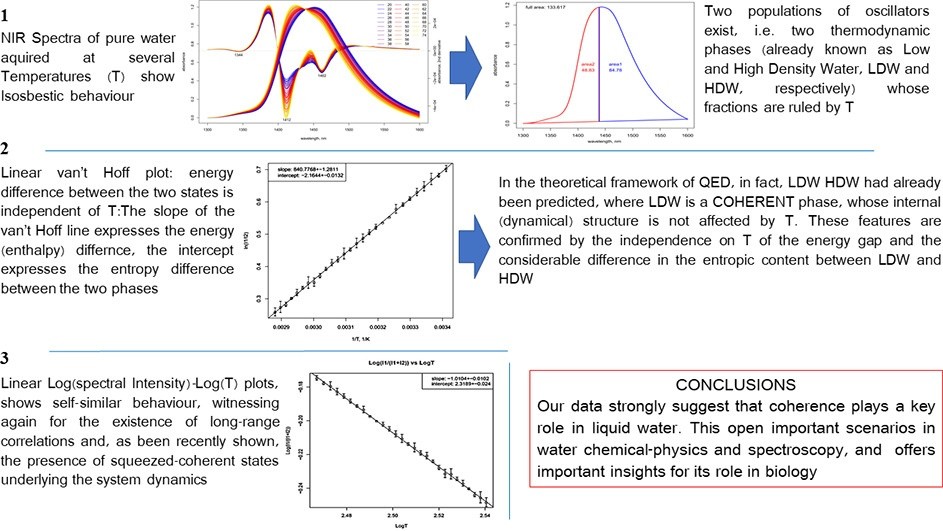
11:30-11:45 Paolo Renati – Temperature dependence analysis of the NIR spectra of liquid water confirms the existence of two phases, one of which is in a coherent state
11:45-12:00 Nikolaj Sorgenfrei Blom – DireWaves: Disarming resistant microbes with weak ELF magnetic fields
12:00-12:15 Everine van de Kraats – Water functionality and lessons learnt from NIR spectroscopy
12:15-12:30 Zoltan Gillay – Evaluation of modified handheld spectrometer to transmission mode using NaCl and saccharose
The payments can be done in cash/by card/ or transferring the money to the hotel account* and it has to be done by 15th November, 16:00 (local, Hungary time). Please do not proceed with the payment until your reservation is confirmed by the hotel!
Bank details
Name of the bank: Magnet Magyar Közösségi Bank Zrt.
Address of the bank: 1062, Budapest Andrássy út 98.
Firm code: 01-10-04611
Bank account for EUR payment: HU 12 1620 0106 11633271 00000000 IBAN
SWIFT: HBWE HUHB
Free cancellations can be done until 15th November, 16:00 (local, Hungary time), after this the 100% of the price has to be paid.
Location: The conference venue can be reached in about ten minutes with Tram 51.
Hotel Rila ** – hostel style
Offers of the hotel
Single room (one bed) – 9000 HUF (27 EUR)/room/ night including breakfast
Double room – 12000 HUF (36 EUR)/room/night including breakfast
The prices include taxes and access to Wi-fi.
Reservation instructions
You can make your reservations via website of the hotel. If you choose this hotel, please in the notes write the SZIECONF code. If you would like to stay with someone else, then when you apply please write also in the notes.
Payment and cancellation policy
Payment can be done at the hotel at arrival in cash/by card.
You can cancel and modify your booking by 23rd November, 16:00 (local, Hungary time).
Website: (where you can make your reservation) http://www.hotelrila.com/
Location: The conference venue can be reached in about five minutes on foot.
Tour
Tour fee covers lunch and dinner and visits to some Budapest tourist sites.
We are very pleased to announce that a new article on Aquaphotomics has been accepted and will be published in “Talanta” (Volume 206, 1 January 2020).
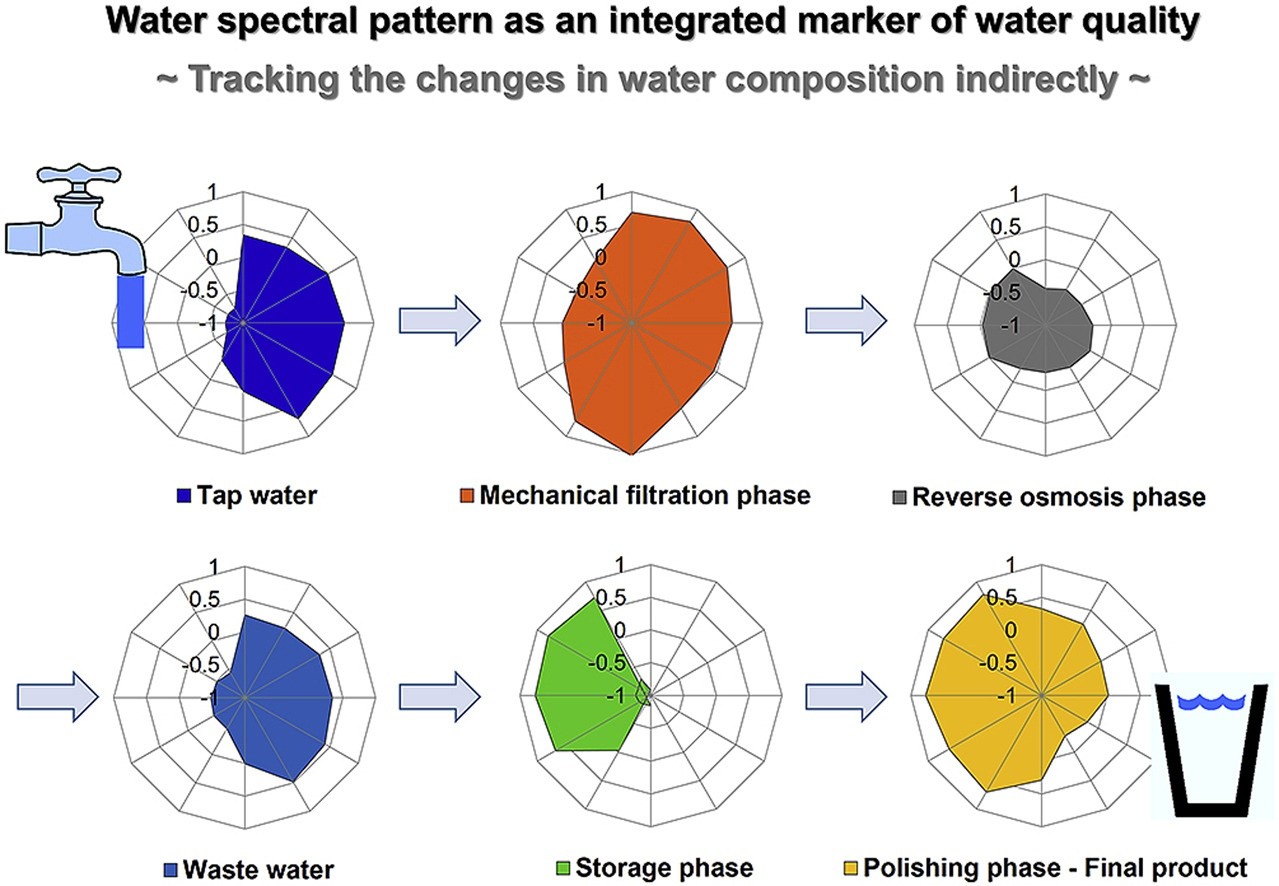
“Aquaphotomics approach for monitoring different steps of purification process in water treatment systems” by Jelena Muncan, Valentina Matovic, Strahinja Nikolic, Jelena Askovic and Roumiana Tsenkova
Currently, the water quality assessment is based on determination of a range of physico-chemical, and microbiological parameters, which is costly, time-consuming and requires multiple tests. Aquaphotomics strategy for water monitoring is based on the principle that the spectra of water are sensitive to all the chemical and physical perturbations, and as such reflect the state of water. In this study, aquaphotomics approach was applied on the near infrared spectra of water samples which underwent different filtration treatments performed by a commercially available water treatment system intended for the household use. The applicability of this approach was demonstrated using difference spectra, multivariate classification analysis and by visualizing the water spectral pattern in aquagrams. The results consistently showed that water samples produced by different filtration treatments have distinctive spectral patterns which characterize the state of water molecular network, and can be used for identification of the respective treatment, tracking efficiency of the treatment and monitoring the performance of water treatment systems.
We are very pleased to announce that a new article on Aquaphotomics has been accepted and will be published in “Journal of Molecular Liquids” (Volume 206, 15 October 2019).
“Temperature dependence analysis of the NIR spectra of liquid water confirms the existence of two phases, one of which is in a coherent state” by Paolo Renati, Zoltan Kovacs, Antonella De Ninno and Roumiana Tsenkova
Highlights • Milli-Q Water 1300–1600 nm NIR spectra show an isosbestic point on changing T. • It divides the spectral area pointing towards the existence of two populations. • Their ratio follows a van’t Hoff behavior supporting energy gap independent of T. • The energy difference obtained by the van’t Hoff plot fits the theoretical value. • The log-log plot of the abundance of one population vs T cues its coherent behavior.
Dr. Ahmad Fairuz Omar currently leading an optical spectroscopy research group in the School of Physics, Universiti Sains Malaysia (USM). He completed his master’s degree in 2009 with research on the development of an optical fiber sensor in the measurement of water turbidity. He then completed his Ph.D. in 2012 with a research topic on the application of visible and near-infrared spectroscopy in measuring intrinsic qualities of B10 Averrhoa carambola. For the last 10 years, he has been working to fully utilize the application of optical spectroscopy, especially for environmental monitoring, food quality analysis, and medical diagnosis. He is actively reaching out for collaboration with various research faculties in Malaysia and neighboring countries, in enhancing the establishment of spectroscopy network and contribution within this region. In addition, Dr. Omar regularly organized outreach programs to high school and general public in promoting awareness on issues related to sustainability and quality of life, and the potential role that optical spectroscopy carries in handling quality issues from instrumentation and measurement point of view.
Aquaphotomics work
Dr. Omar has previously published several articles on the application of near-infrared spectroscopy in the measurement of aqueous sugars and acids concentration and also in food quality analysis. His current research focus is on implementing near-infrared spectroscopy and aquaphotomics in cancer diagnosis and in skin quality measurement, especially those related to moisture measurement of stratum corneum layer on human skin. This research is in collaboration with the Malaysian Institute of Pharmaceuticals and Nutraceuticals (IPharm) and Advanced Medical and Dental Institute (AMDI), USM.
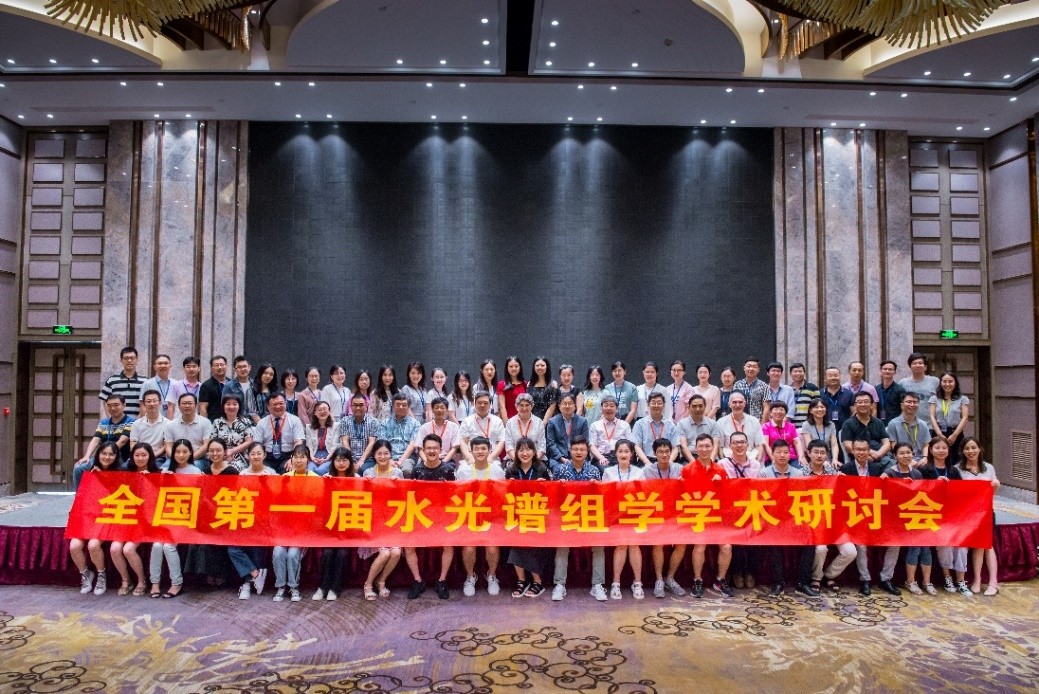
From the 21st
to 23rd of July, 2019, the “First Chinese Conference on
Aquaphotomics” was held in Jinan, China. This event was organized by Professor
Hengchang Zang (Shandong University) and Professor Xueguang Shao (Nankai
University). The event was hosted by China Council of Near Infrared
Spectroscopy (CCNIRS), jointly organized by School of Pharmaceutical Sciences,
Shandong University, and sponsored by Bloomage Biotechnology Corporation
Limited.
The Conference
brought together water researchers, students and users of the technology from a
wide variety of backgrounds, applications and industries to present, see and
discuss current developments in aquaphotomics. There were more than 110
participants from a wide range of research fields, including pharmacy, food and
chemical analysis, photobiology,
petrochemistry,
equipment and software suppliers.
The theme of
this conference was “Application of Spectroscopy in Aquaphotomics”. During the
conference, researchers communicated and discussed various topics, such as the
origin of aquaphotomics, methods of aquaphotomics, various applications in
medicine and different industrial branches, specifics of instruments and probes
for water research and so on. Experts discussed in depth and called for more
researchers to join the study of water which may seem to be a simple substance,
but it is a huge world to explore.
The conference
invited Professor Dr Roumiana Tsenkova (Chairperson of the International
Council for Aquaphotomics and a founder of aquaphotomics) and Hoeil Chung (Secretary-General
of Asian NIR Consortium) to give cutting-edge research presentations. Prof.
Hengchang Zang (Shandong University), Prof. Xueguang Shao (Naikai University),
Prof. Jingyan Han (Peking University), Prof. Xinghua Xia (Nanjing University),
Prof. Kexin Xu (Tianjin University), Dr. Xiu’e Jiang (Changchun Institute of
Applied Chemistry, Chinese Academy of Sciences) and Dr. Xueping Guo (Bloomage Biotechnology
Corporation Limited) shared the research results of their laboratories. Most of
the reported achievements were focused on applications in basic research with a
fresh approach to studying using water as a source of information, but many works in the areas of medicine, life
sciences etc. were also presented.
After the
meeting, the experts called for the establishment of the “Chinese Council of Aquaphotomics”
and regular discussions of the topics to promote the development of this
scientific discipline. The hope of the organizers is that regular, successful
conference meetings will attract more people to join this research field, establish
wider network of scientists interested in the research of water molecular
matrix and application of the research findings in industry and everyday-life
applications, thus helping the progress of human society.
We are very pleased to announce that a new review article on Aquaphotomics has been published in “Molecules” as part of the “Special Issue Advances in Near Infrared Spectroscopy and Related Computational Methods.”
“Aquaphotomics—From Innovative Knowledge to Integrative Platform in Science and Technology” by Jelena Muncan and Roumiana Tsenkova (Published: 28 July 2019)
Aquaphotomics is a young scientific discipline based on innovative knowledge of water molecular network, which as an intrinsic part of every aqueous system is being shaped by all of its components and the properties of the environment. With a high capacity for hydrogen bonding, water molecules are extremely sensitive to any changes the system undergoes. In highly aqueous systems—especially biological—water is the most abundant molecule. Minute changes in system elements or surroundings affect multitude of water molecules, causing rearrangements of water molecular network. Using light of various frequencies as a probe, the specifics of water structure can be extracted from the water spectrum, indirectly providing information about all the internal and external elements influencing the system. The water spectral pattern hence becomes an integrative descriptor of the system state. Aquaphotomics and the new knowledge of water originated from the field of near infrared spectroscopy. This technique resulted in significant findings about water structure-function relationships in various systems contributing to a better understanding of basic life phenomena. From this foundation, aquaphotomics started integration with other disciplines into systematized science from which a variety of applications ensued. This review will present the basics of this emerging science and its technological potential.






 Dear colleagues,