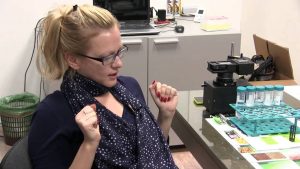
Affiliation: Mississippi State University, Department of Biochemistry, Molecular Biology, Entomology, and Plant Pathology, Mississippi State, MS, USA 39762
Research Topics : Animal physiology, Amphibian conservation, NIR and NMR spectroscopy applied to animal and plant pathogens and diseases.
Description: Our research group started working with spectroscopic applications in animal physiology when Dr. Vance joined a research team focusing on NIR analysis of nutrition in the Giant Panda. We expanded our studies to develop NIR spectroscopic methodologies for determining basic physiological parameters (e.g. gender, reproductive status, age, disease) with the end goal of mapping the demographic movements of giant panda in-situ. Additionally, we have applied NIR spectroscopy to numerous other mammalian species (horses, cattle, elephants, okapi, leopards) and extended our research into non-mammalian taxa (anura, caudates, fish).
Aquaphotomics work: We have used Aquaphotomics to profile the reproductive status of Snow leopards and Amur leopards using NIR spectra collected from urine. In addition, we evaluated the reproductive cycling and performance of mares exposed to the fusarium mycotoxin Zearalenone, which causes hyperestogenism, by the analysis of blood serum spectra. Currently, we are using NIR spectroscopy and Aquaphotomics to analyze biochemical profiles of the pathogens Bovine Herpesvirus type 1, Bovine Respiratory Syncytial Virus, Mannhemia haemolytica, Xanthomonas spp, and Rhizoctonia solani. Our ultimate goal is to understand the biochemical changes occurring during the course of disease, and validate spectra profiling early stages of infection. Deterministic spectra feed into the development of NIR spectroscopy as a rapid, portable, non-destructive, and accurate diagnostic tool capable of reducing the time required for pathogen and disease detection and identification, which is a determining factor in infection-related mortality rates and the control of further disease spread.
A series of chemometric methods were developed for analyzing complex systems, including chemical factor analysis (CFA), optimization methods, wavelet transform (WT), and immune algorithm (IA). Particular attention was paid to the studies of near infrared spectroscopy. Chemometric methods for near–infrared (NIR) spectral analysis, including the methods for spectral pre-processing, outlier detection, variable selection, and the methods for quantitative and discrimination analysis. Works for the micro-analysis by NIR spectroscopy were conducted as well based on the combination of chemometric and experimental strategies. The research interests of the laboratory also include the application of NIR spectroscopy in the monitoring of industrial productions and the quality control of drugs and natural products.
In recent works, research works are concentrated on temperature–dependent NIR spectroscopy. Quantitative models between NIR spectra and temperature was studied and applied to the quantitative determination of the compositions in mixtures and the analytes in aqueous solutions, as well as the structural analysis in the transformation of proteins and polymers. In these works, water was taken as a probe for sensing the quantity and the structure of the analytes. Therefore, chemometric methods for extracting the information from NIR spectrum of water was developed. In the future works, application of temperature–dependent NIR spectra in analyzing bio-systems will be concentrated on, e.g., disease diagnosis based on the spectra of bio-liquids.
Aquaphotomics Related Work
Similar with the studies of aquaphotomics, the spectrum of water was taken as the main source of the information. Water serves as a mirror to reflect the quantity, structure and the interactions in the analyzing systems. Therefore, methods for deeply mining the fine spectral features of water and their variation with temperature are needed. Up to now, water structures in different solutions were studied by temperature–dependent NIR spectroscopy, and the complexity of water structures was studied by molecular simulations. Chemometric methods for enhancing the resolution of the NIR spectrum and retrieving the spectral information for different water species were developed. Furthermore, quantitative determination and understanding of the structural changes of proteins and polymers by the change of the spectral features of water with temperature was conducted. Water was proven to be a good probe for indicating the quantity and the structure of the analytes in aqueous and bio-liquid systems.
Dr. Ahmad Fairuz Omar currently leading an optical spectroscopy research group in the School of Physics, Universiti Sains Malaysia (USM). He completed his master’s degree in 2009 with research on the development of an optical fiber sensor in the measurement of water turbidity. He then completed his Ph.D. in 2012 with a research topic on the application of visible and near-infrared spectroscopy in measuring intrinsic qualities of B10 Averrhoa carambola. For the last 10 years, he has been working to fully utilize the application of optical spectroscopy, especially for environmental monitoring, food quality analysis, and medical diagnosis. He is actively reaching out for collaboration with various research faculties in Malaysia and neighboring countries, in enhancing the establishment of spectroscopy network and contribution within this region. In addition, Dr. Omar regularly organized outreach programs to high school and general public in promoting awareness on issues related to sustainability and quality of life, and the potential role that optical spectroscopy carries in handling quality issues from instrumentation and measurement point of view.
Aquaphotomics work
Dr. Omar has previously published several articles on the application of near-infrared spectroscopy in the measurement of aqueous sugars and acids concentration and also in food quality analysis. His current research focus is on implementing near-infrared spectroscopy and aquaphotomics in cancer diagnosis and in skin quality measurement, especially those related to moisture measurement of stratum corneum layer on human skin. This research is in collaboration with the Malaysian Institute of Pharmaceuticals and Nutraceuticals (IPharm) and Advanced Medical and Dental Institute (AMDI), USM.
「Molecules」誌の「Special Issue: Advances in Near Infrared Spectroscopy and Related Computational Methods」において、アクアフォトミクスに関する新しいレビュー論文が掲載されたことを、大変うれしくお知らせいたします。
“Aquaphotomics—From Innovative Knowledge to Integrative Platform in Science and Technology” by Jelena Muncan and Roumiana Tsenkova (Published: 28 July 2019)
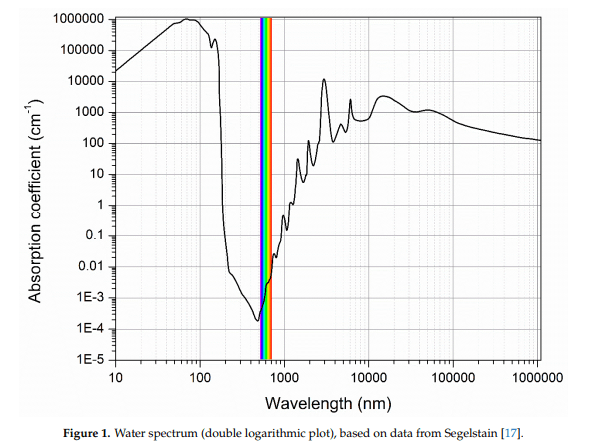
Aquaphotomics is a young scientific discipline based on innovative knowledge of water molecular network, which as an intrinsic part of every aqueous system is being shaped by all of its components and the properties of the environment. With a high capacity for hydrogen bonding, water molecules are extremely sensitive to any changes the system undergoes. In highly aqueous systems—especially biological—water is the most abundant molecule. Minute changes in system elements or surroundings affect multitude of water molecules, causing rearrangements of water molecular network. Using light of various frequencies as a probe, the specifics of water structure can be extracted from the water spectrum, indirectly providing information about all the internal and external elements influencing the system. The water spectral pattern hence becomes an integrative descriptor of the system state. Aquaphotomics and the new knowledge of water originated from the field of near infrared spectroscopy. This technique resulted in significant findings about water structure-function relationships in various systems contributing to a better understanding of basic life phenomena. From this foundation, aquaphotomics started integration with other disciplines into systematized science from which a variety of applications ensued. This review will present the basics of this emerging science and its technological potential.
Affiliation: Leibniz Institute for Agricultural Engineering and Bioeconomy (ATB), Germany
Research Topics: fruit quality; irrigation; oxygen shortage; spatially resolved spectroscopy, frequency based spectroscopy
Description
The group Prec_Hort works on research questions related to precise production measures in fruit growing. The group is active in the development of optical sensors and turning the signals into plant information. The plant information obtained is used in the agronomic processes. The Prec_Hort work group is located in the Leibniz Institute for Agricultural Engineering and Biotechnology (ATB), Potsdam, Germany. Here we have an optical laboratory and an experimental station providing some two thousand apple trees with two cultivars in random design and sweet cherry trees capturing >70 varieties to run experiments. We are a group of five researchers in various steps of our careers supported by excellent engineers.
Aquaphotomics work
Our research questions target the following three steps to integrate sensors in the precise fruit production:
Characterisation of physical properties of fresh fruit
The in-situ assessment of fruit by means of spectral-optical (multi- and hyper-spectral methods in the visible and near infrared wavelength range, time-resolved laser-induced fluorescence spectroscopy, spatially resolved spectroscopy [backscattering imaging]) and whole trees by means of light detection and ranging laser scanners.
Applications of Precision Horticulture such as zone-specific harvest management and more precise irrigation management considering soil zones, plant growth (leaf area) and fruit developmental stage
Any exchange within Aquaphotomics on the optical sensing and its application would be very interesting to us.
Research Topics: NIR spectroscopy and the related instrumentation, data evaluation techniques, software and programming
There is a little group in the middle of Europe consisting of three young research fellows having devotion towards NIR spectroscopy and the related instrumentation, data evaluation techniques, software and programming.
One of the fellows, Dr. Bernhard Pollner <[email protected]> from Austria, graduated to MD at Innsbruck Medical School in 2004. He has been working as an independent researcher consultant in the field of water science since his graduation. During his scientific activities Bernhard acquired a good knowledge of many different methods in this field. One of his special interests lies in complex algorithms and high-throughput computations using R, a free software environment for statistical computing and graphics. Since his three months stay in Professor Roumiana Tsenkova’s laboratory, at Kobe University, Japan, together with the other two fellows Zoltan and George, he worked on various projects in the field of NIRS and Aquaphotomics. He is currently a PhD student at University of Innsbruck, Austria.
George Bazar, PhD <[email protected]>, one of the Hungarian fellows, started learning about NIRS as a PhD student in Professor Robert Romvari’s laboratory at Kaposvar University in 2005. Later he was mentored by Professor Karoly Kaffka who motivated him to attend the next IDRC in Chambersburg. At this meeting in 2008 George met many pioneers of NIRS, among them the famous Karl Norris considered to be the father of NIR spectroscopy, and Roumiana Tsenkova who introduced him Aquaphotomics. Thanks to this acquaintance, after defending his PhD in 2011, he successfully applied for a JSPS postdoc position at Professor Tsenkova’s laboratory, where he spent two years. Half a year after his arrival Zoltan joined the same team, and they started working together on different research topics in the field of Aquaphotomics. George returned to Hungary in 2014 and since then he has been working at Kaposvar University as Research Fellow. His valuable work has been awarded by the Postdoctoral Fellowship Grant in the frame of the New National Excellence Program of the Hungarian Government.
The second Hungarian fellow, Zoltan Kovacs, PhD <[email protected]>, started his scientific activity in the field of instrumental taste sensing and defended his PhD diploma in 2012 in the topic of the problems with electronic tongue measurements. He gained knowledge about experimentation, uni- and multivariate data analysis related to the above mentioned topics, which gave him the opportunity to apply to Professor Tsenkova’s laboratory where he learned the basics of NIRS and Aquaphotomics techniques working together with George and later with Bernhard. Zoltan returned to Hungary in 2016 and works at his home university, Szent István University, Budapest, as assistant professor and beside his original field he makes great efforts to do research in the field of NIRS and Aquaphotomics. His work has been awarded by the Janos Bolyai Postdoctoral Research Grant given by the Hungarian Academy of Sciences.
George and Zoltan realized the high importance of the stability of the spectrometers when the Aquaphotomics approach was applied and started to pay attention to the stabilization of the experimental arrangements, widening the knowledge of Aquaphotomics with their observations. While Bernhard and Zoltan have been working to develop dedicated software for Aquaphotomics calculations since they met in Japan.
Bernhard, George and Zoltan continuously look for the opportunities to extend the research of NIRS and Aquaphotomics and they keep working on research projects with Professor Tsenkova at Kobe University, but they are willing to build collaborations with other groups, too.
Beside the academic presence they have founded a consulting company in Hungary, Correltech Bt., to provide a more flexible way of collaboration of researchers related to NIR spectroscopy and other correlative analytical technologies worldwide. They all were invited to the scientific team of Tellspec Inc., an innovative data company offering real-time food analysis with a small handheld NIR spectrometer connected with a cloud-based analysis engine.
These research fellows aim to build a wide international scientific cooperation in NIR spectroscopy, multivariate data analysis, and in the field of possible applications. Therefore, they are ready to support cooperation with their knowledge in instrumentation, experimentation, data evaluation, software and programming.
Research Topics : Near Infrared Spectroscopy, Water Science, Biomeasurement, Aquaphotomics.
NIRS Laboratory is the cradle of Aquaphotomics, a new scientific discipline, proposed by Professor Roumiana Tsenkova in 2005. The Laboratory is working on various applications and new developments in the area of near infrared spectroscopy (NIRS) as non-destructive technology for monitoring and diagnosis of biological and aqueous systems. Qualitative and quantitative analysis applied in biological- and food-related research and technology, as well as understanding new phenomena related to water in biology are the main area of interest. We proposed a new scientific area called Aquaphotomics as a new member in the “omics” area devoted to examine “all about the interaction between water and light” and present spectroscopy as an important tool to study the functionality of water in Life science.
Group leader (former) : Assistant Professor Jelena Muncan
Affiliation: Biomedical Engineering Department, University of Belgrade, Serbia
Research Topics : Characterization of biomaterials and nanomaterials, Biomedical diagnostics and therapy, Aquaphotomics.
Jelena Munćan started her research career at Biomedical Engineering Department, University of Belgrade in Serbia. After graduating at Department of Manufacturing Engineering in 2008, her interest in artificial intelligence and neurprosthetics led her to pursue PhD in Biomedical engineering, with the initial focus on nanotechnologies and how they can help early diagnostics and/or therapy in the case of neurodegenerative diseases.
During her early years as a PhD student she meets Professor Dr Tsenkova, and starts initial explorations in aquaphotomics, with works on characterization of water, aqueous solutions of fullerol and other fullerene based nanomaterials, as well as cosmetic and therapeutic products based on fullerene. The framework of Aquaphotomics inspired her to search for better understanding of water phenomena and how it can be implemented for the purposes of biomedical diagnostics and therapy, as well as better understanding of the role of water in biological organisms.
After completing her PhD thesis on the topic of non-invasive glucose sensing, recognizing the potential and vast possibilities of aquaphotomics in biomedical science, she widened her research area to characterization of hydrogel based contact lenses, cancer and diabetes diagnostics, and efficacy of dialysis therapy. During this period, first as an Assistant, and then as an Assistant Professor at the Biomedical Engineering Department, Faculty of Mechanical Engineering, University of Belgrade she introduced some additions to the standard curriculum offering the courses such as BioStatistics and Data mining, Spectroscopy methods and techniques as well as a new PhD course entirely devoted to Aquaphotomics.
In 2017 she was awarded by Japanese Society for Promotion of Science, and after completing her 2-year postdoctoral fellowship on mastitis diagnosis in dairy, she decided to continue to live in work on aquaphotomics in Japan, where is currently employed as a Specially Appointed Assistant Professor at newly established, Aquaphotomics Research Department, Kobe University.