Description: Our research group consist of members having the expertise in different fields, including plant science, environmental science and microbiology. Currently, in our research, we apply multidisciplinary approach to study, monitor and find solutions for environmental issues through the application of different types of molecular biological, chemical and physical analyses.
Aquaphotomics work: I joined with Aquaphotomics Department in the Faculty of Agriculture, Kobe University Japan, as a postdoctoral researcher and there I learned NIR spectroscopy and aquaphotomics under the guidance of Prof. Dr. Roumiana Tsenkova. In our future research, I hope to apply NIR spectroscopy and aquaphotomics as a holistic biomarker.
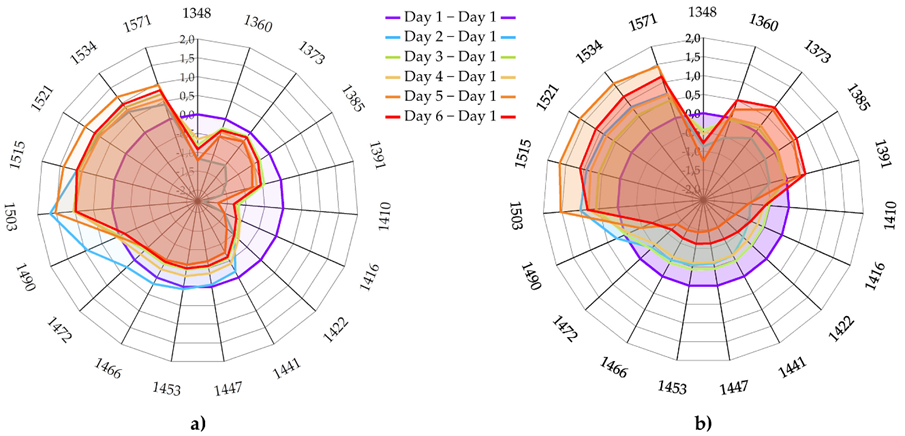
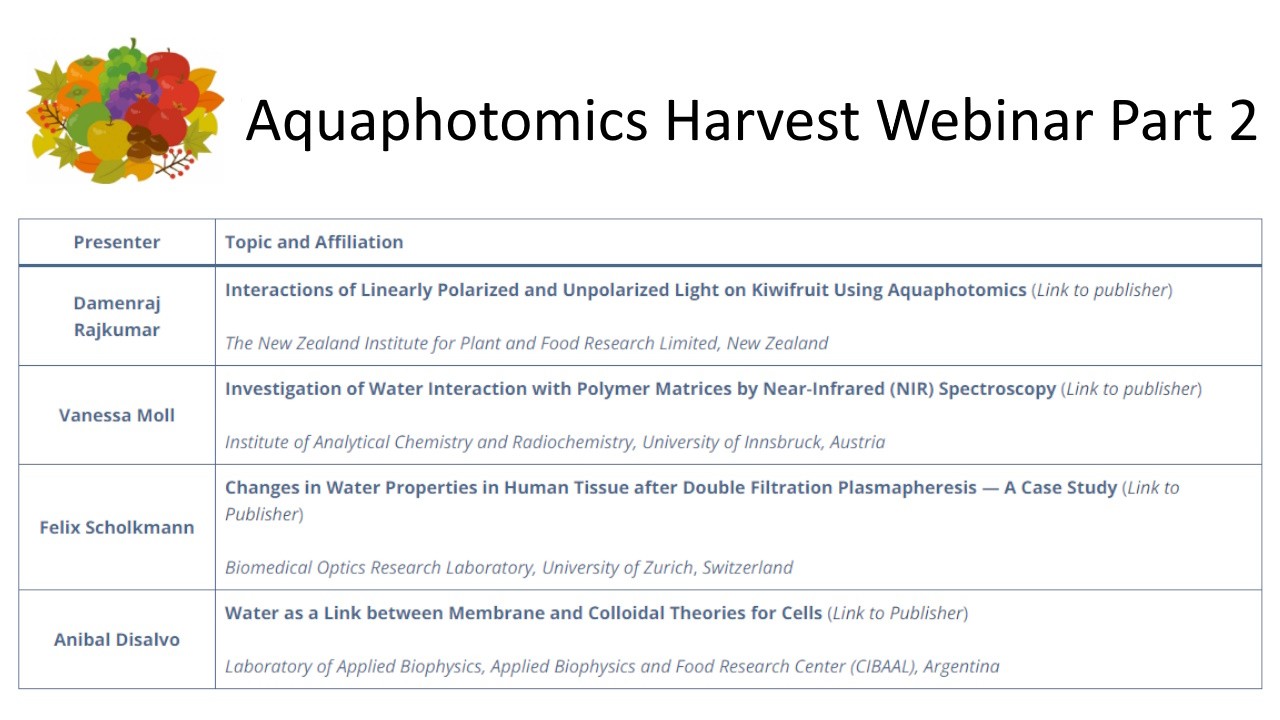
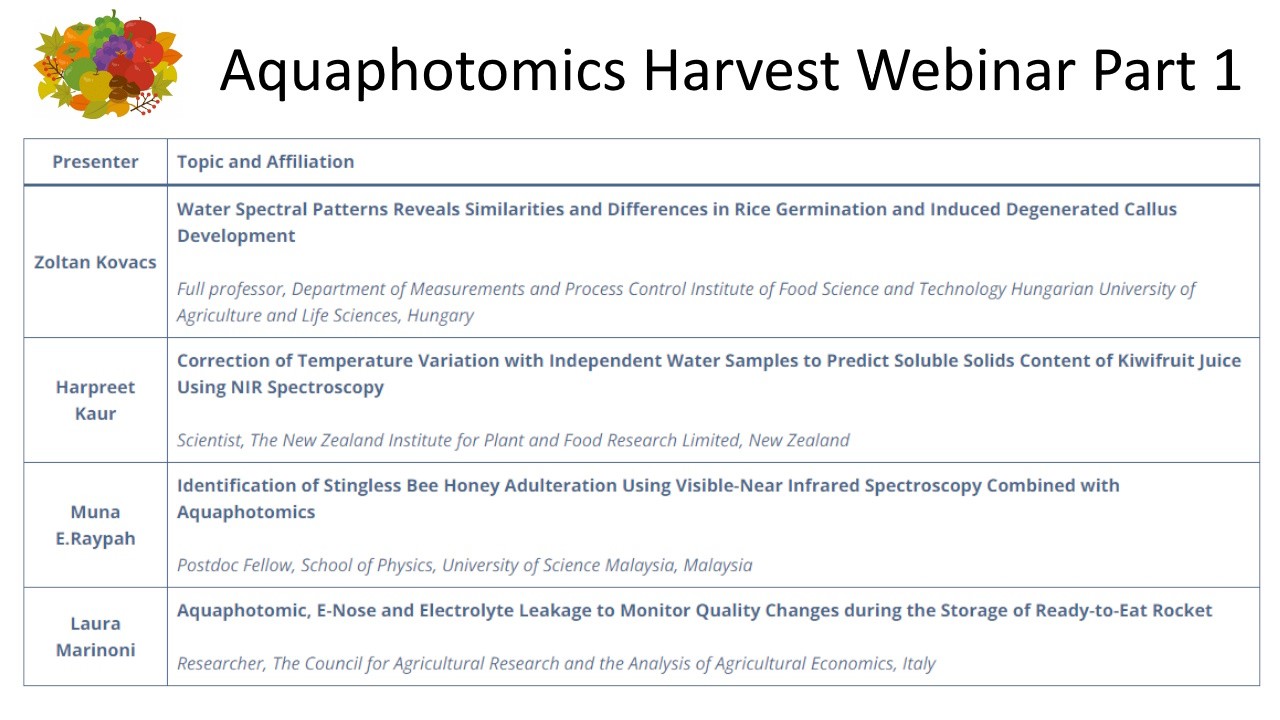
Water Spectral Patterns Reveals Similarities and Differences in Rice Germination and Induced Degenerated Callus Development
Full professor, Department of Measurements and Process Control Institute of Food Science and Technology Hungarian University of Agriculture and Life Sciences, Hungary
Harpreet Kaur
Correction of Temperature Variation with Independent Water Samples to Predict Soluble Solids Content of Kiwifruit Juice Using NIR Spectroscopy
Scientist, The New Zealand Institute for Plant and Food Research Limited, New Zealand
Muna E.Raypah
Identification of Stingless Bee Honey Adulteration Using Visible-Near Infrared Spectroscopy Combined with Aquaphotomics
Postdoc Fellow, School of Physics, University of Science Malaysia, Malaysia
Laura Marinoni
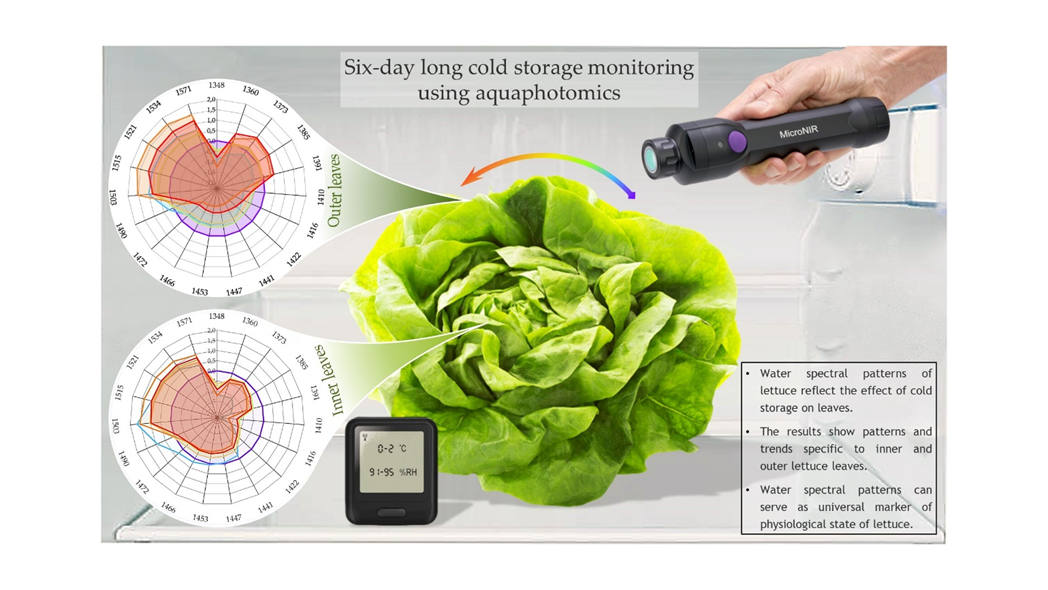
Aquaphotomic, E-Nose and Electrolyte Leakage to Monitor Quality Changes during the Storage of Ready-to-Eat Rocket
Researcher, The Council for Agricultural Research and the Analysis of Agricultural Economics, Italy
論文「Aquaphotomics for monitoring of groundwater using short-wavelength near-infrared spectroscopy」がSpectrochimica Acta Part A: Molecular and Biomolecular Spectroscopy誌に掲載されました。この論文は、神戸大学アクアフォトミクス研究室、ハンガリー農業生命科学大学アクアフォトミクスグループ、和歌山県橋本市の湯の里アクアフォトミクスラボの3チームが長期にわたる共同研究した成果によるものです。
和歌山県湯の里アクアフォトミクス研究室では長期研究プロジェクトが行われており、2016年に最初の成果がTalanta誌に掲載されKovacs, Z., Bázár, G., Oshima, M., Shigeoka, S., Tanaka, M., Furukawa, A., Nagai. A, Osawa, M., Itakura, Y. and Tsenkova, R. (2016). 水質モニタリングのための総合マーカーとしての水のスペクトルパターン.Talanta, 147, 598-608.)、今回は最新の成果を発表しています。株式会社重岡のゆの里温泉では地下水を汲み上げており、2016年からこの研究による初のアクアフォトミクスに基づく水質モニタリングシステムを採用しています。また、民間初の「ゆの里アクアフォトミクスラボ」を設立し、研究の幅は食品、化粧品、土壌、人の健康、さらに音にまで広がっています。
NIRS is a modern analytical technique that makes use of the material information contained in the near infrared spectrum region and relies on chemometrics and computer technology to carry out qualitative and quantitative analysis of organic substances. It is one of the most important tools in PAT technology. NIRS has become one of the most rapidly developed new analytical techniques in the past decade due to its advantages of fast analysis speed, no pretreatment, no pollution, and simultaneous analysis of multiple components.
Drug quality and its uniformity is one of the important basic characteristics of drugs, and it is the core of drug efficacy and drug risk management. Many advanced pharmaceutical companies have adopted NIR spectroscopy for quality analysis and control of the whole process. However, the application of NIR spectroscopy in the pharmaceutical field is still in the research stage, and the common problems of many methodologies need to be further studied and understood. It is necessary to conduct theoretical discussion and experimental research on how to integrate the implementation of engineering, drug registration regulations, and the restrictions of GMP clauses. The consistency of drug efficacy and the improvement of drug re-registration standards all need the support of NIR technology. Therefore, in recent years, our research group has been devoted to the theoretical exploration and application research of the application of NIR spectroscopy in the pharmaceutical field.
Aquaphotomics related work
Hydration plays an important role in the stability of protein structure and function. The dynamic characteristics of hydration play a key role in biochemical processes, including protein folding, enzyme function, and molecular recognition. Protein purification is affected by hydration and dehydration. We used NIR spectroscopy to study the morphological changes of the hydration layer around protein molecules and detected the network structure of hydrogen bond water around protein molecules by changing the protein concentration, thus providing theoretical support for the stability of protein structure.