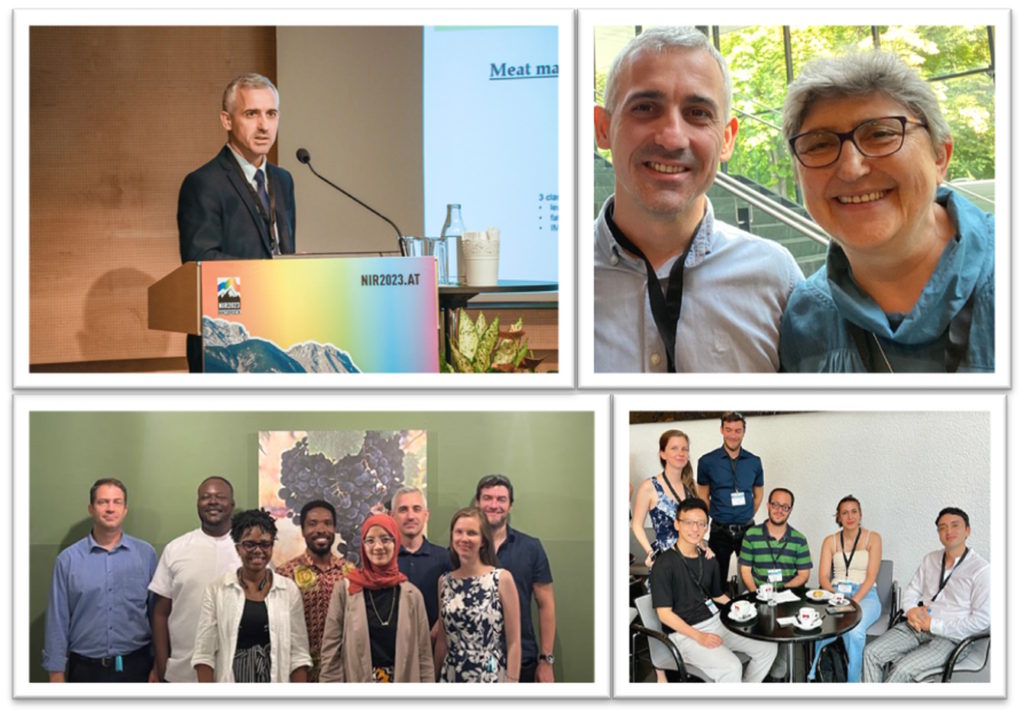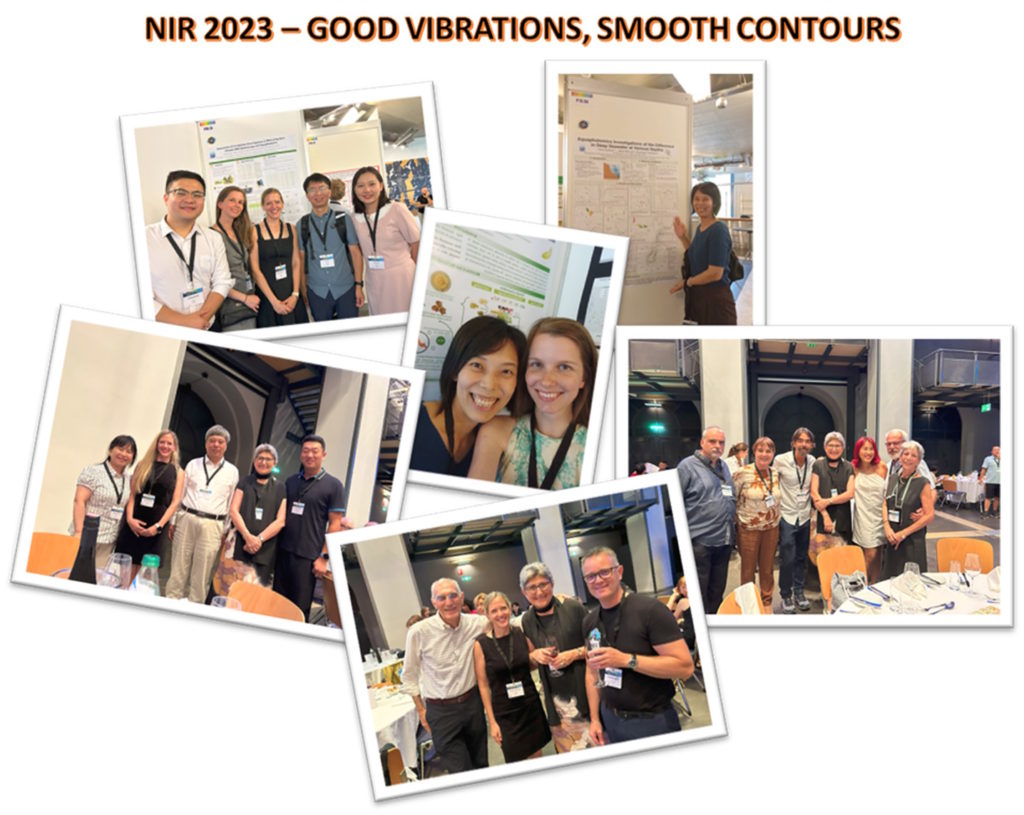
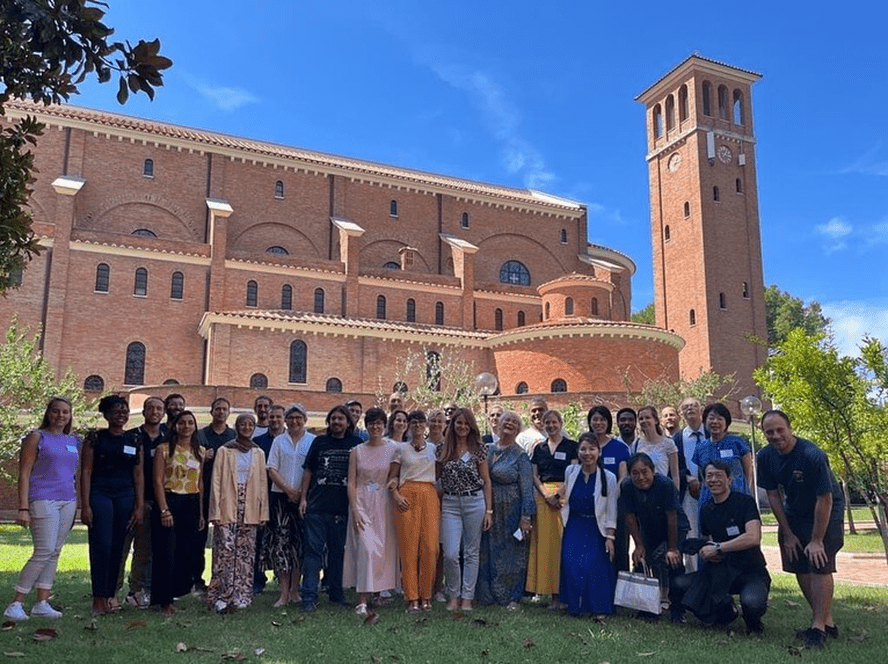
第3回アクアフォトミクスヨーロッパ会議は、今年、イタリア近赤外分光学会(SISNIR https://www.sisnir.org/ )とアクアフォトミクス国際学会の共同開催により、荘厳で時を超えた都市、イタリア・ローマにて開催されました。
2006年12月13日にローディで設立されたSISNIRは、現在100名を超える会員を擁しています。世界でも最大級かつ最も活発なNIR学会のひとつとして、SISNIRの目的は、近赤外分光法(NIRS)の科学的知識の普及、隔年開催のNIRITALIAシンポジウムなどのイベントの企画、そして若手研究者の国際会議への積極的な参加を支援することを通じて、イタリアの科学コミュニティへの貢献を高めることにあります。

イタリアNIRコミュニティの支援を受け、第3回アクアフォトミクスヨーロッパ会議は、長引く渡航制限と交流の機会の制約を乗り越えた後に再会する素晴らしい機会となりました。この集いは、旧友との再会、新たに登場したアクアフォトミクス研究者の世代との交流を可能にし、永遠の都ローマの美しさを堪能しながら、世界最高のピザや極上のジェラートを味わい、濃厚なエスプレッソを片手に心躍る会話を楽しむ場となりました。
会議は4日間にわたり、9月1日と2日に開催された「アクアフォトミクス・サマースクール」から幕を開けました。この特別なトレーニングプログラムは、主にNIR分光法やケモメトリクスの研究者、そして他分野の研究者を対象に、この“オミックス”分野の基礎を学ぶことを目的として設計されました。
初日の講義は、ハンガリー・ブダペストのハンガリー農業生命科学大学(MATE)のゾルタン・コヴァーチ教授によって開講されました。コヴァーチ教授は、ツェンコヴァ教授が日本でアクアフォトミクスを創設して以来の発展をたどりながら、現在の世界およびヨーロッパにおける展開について紹介しました。また、アクアフォトミクスの第4世代と呼ばれる最新の進展や、その多様な応用についても詳しく解説しました。
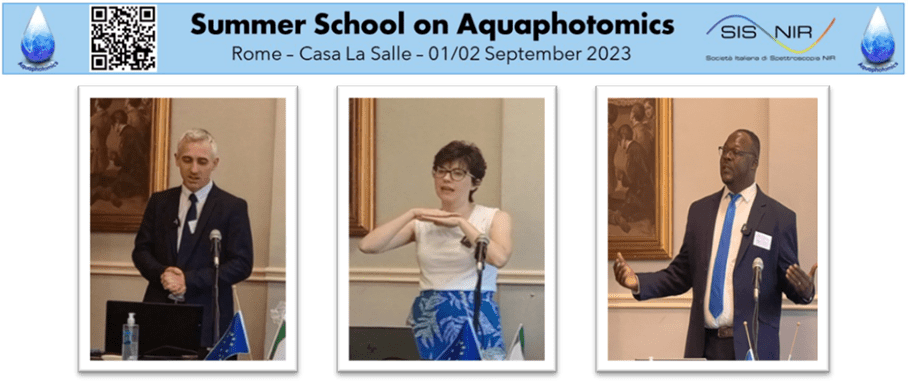
初日の中心テーマはアクアフォトミクスの応用であり、イタリア・ジェノヴァのDIFAR大学のクリスティーナ・マレゴリ助教授によってさらに掘り下げられました。彼女の講演「Applications – Water is Everywhere(水は至るところにある)」では、多くの実践的な応用の可能性が紹介され、この分野における重要なノウハウが伝えられました。
応用に焦点を当てた講義の締めくくりとして、ガーナのクワメ・エンクルマ科学技術大学(Kwame Nkrumah University of Science and Technology)生物科学学部・食品科学技術学科の講師ジョン=ルイス・ジニア・ザクー博士が、「農業・食品分野におけるアクアフォトミクス」という講演を行いました。ザクー博士は、アクアフォトミクス研究者の「第3世代」に位置づけられ、ハンガリーでコヴァーチ教授の指導のもと博士課程を修了しました。なお、コヴァーチ教授自身もツェンコヴァ教授のポスドク研究員でした。博士号取得後、ザクー博士はガーナへ戻り、食品科学技術学科で実験室委員会委員長や試験補佐官を務めながら、ガーナにおける自身のアクアフォトミクス研究グループを立ち上げました。
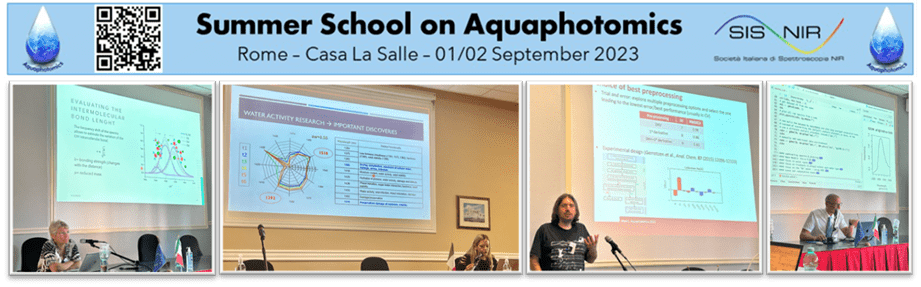
ワークショップ2日目は、水の化学と物理をさらに深く掘り下げ、実験の改善やデータ解析に関する実践的な側面にも焦点が当てられました。イタリア新技術・エネルギー・持続的経済開発庁(ENEA)を代表するアントネッラ・デ・ニンノ博士が、水の化学と水の振動分光に関する講義で2日目の幕を開けました。続いて、日本・神戸のアクアフォトミクス研究部門からムンチャン・イェレナ准教授が登壇し、近赤外分光法とそのアクアフォトミクス発展における重要な役割について解説しました。彼女は、自身の経験に基づき、機器選定、信号品質評価、実験手順、そしてアクアフォトミクスに特化したデータ解析手法に関する実践的な指針を示しました。
その後の2つの講義は、この基盤をさらに発展させました。ローマ・ラ・サピエンツァ大学のフェデリコ・マリーニ教授は、ケモメトリクスおよびスペクトルデータ解析の第一人者として、アクアフォトミクスに不可欠なさまざまなデータ前処理戦略を解説しました。特に、アクアフォトミクス分野におけるデータ解析の課題に対応するために近年開発された前処理技術の重要性を強調しました。
最後に、神戸大学でコヴァーチ教授とともにアクアフォトミクス用データ解析ツール「aquap2」パッケージを開発したコンサルタント兼データアナリストのベルンハルト・ポルナー医師が講義を行いました。彼は、このR環境向け専用パッケージの機能を、多くの事例と実践的なガイドを通じて効果的に示し、解析プロセス全体を加速させるだけでなく、アクアフォトミクス分野の教育支援においても重要なツールとなることを強調しました。
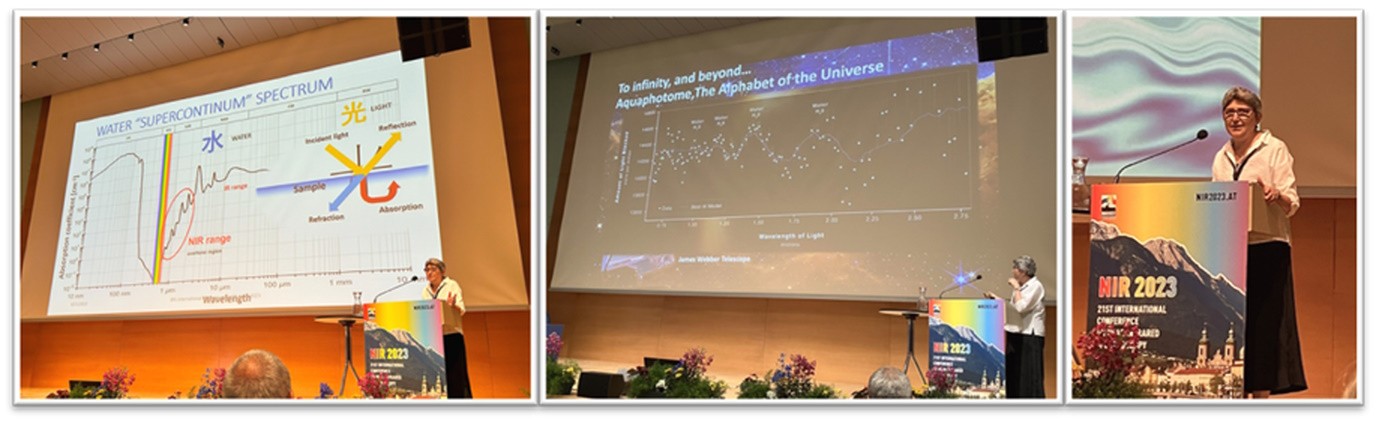
同日の夕方、会議はルミアナ・ツェンコヴァ教授の講演によって正式に開会されました。講演のタイトルは「アクアフォトミクス ― 新しい統合的科学・技術・教育プラットフォーム」であり、ツェンコヴァ教授は、アクアフォトミクスを以下の3つの重要な発展方向をつなぐ共通基盤とするビジョンについて語りました。すなわち、水と光の相互作用に関連する現象を発見・解明することを目的とした基礎研究、新たに得られた知識を活用することで必然的に進む技術開発、そして最後に、この新しい知識を科学コミュニティのみに留めず広く社会全体に共有し、社会的価値観や未来の社会動向に影響を与えることを目指す教育的側面です。
さらに彼女は、量子現象と意識における水の役割が交差する魅力的なテーマに関する新たな知見も紹介しました。その中で、水や微小管に由来する「レーザーのような」および「ホログラムのような」現象の出現を例に挙げました。ツェンコヴァ教授は、アクアフォトミクスは単なる科学・技術・教育の分野にとどまらず、それ自体が「生き方」であると強調しました。そして「Aquaphotomics」という名称の日本語訳として「水光道(みこうどう)」を紹介し、「水(み)」「光(こう)」「道(どう)」が合わさり、「水と光の道」という意味になることを説明しました。
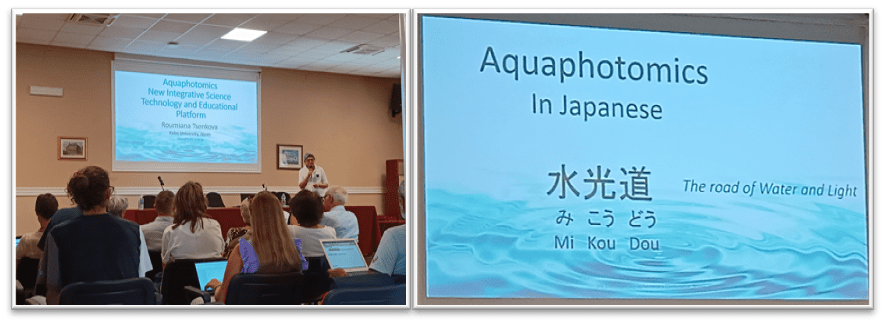
その後の2日間にわたり、会議では2つの基調講演、10件の口頭発表、そしてポスターセッションが行われました。
最初の基調講演は、イタリアのCREA(農業研究・食料変換技術研究センター、ミラノ部門)のティツィアーナ・カッタネオ博士によって行われました。カッタネオ博士はアクアフォトミクス分野の先駆者であり、ベテランとして広く知られています。彼女の講演では、アクアフォトミクスとの最初の出会いから始まり、長年にわたって研究グループが貢献してきた数多くの発展の節目を振り返りながら、その研究の歩みを雄弁に語りました。
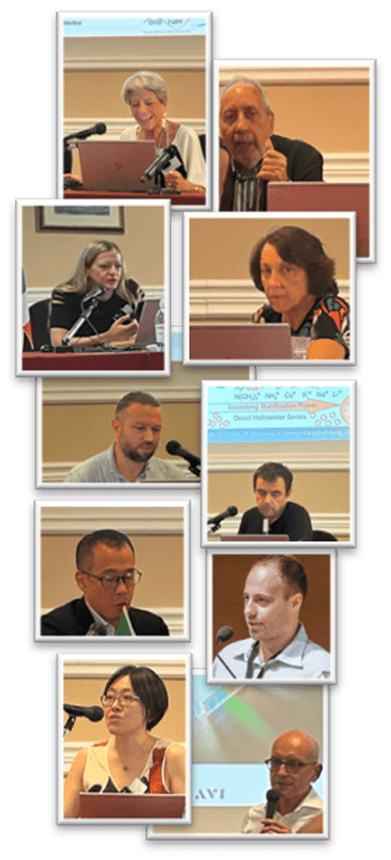
彼女はアクアフォトミクス研究者の模範であり、食品生産や品質管理の実践に深い意味を持つ科学・技術としてのアクアフォトミクスの発展に大きく貢献しただけでなく、献身的な教育者としても活躍しています。長年にわたる彼女の揺るぎない努力は、イタリアにおける新しい世代の研究者の思考を育み、その技能を磨くうえで重要な役割を果たしてきました。
彼女の最近の業績の一つに、博士論文「Non-destructive Spectroscopic Technology Applied to Sustainable Food Transformation Processes for Monitoring the Horticultural Supply Chain(園芸サプライチェーンのモニタリングのために持続可能な食品変換プロセスに適用された非破壊分光技術)」があります。この論文において彼女は、アクアフォトミクスとクラウドサービスを統合し、食品製品の品質を効率的に評価・監視できる革新的なクラウド型データベース「Aquacontrol」プラットフォームを創出したことを示しました。
2つ目の基調講演は、ブリュッセルの欧州がん・環境研究センターを代表するリヴィオ・ジュリアーニ博士によって行われました。彼の講演「Exposure of iPSC-Cardiomyocytes to Ca2+-ICR Modulates Gene Expression According to Maturation Pathways」では、カルシウムのサイクロトロン共鳴に応答して遺伝子が上方制御および下方制御されるという説得力のある証拠が提示されました。ジュリアーニ博士は、この現象を「非電離」放射線が実質的に水を電離するという概念に基づいて画期的に説明しました。この電離プロセスは、細胞内の生化学反応を駆動するのに必要なエネルギーを持つコヒーレント水ドメインの形成につながるというものです。
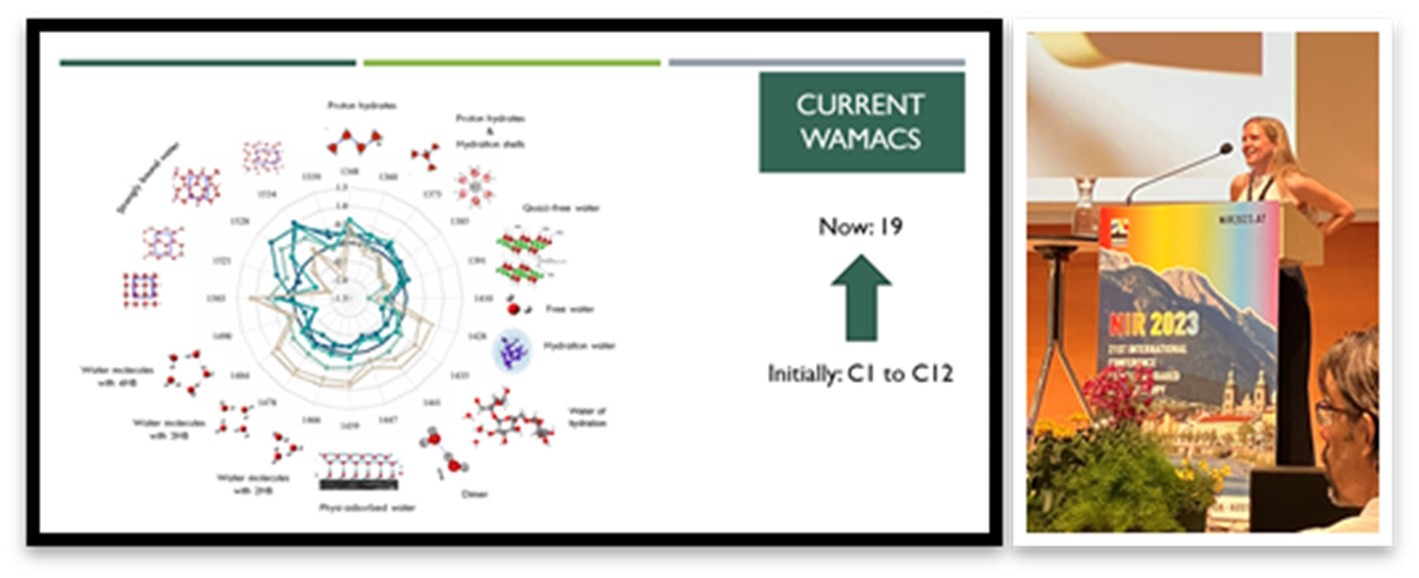
会議ではまた、日本のイェレナ・ムンチャン准教授およびブルガリアのステフカ・アタナソヴァ教授による発表も行われました。両者は長年アクアフォトミクスに取り組んできた専門家として知られています。ムンチャン教授は、アクアフォトーム・マッピングに関する自身の研究について発表しました。これは20年以上にわたり、水の近赤外領域で発見されてきた吸収バンドに関する知識を統合する体系的な試みです。特に第一倍音領域における研究の進展は大きく、その完成が間近に迫っていることを強調しました。ムンチャン教授は、特定の吸収バンドを割り当てるだけでなく、それらの吸収が示す水の機能性を明らかにすることの重要性を強調しました。つまり、各水分子構造が特定の役割を果たすために利用可能なエネルギーを、吸収スペクトルから読み解くという視点です。
一方で、アタナソヴァ教授は、トウモロコシにおける水ストレス診断に関する研究を発表しました。彼女の実験アプローチでは、水ストレスに対して通常の抵抗性を示す系統と、極めて高い耐乾燥性を特徴とする突然変異の自殖系統という、2種類の異なるトウモロコシ系統を用いています。彼女の研究成果は、植物が水ストレスに対抗する能力に関与する水の分子種を理解する上で重要な手がかりを提供し、トウモロコシ研究における大きな貢献となりました。
また会議では、アクアフォトミクス研究分野の新しい参加者たちも登場し、実践的・基礎的両面から貢献を果たしました。ローマ・サピエンツァ大学のエルマル・ニコッラリ博士は、水の「二流体挙動」に関する興味深い発見を発表しました。この現象は、液体の水および4種類のイオン水溶液の誘電応答を通じて観察されました。ニコッラリ博士は、THzデータとATR-FTIR分光を組み合わせ、水の「二状態」概念とは異なる「二集団モデル」を提示し、水分子種の多様性に光を当てました。
スロベニアからは、リュブリャナ大学のチェラル・ヤネツ准教授が登壇しました。彼はハンガリーのコヴァーチ教授と共同で、無機イオンや高分子電解質の水溶液についてより深い理解を得ることを目的とした研究を行っています。講演では、これらの系における未解決の課題を多数指摘し、特にアイソスベスティックポイントの挙動に焦点を当てました。そして、水分補正係数を用いた新しいアプローチを提示し、有望な知見と解決策を示しました。
また、日本・慶應義塾大学の比較的新しい研究者は、生体内で重要な抗酸化物質であるグルタチオンの作用機序を理解するためにアクアフォトミクスを応用した研究を発表しました。彼の研究は、還元型グルタチオン(GSH)と酸化型グルタチオン(GSSG)の違いに注目しました。両者の比率は酸化ストレスや細胞の健康状態を示す重要な指標です。彼の成果は、還元型グルタチオン(GSH)の抗酸化特性に関連する水スペクトルパターンを明らかにし、電荷を持つ分子と相互作用する水和殻の存在がその特徴であることを示しました。これは、水分子種が抗酸化機能そのものを担っている可能性を示唆するものです。
さらに今年のヨーロッパ会議で特筆すべきことは、若手研究者の大規模な参加でした。特に、10件の口頭発表のうち半数が新進の研究者によるものであり、イタリアやハンガリーにおける次世代アクアフォトミクス研究者の力強い成長を示しました。彼らは若手でありながら、成熟した姿勢、強力な研究能力、探究心、そして難しい課題に立ち向かう意欲を示しました。
ミラノ大学のシルヴィア・グラッシは、肉のスーパー冷却における氷結形成モニタリングという未踏領域で、アクアフォトミクスの先駆的研究を行いました。彼女は、アクアフォトミクスが相転移を非破壊的に観察するツールとして活用できることを明らかにしました。これは食品産業だけでなく、製薬や医学分野にとっても有望であり、従来の示差走査熱量測定(DSC)などの熱的方法に取って代わる可能性を秘めています。さらに、このアプローチはプロセス中の水分子構造をより深く理解する手がかりを提供します。
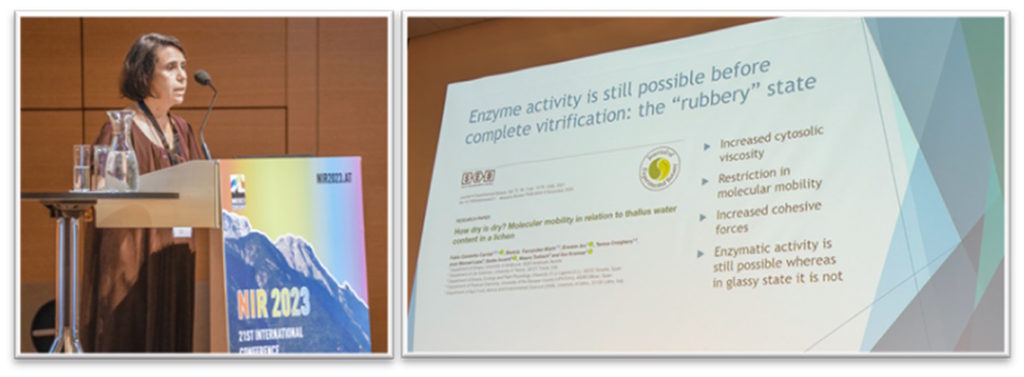
また、イタリア・ジェノヴァ大学のサラ・ガリリオは、NIRハイパースペクトルイメージングとアクアフォトミクスを用いて、乾燥中の非維管束着生群落の研究に挑みました。彼女の研究は、地衣類や蘚類といった微気候に大きな影響を与える生物の脱水・保水挙動に光を当てました。乾燥耐性や無水生存(アナビオシス)が可能なこれらの生物の研究は、アクアフォトミクス分野における新たな強力な研究方向として浮上しました。
シルヴィアとサラは共に、卓越した存在感と優れたコミュニケーション能力、革新的な思考、情熱、そして困難な研究課題に立ち向かう強い意志をもって聴衆に強い印象を残しました。
ハンガリーのMATE所属のフローラ・ヴィタリスも、有望な若手研究者として登場し、アクアフォトミクスを用いた発酵プロセスのモニタリングに関する講演で聴衆を魅了しました。彼女の発表は、昨年日本のアクアフォトミクス研究部門に2か月間滞在した際に得られた知見を反映し、アクアフォトミクスにおける顕著な進展を示すものでした。この経験が加わることで、彼女は日本とハンガリー双方のグループをつなぐもう一つの架け橋としての役割を確固たるものとし、両方の文脈から得られた知識を統合しました。
フローラの講演を特に際立たせたのは、現代的かつ革新的なシステム ― プロバイオティクス飲料の新しい担体として注目されている「プロバイオティクス果汁」への着目でした。彼女の発表は、その科学的内容が大きな注目を集めただけでなく、卓越した創造性と高い完成度によっても際立ちました。各スライドごとに聴衆を惹きつけ、魅力的かつ有益なセッションを実現し、強い印象を残しました。
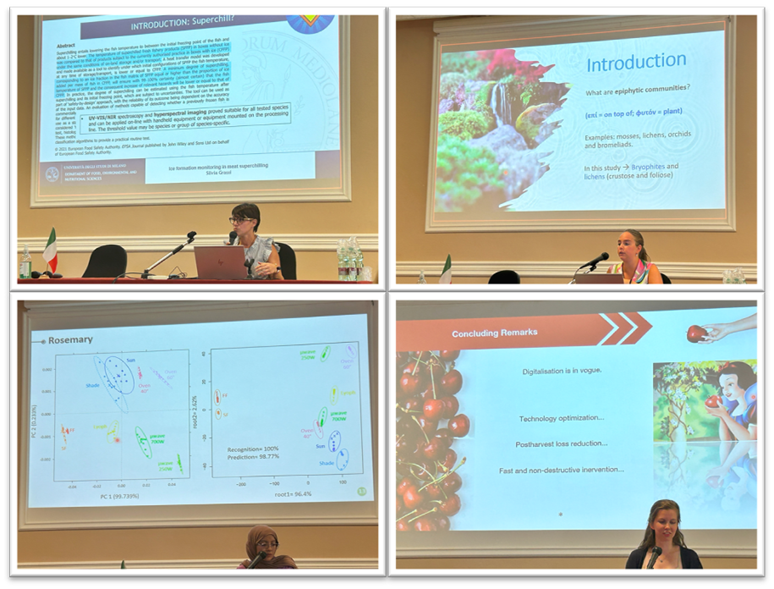
同じ大学に所属するバルキス・アウアディも、ローズマリー、オレガノ、タイムといった特定のハーブにおける乾燥による植物化学成分と水スペクトルパターンの変化について、同様に魅力的な講演を行いました。この研究は、アクアフォトミクスにおける新しく重要なフロンティアを示すものです。バルキスは、乾燥方法の違いによって生じる多様な影響を強調し、総ポリフェノール含量の予測や抗酸化能の評価の可能性を示しました。彼女の研究は、アクアフォトミクスの新たな領域を切り開く重要性を強調し、ハーブの乾燥過程における植物化学成分保存への貴重な知見を提供するものです。
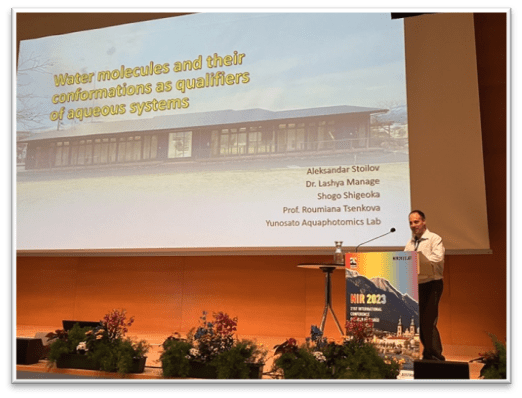
さらに、ユノサト・アクアフォトミクス研究所(世界初の産業・民間アクアフォトミクス研究所、日本)から参加した若手研究者アレクサンダー・ストイロフは、アクアフォトミクスを用いた土壌分類の可能性について発表しました。彼は、土壌水分率や水分子構造の違いが土壌タイプ分類の精度にどのように影響するかを調査しました。
会議ではまた、特別セッションとして「円卓会議」と「ヨーロッパ・アクアフォトミクス学会総会」が開催され、ヨーロッパおよび世界におけるアクアフォトミクス研究の現状が議論されました。参加者は積極的に意見を交換し、研究の方向性、現在の課題、さらなる発展に必要な要件について話し合いました。これらの議論を通じて明らかになったのは、アクアフォトミクスの主要な発展領域が創設当初から食品品質および炎症診断への応用であったことです。しかし同時に、乾燥ストレス研究や植物におけるストレス診断、さらにはストレス耐性のメカニズム理解といった分野が新たに力強く台頭していることも浮き彫りになりました。特に、遺伝子改変とストレス耐性との関係が注目されており、細胞や組織における水構造の制御能力に直結するという刺激的な成果が蓄積されています。
さらに、主にイタリア発の新しい潮流として、近赤外分光イメージングの利用が注目されています。このアプローチは、アクアフォトミクス研究において空間的次元を加える重要な方法です。また、データ前処理や新たなデータ解析手法の探究においても大きな進展が見られます。そして何よりも、次世代研究者を育成・支援することが強調されており、今後の継続的な成長と革新を確実なものとしています。
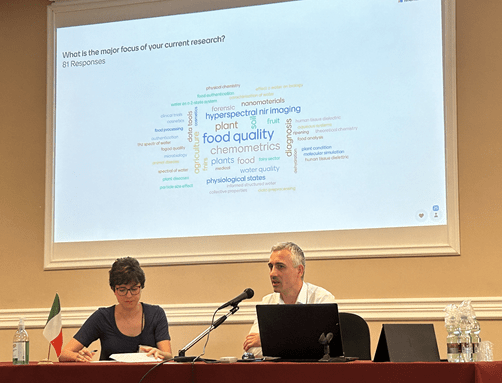
このような文脈の中で、コヴァーチ教授が率いるアクアフォトミクス研究グループが、ヨーロッパにおいて強力な存在として台頭していることが明らかとなりました。MATEにおける研究戦略責任者であり、食品科学技術研究所の国際渉外顧問も務めるコヴァーチ教授は、ハンガリーの食品産業デジタル化戦略の策定において中心的役割を果たしてきました。そして同様に、アクアフォトミクス分野における国際的な関係構築や共同研究の推進にも情熱を注いでいます。
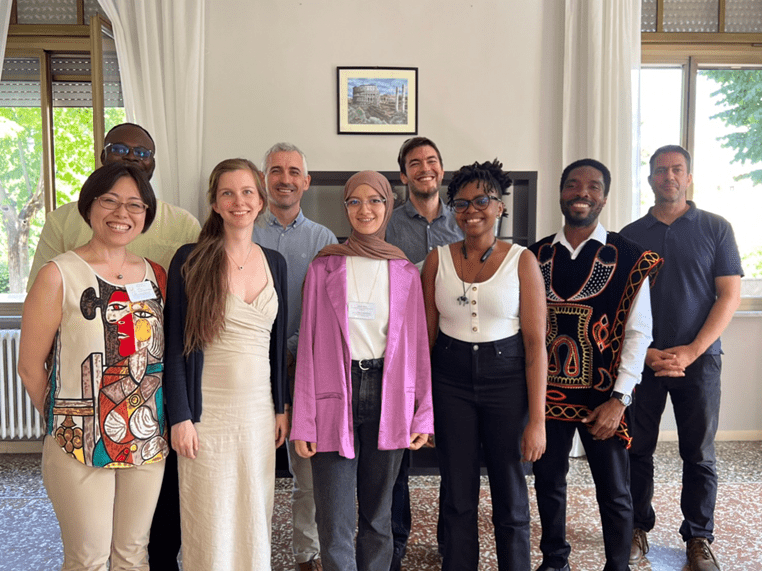
ハンガリー政府が提供するStipendium Hungaricum奨学金制度のおかげで、コヴァーチ教授はハンガリーで博士課程研究を行う国際的な優秀な研究者チームを結成することができました。各メンバーはそれぞれ独自の研究テーマに取り組んでおり、特にジョン=ルイス博士のように、自国ガーナで自身の研究グループを立ち上げた研究者もいます。将来的には、日本、中国、ヨーロッパに続き「アフリカ支部」の設立についても議論が進められており、さらなる発展の可能性が期待されています。
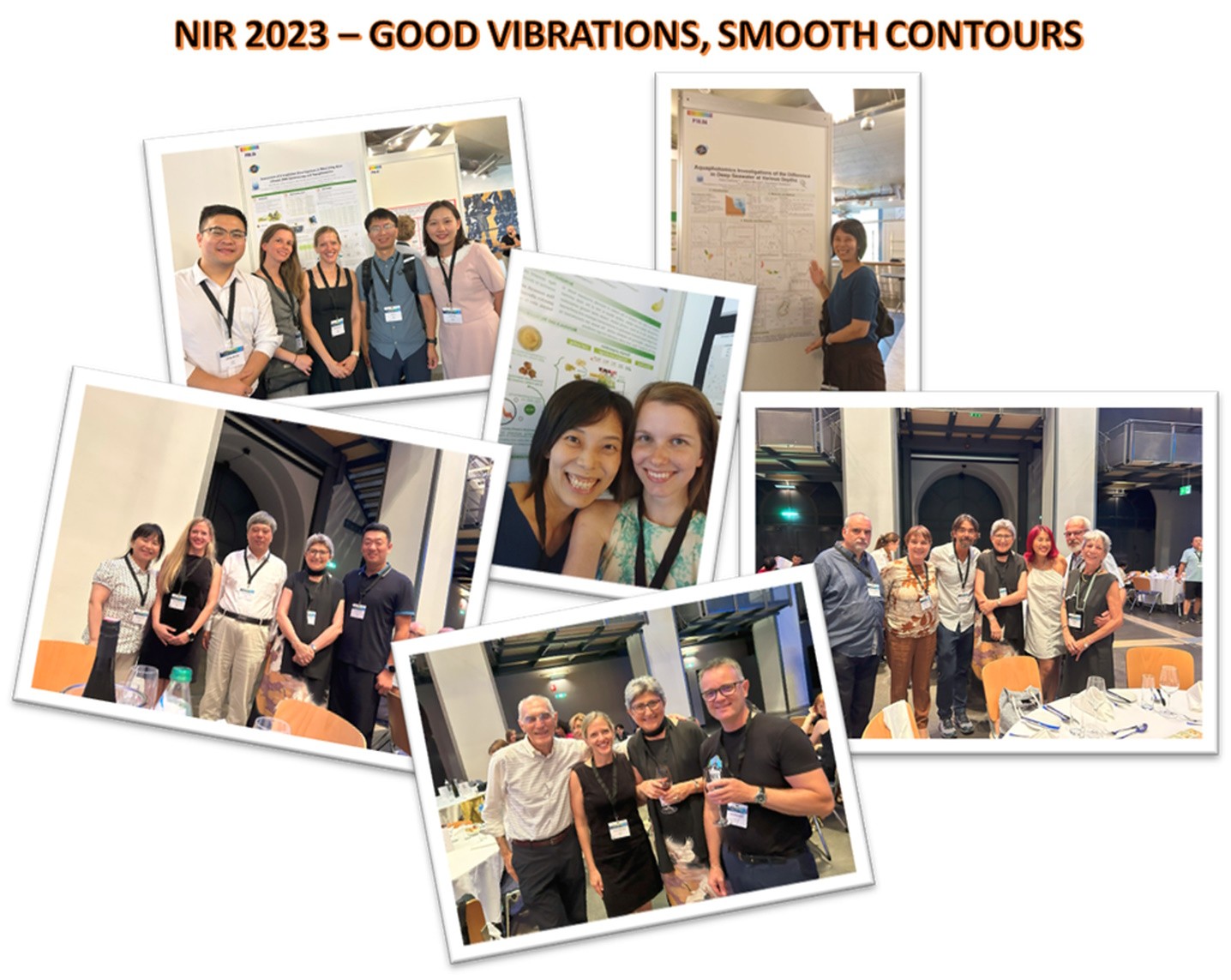
会議ではまた、活発なポスターセッションも行われ、若手研究者たちに自らの研究を発表し、仲間や経験豊富な研究者からフィードバックを受ける貴重な機会が提供されました。発表内容は非常に多岐にわたり、以下のようなテーマが含まれていました:
- 生鮮肉と解凍肉・魚の非破壊識別(ブルガリア)
- 尿を用いた豚の発情検知(ハンガリー)
- 超音波処理を用いた赤インゲン豆の浸漬効果モニタリング(ハンガリー)
- 化粧品製造に使用される海洋深層水の特性評価(日本)
- ワイン中のオクラトキシン汚染の検出(ハンガリー)
- マウスにおける吸収放射線量の測定(日本)
- 土壌の特性評価および分類(日本)
このようにポスターセッションは、アクアフォトミクスの広範な応用分野を示す場であり、若手研究者の成長とネットワーク形成を支える重要なプラットフォームとなりました。
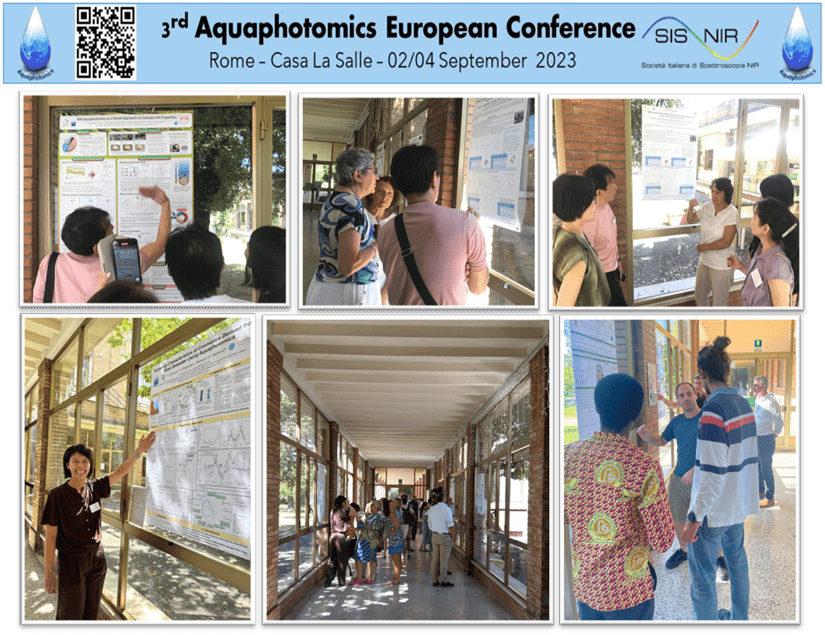
非常に新しい研究テーマもいくつか発表されました。例えば、イオン性水溶液の水スペクトルパターンをアクアグラムで表現するための新しい水補正法の探究(スロベニアとハンガリーによる興味深い新規共同研究)、マイクロ波帯を用いたヒト組織の誘電特性の自動推定(イタリア)、そして電磁的ダイナミゼーションが水に与える影響の検討(イギリス)などです。
会議は、VIAVI Solutions社と月のしずく財団からの寛大な協賛を受けました。どちらもアクアフォトミクスの発展を支えるうえで極めて重要な役割を果たしています。特に、アクアフォトミクス研究者コミュニティの間で広く使用されている携帯型マイクロNIR装置で知られるVIAVI Solutions社は、これらの装置の機能と特長を紹介する簡潔なプレゼンテーションを行いました。
また、月のしずく財団(https://www.tsukinoshizuku.org/)理事長の三浦トモコ・マタハリ氏は、財団の資金がどのように戦略的に活用されてきたかについての詳細な報告を行いました。その投資には、研究機器の提供、若手研究者が学会に参加する際の旅費支援、教育コースへの参加支援、そして科学的成果の出版支援などが含まれており、アクアフォトミクス研究の発展に対する財団の大きな貢献が示されました。
ヨーロッパにおけるこの会議の締めくくりにおいて、全体を支配した感情は「顕著な進展」への実感であり、特に若手研究者層の成長が際立ちました。この科学の新しい担い手一人ひとりが他者を教育し、鼓舞することで、その広がりと成長が促進されていくという期待が込められています。
そして未来に目を向ければ、アクアフォトミクスの道は「第5回アクアフォトミクス国際会議」へと続きます。この権威ある会議は、ローマで発表され、2024年11月にアクアフォトミクスの誕生地である日本・神戸にて開催される予定です。世界中の研究者が集まり、水の精緻な世界をさらに解き明かしていくことが大いに期待されています。