Author: admin

  • The Aquaphotomics Children are Growing – part 2

    The Aquaphotomics Children are Growing – part 2

    Exciting times are coming! The borders are open, people are travelling, and we were able to invite an international researcher who had been waiting for an opportunity for several months!

    Flora Vitalis, PhD student from Hungarian University of Agriculture and Life Sciences, Institute of Food Science and Technology.

    At the end of May this year, we were happy to receive our first guest, a visiting researcher coming from Hungary, Ms. Flora Vitalis, who is a PhD student under the supervision of Prof. Dr. Zoltan Kovacs from Hungarian University of Agriculture and Life Sciences (MATE). Flora is now a first Aquaphotomics researcher who can be said to belong to the second Aquaphotomics generation, since Prof. Kovacs was actually a postdoctoral fellow in Biomeasurement Technology Laboratory of Prof. Tsenkova during 2013 – 2016.

    Upon return to Hungary, he formed his own Aquaphotomics research group, which has been growing ever since, and becoming increasingly multinational. Zoltan was steadily rising through academic ranks, being promoted last year to a full professor, also International Affairs Advisor of the Institute, and for more than 2 years performing the function of Vice Dean for International Affairs at his University. Owing to the amazing dedication on his part, and the staff at the Aquaphotomics Research Department, the agreement between MATE and Kobe University has been signed about participating in the Erasmus+ International Credit Mobility Scholarship which enabled Flora’s visit.

    Flora is interested in learning more about Aquaphotomics, and applying it in the food research, particularly related to the food authentication, preservation and detection of quality changes, especially fungal diseases at an early asymptomatic stage. She will be staying with us for two months, and she is already working full speed on her first paper about our joint project on monitoring the refrigerated storage of lettuce.

  • The Aquaphotomics Children are Growing – part 1

    The Aquaphotomics Children are Growing – part 1

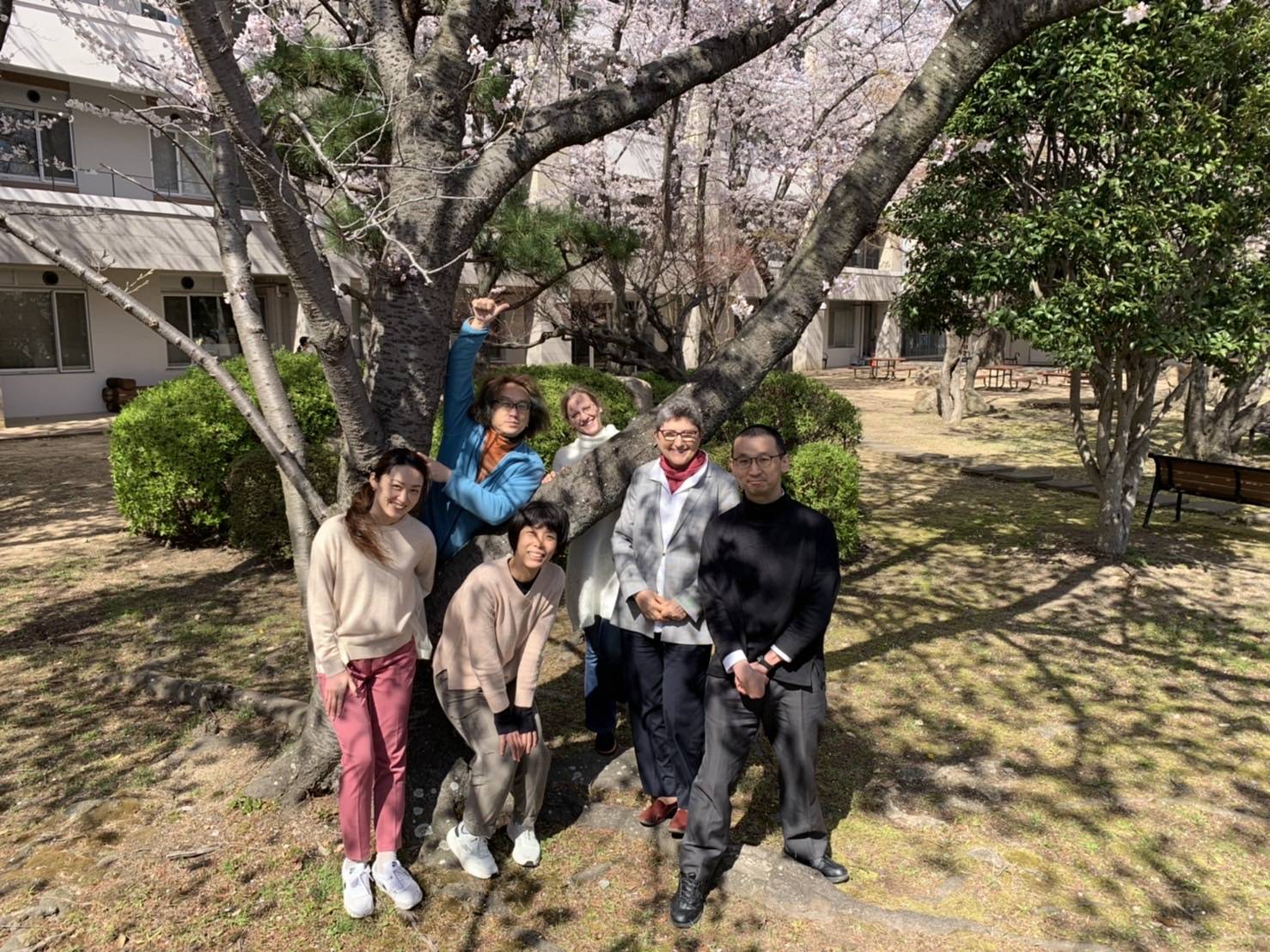
    Our Aquaphotomics Department has celebrated its first birthday and the aquaphotomics children are growing! We would like to introduce our family of Kobe University.

    Yoko Osafune, collaborative researcher from Dr. Recella Co. Ltd.

    In April this year a new researcher has joined our Lab!

    Ms. Yoko Osafune, who graduated from Kobe University, Faculty of Agriculture has been working for some time in the industry, in the process quality control management before being recruited by Dr. Recella Co. Ltd. She has joined our Lab, with the special mission of learning Aquaphotomics with the final goal of establishing an Aquaphotomics laboratory specifically for the requirements of Dr. Recella in the research and development of water and cosmetic products based on the use of deep-sea water.

    Yoko san will be staying with us for two years, and she has made a fast progress for the short time she has been with us so far. She has already reached the level people usually reach after 1 or 2 years of learning and wrote one paper in Japanese. She has a jovial personality, a special talent of making people feel at ease around her, connect to each other and work together. We have no doubt considering how extraordinary she is, that she will be a wonderful Lab leader one day in her company, and also make a great contribution to development of Aquaphotomics not only in Japan, but on the world level.

  • Promotion of Prof. Jelena Muncan

    Promotion of Prof. Jelena Muncan

    Prof. Roumiana Tsenkova and Prof. Jelena Muncan

    Dr. Jelena Muncan has been promoted to the position of Specially Appointed Associate Professor, Aquaphotomics Research Department, Graduate School of Agricultural Science, Kobe University, effective June 1, 2022.

    In 2017 Dr. J. Muncan received Japanese Society for Promotion of Science post-doctoral research fellowship at Kobe University, Graduate School of Agricultural Science, Biomeasurement Technology Laboratory where, under the guidance of Prof. Roumiana Tsenkova (currently Specially Appointed Professor at the newly established Aquaphotomics Research Department) she worked on Aquaphotomics for non-invasive mastitis diagnosis in dairy cows.

    In April 2021, she became a specially appointed Assistant Professor at the Aquaphotomics Research Department, Agricultural Science, Kobe University.

    She has written 28 peer-reviewed papers and has given eight invited lectures at international conferences, and the number of citations per year of her published papers has increased exponentially.

    In November 2021, Prof. Tsenkova and Dr. J. Muncan published the book “Aquaphotomics for Bio-diagnostics in Dairy” from Springer, which was ranked No. 1 in the Amazon sales ranking for Western books in spectroscopy in January 2022!

    Introduction by Springer

    https://link.springer.com/book/10.1007/978-981-16-7114-2

    Publication articles in our website

    https://aquaphotomics.com/ja/aquaphotomics-for-bio-diagnostics-in-dairy-first-aquaphotomics-book-to-be-published-in-december-2021/

    Dr. J. Muncan’s promotion is the result of the university’s recognition of her significant contributions to the development of Aquaphotomics.

    Jelena is a wonderful person who is both serious and persistent in her research and cheerful and friendly. We will continue to see her activities through Aquaphotomics, which transcends research fields and spreads around the world.

  • Aquaphotomics for monitoring of groundwater using short-wavelength near-infrared spectroscopy

    Aquaphotomics for monitoring of groundwater using short-wavelength near-infrared spectroscopy

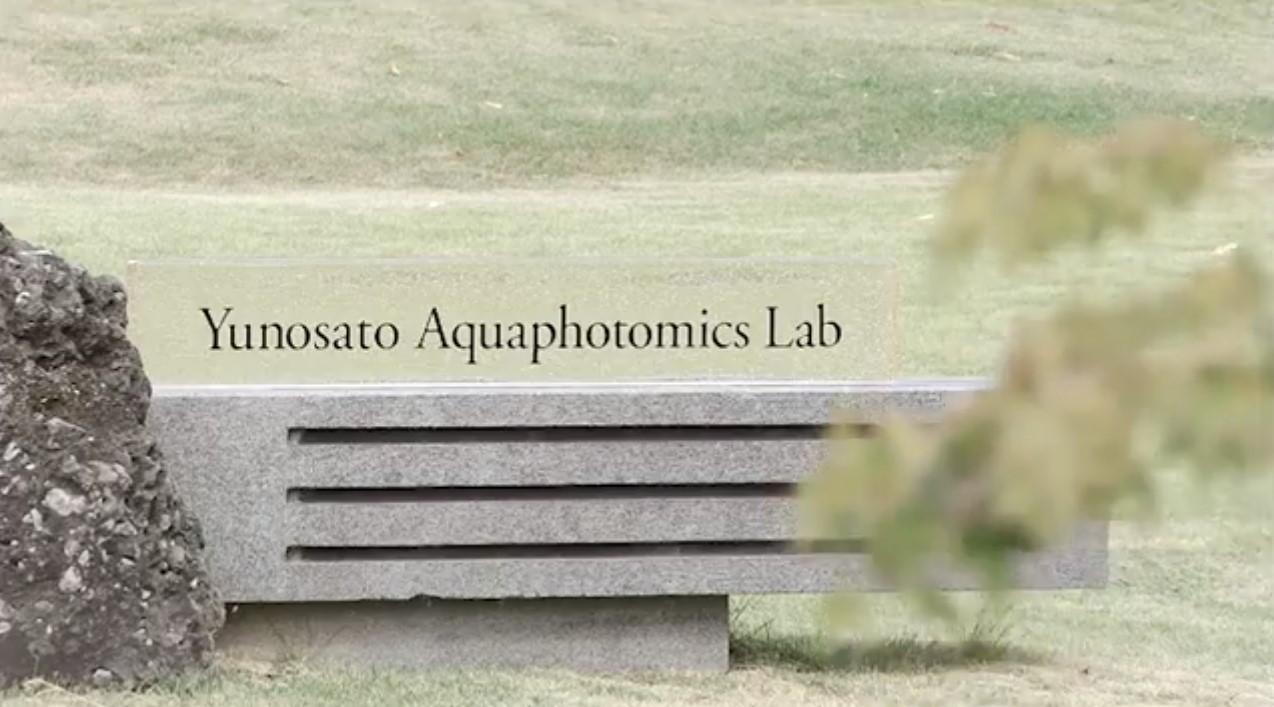
    The latest paper published in the journal Spectrochimica Acta Part A: Molecular and Biomolecular Spectroscopy, titled “Aquaphotomics for monitoring of groundwater using short-wavelength near-infrared spectroscopy” is a result of a long collaborative research between 3 aquaphotomics teams: Aquaphotomics Research Department from Kobe University, Aquaphotomics group at Hungarian University of Agriculture and Life Sciences, and a young Yunosato Aquaphotomics Lab from Hashimoto city in Wakayama, Japan.

    Yunosato Aquaphotomics Lab

    The paper is the latest achievement of a long-term research project taking place in Wakayama, whose first results were published in 2016 in Talanta journal (Kovacs, Z., Bázár, G., Oshima, M., Shigeoka, S., Tanaka, M., Furukawa, A., Nagai. A, Osawa, M., Itakura, Y. and Tsenkova, R. (2016). Water spectral pattern as holistic marker for water quality monitoring. Talanta147, 598-608.). The entire research served as a basis for establishment of the first aquaphotomics-based water monitoring system at the Yunosato spa of Shigeoka Co. Ltd where the ground waters are being extracted and which is functioning since 2016. It also led to the establishment of the first private Yunosato Aquaphotomics Lab, which has since then expanded the research into the food, cosmetics, soil, human health, and even the sound!

    In the latest paper, the novelty compared to the previous studies concerned with water monitoring, is that, for the first time, we improved the robustness and assessed the feasibility of the water spectral pattern – WASP in the short near infrared wavelength to be used as an integrative water quality marker by excluding the absorbance bands that are most influenced by the environment, namely temperature and humidity.

    The results of the study are also presented in a novel way to put more accent on the work associated with the selection of bands that can serve as water matrix coordinates – WAMACs. While there are numerous publications reporting results in the area of 1st overtone of water (1300 – 1600 nm), the selection of WAMACs in other regions of water near infrared spectrum is still somewhat of a difficulty for researchers, as we have found out from the audience attending aquaphotomics webinars. The process of selection of WAMACs from the available absorbance bands, as well as the assignments of the absorbance bands in the region 600 – 1050 nm have been provided in the paper in great details.

    We showed which bands were influenced by humidity and temperature, and made sure that they are excluded from the final WASPs. This efficiently prevented “false alarms” due to the environmental changes led to development of robust, unique WASP for each of the mineral waters that is subjected to daily screening.

    The paper is available online since 11 May, 2022 and can be found at the following address: 

    https://www.sciencedirect.com/science/article/pii/S1386142522005273#f0035

    The study uniquely presents results how spectral patterns and hydrogen-bonding of groundwater samples were affected by changes in environmental factors – temperature, humidity, time and others. Despite these effects, Aquaphotomics analysis resulted in obtaining consistent, specific spectral patterns during the entire monitoring period, unique for each groundwater that can be used as its fingerprint and monitored over time. These results confirm that Vis/ NIR spectral pattern can be used as an integrative marker of water status, stable over time, providing the basis for an efficient cost-effective method for monitoring of water.

  • First Anniversary of the Aquaphotomics Research Department at Kobe University

    First Anniversary of the Aquaphotomics Research Department at Kobe University

    Spring has come, and warm sunshine is illuminating the cherry blossoms in full bloom. One year has passed since the establishment of the Aquaphotomics Department, Graduate School of Agricultural Science, Kobe University.

    I would like to express my gratitude to all of you who support our research activities, to all aspiring researchers around the world, to my colleagues, and to my friends and family. With all my heart, thank you very much.

    In Japan, where I have spent a quarter of a century of my career, the world’s first Aquaphotomics laboratory was established at Kobe University, Japan, in 25th anniversary year. In this new Research Department, which I started upon my retirement, I continue to enjoy science together with my co-workers. Within the past year, our first book on Aquaphotomics research has been published (*1), and we are in the process of editing for publication of a special issue of “Molecules” journal on Aquaphotomics (*2), and many papers have been submitted. In order to share and continue Aquaphotomics research with researchers around the world, we have organized webinars and lively discussions. We received inquiries from all over the world from researchers who want to visit and research in our lab.

    The other day, I received a very nice and grateful words from a person who has been supporting our research, and I would like to take this opportunity to introduce it to you. This man was an engineer who had been involved in the development of spectroscopic instruments, which are indispensable for our research.

    “That’s what I’ve been looking for Aquaphotomics research. There is now a science that can reveal it. I am happy to be able to support a tool to reveal the truth in life.

    I have learned many things until I started working, and I have also been exposed to new knowledge, technologies, and studies in my work. I was involved in the development of production technologies that applied these technologies and used them in the manufacturing process, and I was also involved in the budgeting of a team that developed lithium-ion batteries for automobiles and the introduction of analytical equipment.

    I think all of this was in preparation for understanding the truth through Aquaphotomics research. I am grateful for this miraculous encounter.”

    I believe that science is the wisdom of humanity, transcending countries and time, as we take over, pass on, and cooperate with each other. I would like to thank everyone who has supported us by continuing to push forward the Aquaphotomics studies.

    I would like to start the next year with deep gratitude especially to our sponsor Dr. Recella for being able to continue our research today.

    I pray for the world peace and good health for all of you. Thank you very much.

    Roumiana Tsenkova

    *1. Tsenkova, R. and Muncan, J. (2021). Aquaphotomics for Bio-diagnostics in Dairy: Applications of Near-Infrared Spectroscopy. Springer Publishing. ISBN:9789811671135. https://books.google.co.jp/books?id=Vn6izgEACAAJ

    *2 Special Issue “Aquaphotomics – Exploring Water Molecular Systems in Nature”. https://www.mdpi.com/journal/molecules/special_issues/Water_Molecular

  • Recording of Aquaphotomics Spring Webinar is now available!

    Recording of Aquaphotomics Spring Webinar is now available!

    Recording is now available on the Aquaphotomics YouTube Channel!

    Thank you so much for joining us at the webinar! I hope you all enjoy Prof. Hayashi’s talk.

    As promised, here is the link to the webinar recording:

    The subtitles language can be changed to Japanese or other languages.

    • Enable “Subtitles/closed captions”, then go to Settings->Subtitles->Auto-translate->select a language.

    字幕の言語を日本語や他の言語に変更することができます。

    • 字幕をオンにして、「設定」→「字幕」→「自動翻訳」→「日本語」

    If you have any questions, please leave a comment, or email us at [email protected].

    You can also find previous webinar recordings and many other videos about Aquaphotomics on our YouTube channel (https://www.youtube.com/c/Aquaphotomics), so please subscribe!

    We will have another webinar coming up in April. See you soon!

  • Aquaphotomics Spring Webinar

    Aquaphotomics Spring Webinar

    Aquaphotomics Spring Webinar


    Recording is now available on the Aquaphotomics YouTube Channel!

    Thank you so much for joining us at the webinar! I hope you all enjoy Prof. Hayashi’s talk.

    As promised, here is the link to the webinar recording:

    The subtitles language can be changed to Japanese or other languages.

    • Enable “Subtitles/closed captions”, then go to Settings->Subtitles->Auto-translate->select a language.

    字幕の言語を日本語や他の言語に変更することができます。

    • 字幕をオンにして、「設定」→「字幕」→「自動翻訳」→「日本語」

    If you have any questions, please leave a comment, or email us at [email protected].

    You can also find previous webinar recordings and many other videos about Aquaphotomics on our YouTube channel (https://www.youtube.com/c/Aquaphotomics), so please subscribe!

    We will have another webinar coming up in April. See you soon!


    Dear Friends and Colleagues,

    It is our pleasure to announce a new aquaphotomics webinar, first one this year, marking the beginning of a spring season, and hopefully a successful year for all of us.

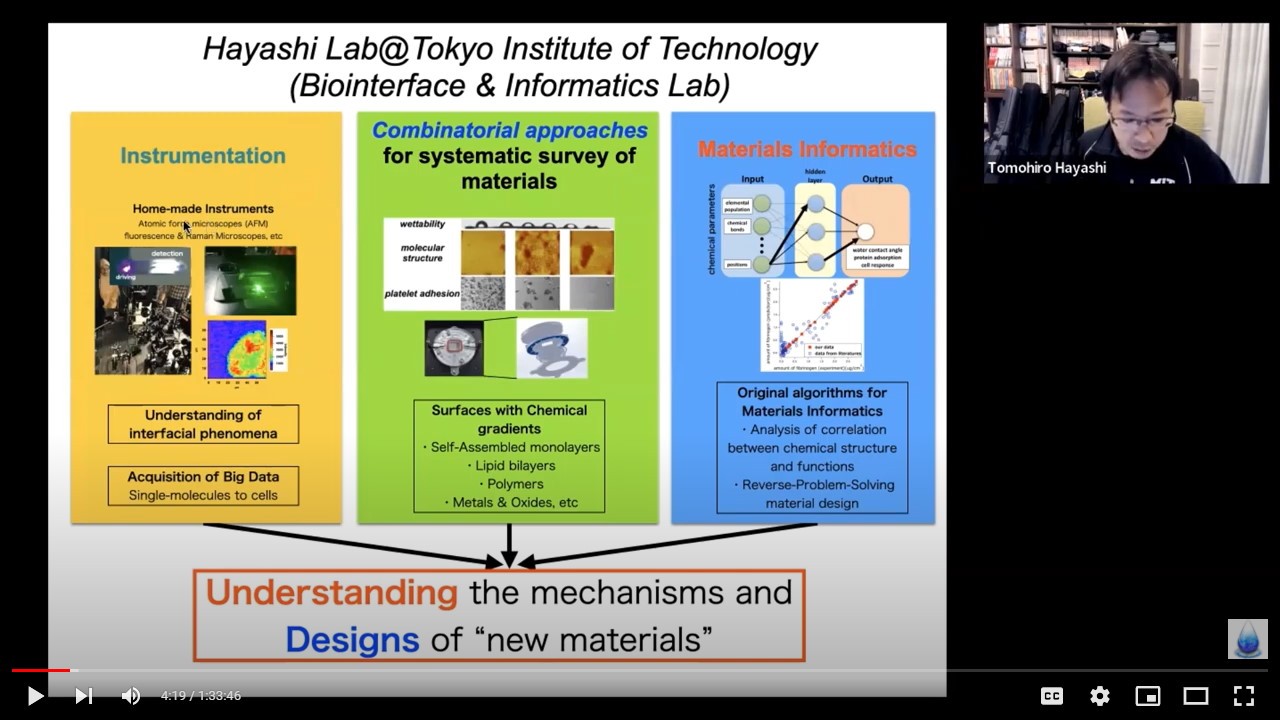
    This time, we have a pleasure to host the lecture of Prof. Tomohiro Hayashi, from Tokyo Institute of Technology, who will be talking about the role of water in the mechanism underlying bio inertness of materials.

    Prof. Hayashi is a regular attendant of the Aquaphotomics Conferences, and his lectures are always advanced and very inspiring.

    Please find short abstract of his lecture below. The webinar will be held using Zoom platform, 1h for the lecture and 30 min for discussion; free for all who wish to participate. All you need to do is to sign up for attendance using the “Sign up” form provided below.  

    The webinar will be held in English, and it will be recorded and made available on the Aquaphotomics YouTube channel shortly afterwards, with Japanese subtitle.

    We are looking forward to seeing you at the Aquaphotomics Spring Webinar!


    Aquaphotomics Spring Webinar – Schedule

    [amo_member id=”4811″ item-width=”150″ align=”right” item-margin=”0″ full-width=”no” panel=”right”]

    Speaker: Associated Professor Tomohiro Hayashi, Tokyo Institute of Technology, Japan

    Title: Mechanism underlying anti-biofouling: behavior of molecules at bio interfaces

    Abstract: Although surfaces rejecting adsorption of biomolecules and adhesion of cells and microorganisms (anti-fouling surfaces) are highly demanded, designs of these surfaces still involve difficulties because of the lack of understanding of the underlying mechanism. We first discuss the mechanism underlying the bio inertness of oligo (ethylene glycol)-, zwitterionic-, DNA, and peptide-terminated self-assembled monolayers (SAMs) by investigating the interfacial behavior of water molecules by surface force and surface-sensitive vibrational spectroscopic techniques. Our surface force measurements evaluating the interaction between SAMs in a physiological condition revealed that all investigated bioinert SAMs exhibited water-induced repulsion. In contrast, bio adhering SAMs do not show repulsion. Surface-enhanced infrared absorption spectroscopy unveiled the characteristic hydrogen bonding state of water molecules near the nonfouling monolayers. These results exhibit that interfacial water plays the role of a physical barrier to prevent bioadhesion.

    Time & Date: 2022/03/15 (Tuesday)
    Starts at: Japan Time (JST) 5:00 PM / Central European Time (CET) 9:00 AM

    Ends at: Japan Time (JST) 6:30 PM / Central European Time (CET) 10:30 AM


  • Special Issue: “Aquaphotomics – Exploring Water Molecular Systems in Nature” (Deadline extended)

    Special Issue: “Aquaphotomics – Exploring Water Molecular Systems in Nature” (Deadline extended)

    We are pleased to announce that Prof. Tsenkova and Prof. Muncan are guest editing special issue “Aquaphotomics – Exploring Water Molecular Systems in Nature” in the open access journal Molecules (ISSN 1420-3049, https://www.mdpi.com/journal/molecules).

    Special Issue: Aquaphotomics – Exploring Water Molecular Systems in Nature

    Website: https://www.mdpi.com/journal/molecules/special_issues/Water_Molecular

    Submission Deadline (extended): 30 June 2022

    Author instructions can be found here: https://www.mdpi.com/journal/molecules/instructions.

    If you are interested in contribution or have any questions, please do not hesitate to let us know or contact the Assistant Editor ([email protected]).

    We look forward to your submissions!

  • The World First Industrial Aquaphotomics Laboratory Opened at Yunosato in Wakayama, Japan

    The World First Industrial Aquaphotomics Laboratory Opened at Yunosato in Wakayama, Japan

    Mr. Shogo Shiegoka, the owner of the “Yunosato Aquaphotomics Lab” located in Wakayama, had an interview with the local TV station. In the interview, he talked about how he learned about Aquaphotomics and the future plan of the Aquaphotomics Lab. Check out the video below!

    (English and Japanese subtitles available on YouTube)

  • Luc Montagnier, a Great Scientist and Our Dear Friend Passed Away

    Luc Montagnier, a Great Scientist and Our Dear Friend Passed Away

    It is with sad heart that we share this news with the Aquaphotomics community. Professor Luc Montagnier, co-discoverer of human immunodeficiency virus (HIV) and a winner of Nobel Prize in 2008, died, aged 89 on 8th February, 2022.

    Professor Montagnier is one of the scientists whose life really made a difference.  His dedication to science and his co-discovery of HIV highly influenced the research and development of antiretroviral medicines, which helped saved the lives of millions of people around the world.

    We will fondly remember his lectures at the Water Conference (on the Physics, Chemistry and Biology of Water), his visit to Kobe University, our former Biomeasurement Technology Laboratory, and our experiments together.

    We shared a love for water and love for science. And we will always be grateful for his support for Aquaphotomics and our work.

    He is a friend that will be very missed.

    Aquaphotomics community sends heartfelt condolences to his family and friends.